
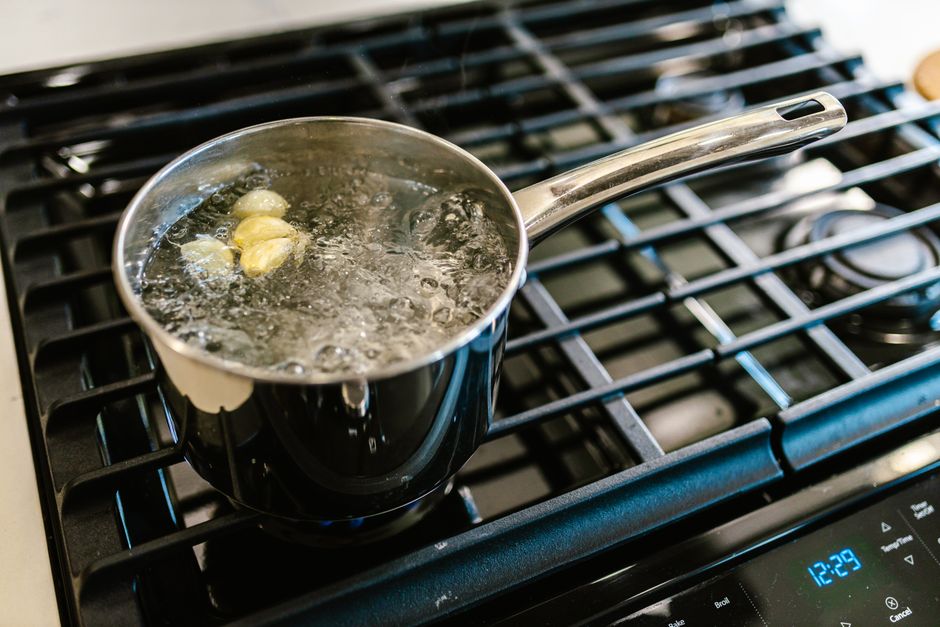
Boiling an egg seems simple, but the difference between a perfect soft yolk and a rubbery grey one comes down to a few minutes on the clock. Once your water is at a full, rolling boil and you lower the eggs in, the timing starts. For a soft-boiled egg with a runny yolk, cook for 3 to 4 minutes. For a jammy, slightly set yolk, aim for 6 to 7 minutes. For a fully hard-boiled egg with a firm yolk, cook for 9 to 12 minutes. These times assume large eggs straight from the refrigerator.
What Is The Exact Time For Soft, Medium, And Hard Boiled Eggs?
The cooking time directly controls the texture of the yolk. The white sets first because it cooks at a lower temperature than the yolk. The yolk then thickens gradually as heat penetrates the center of the egg.
Here is the breakdown for large eggs placed into already boiling water:
- 3 to 4 minutes: Soft-boiled. The white is just set, and the yolk is warm and completely runny. This is ideal for dipping toast soldiers.
- 5 to 6 minutes: The white is fully firm, and the yolk is thick but still liquid in the very center. This is often called a “soft medium” egg.
- 6 to 7 minutes: Jammy or medium-boiled. The yolk is custard-like, slightly soft, and holds its shape when cut. This is the standard for ramen eggs.
- 8 to 9 minutes: The yolk is mostly firm but still has a thin, darker ring of softness near the center. It is not fully dry.
- 10 to 12 minutes: Hard-boiled. The yolk is completely firm, pale yellow, and crumbly. Cooking beyond 12 minutes risks a grey-green ring forming around the yolk.
These times are for large eggs. Medium eggs will cook about 30 seconds faster. Extra-large or jumbo eggs may need an extra 30 to 60 seconds to reach the same stage.
Do You Start The Timer When The Water Boils Or When You Put The Eggs In?
Start the timer the moment the eggs hit the boiling water. Do not start it when you turn on the stove.
There are two common methods for boiling eggs, and the timing differs for each. The method described here is the “boiling water start.” Bring a pot of water to a full, rolling boil first. Gently lower the eggs in with a spoon or tongs to prevent cracking. Set your timer immediately. Reduce the heat slightly to keep the water at a gentle boil rather than a violent rolling boil, which can cause the eggs to bounce and crack against each other.
The alternative is the “cold water start.” Place eggs in a pot, cover with cold water by about an inch, and bring to a boil. Once the water reaches a full boil, turn off the heat, cover the pot, and let the eggs sit. This method typically requires 9 to 12 minutes of standing time for hard-boiled eggs, depending on desired doneness. The times are not interchangeable between methods. If a recipe says “boil for 7 minutes,” it almost always means 7 minutes in actively boiling water, not 7 minutes after a cold water start reaches boiling.
Why Do Eggs Get A Green Ring Around The Yolk?
The grey-green ring that sometimes appears around a hard-boiled yolk is not a sign of spoilage. It is a chemical reaction between iron in the yolk and sulfur in the white.
When eggs cook for too long or at too high a temperature, the sulfur and iron compounds react to form ferrous sulfide. This compound deposits as a thin greenish-grey layer on the surface of the yolk. It is harmless and does not change the flavor, but it looks unappetizing.
To prevent it, avoid overcooking. Remove the eggs from the boiling water at the 10 to 12 minute mark for hard-boiled eggs. Immediately transfer them to an ice water bath to stop the cooking process. The rapid cooling halts the heat transfer that drives the chemical reaction. Leaving eggs in the hot water after turning off the heat is the most common cause of the green ring.





How Do You Peel Boiled Eggs Easily?
Peeling difficulty is largely related to the egg’s age and the cooking method. Fresher eggs are harder to peel because the inner membrane clings tightly to the shell. Eggs that are a week or two old peel more easily because the air cell at the wide end enlarges, and the contents shrink slightly as moisture is lost through the shell.
The ice water bath serves a double purpose. It stops the cooking, and it helps separate the membrane from the shell. The sudden temperature change causes the egg white to contract slightly, pulling away from the shell’s membrane.
For the easiest peeling, crack the shell all over by tapping it gently on a hard surface, then roll it between your hands to loosen the shell. Start peeling from the wider end, where the air pocket sits. Running the egg under cold water while peeling can help wash away small shell fragments and ease the process.
Is It Safe To Eat Runny Or Soft Yolks?
Runny yolks are safe to eat only if the egg is pasteurized or cooked to the right internal temperature. The concern is Salmonella, a bacteria that can be present on the shell or inside the egg.
The USDA recommends cooking eggs until both the white and yolk are firm. For dishes like soft-boiled eggs or over-easy eggs where the yolk remains runny, the risk of foodborne illness is higher, particularly for young children, pregnant women, older adults, and people with weakened immune systems.
If you want a runny yolk and are in a higher-risk group, use pasteurized eggs. These have been heated to a temperature that kills Salmonella without cooking the egg. They are available in many grocery stores and are clearly labeled. For everyone else, the risk is low but not zero. Commercially produced eggs in the United States are washed and inspected, but Salmonella contamination remains a possibility. Cooking eggs until the yolk is firm is the only way to guarantee that any bacteria present are destroyed.
How Long Do Boiled Eggs Last In The Refrigerator?
Boiled eggs should be refrigerated within two hours of cooking. Do not leave them sitting at room temperature for extended periods, as bacteria can multiply rapidly in the “danger zone” between 40°F and 140°F.
In the shell, hard-boiled eggs last up to one week in the refrigerator. The cooking process removes the protective coating on the shell, so the eggs are slightly more porous than raw eggs. Keeping them in the shell helps protect them from absorbing refrigerator odors.
Peeled eggs should be stored in a covered container. You can place a damp paper towel in the container to keep them from drying out. Use peeled eggs within a couple of days for the best quality. Soft-boiled eggs with runny yolks are best eaten immediately. Their texture degrades quickly upon refrigeration and reheating.
Does Altitude Affect Boiling Time?
Yes, altitude affects the boiling point of water, which changes cooking times. At sea level, water boils at 212°F. At higher altitudes, atmospheric pressure is lower, and water boils at a lower temperature.
At 5,000 feet, water boils at approximately 203°F. At 10,000 feet, it drops to around 194°F. Because the water is not as hot, eggs take longer to cook through to the center. If you live at a high altitude, expect to add 1 to 2 minutes to your boiling times. The exact adjustment depends on your elevation and the size of the eggs.
This is also why a hard-boiled egg cooked at altitude may look underdone even after the same cooking time used at sea level. The lower water temperature simply delivers less heat to the egg over the same period.
Is The “Egg Float Test” Reliable For Freshness?
The float test is a popular method for checking egg freshness, but it only tells you about the size of the air cell. As an egg ages, moisture and carbon dioxide escape through the porous shell, and the air cell grows larger.
A fresh egg will sink and lie flat on its side in a bowl of water. An older egg will stand upright on one end. An egg that floats to the surface has a very large air cell and is likely quite old. The float test does not tell you whether the egg is contaminated with Salmonella or other bacteria. An old egg can still be safe to eat if it is cooked thoroughly, and a fresh egg can still carry bacteria.
The most reliable way to check for spoilage is to crack the egg into a bowl and smell it. A spoiled egg has a distinctive, unpleasant sulfur odor. If it smells fine, it is generally safe to use, regardless of how it behaves in water.
Frequently Asked Questions
How long do you boil an egg for a runny yolk?
Boil large eggs for 3 to 4 minutes for a runny yolk.
How long to boil eggs from cold water?
Bring water with eggs to a full boil, then turn off the heat and let them sit for 9 to 12 minutes for hard-boiled eggs.
Can you reboil eggs that are undercooked?
Yes, you can reboil undercooked eggs, but the texture will be slightly rubbery and the timing is difficult to control.
Should eggs be at room temperature before boiling?
No, this is not required. Cold eggs placed in boiling water may crack less if lowered in gently with a spoon.
