
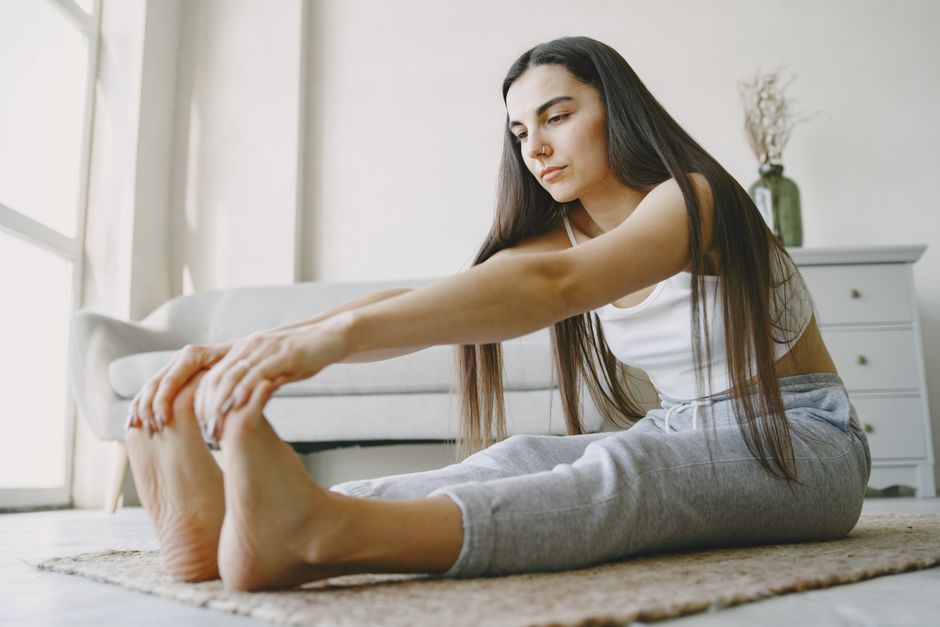
Holding a stretch for 15 to 30 seconds is the standard recommendation for improving flexibility in most muscle groups. For older adults or people targeting specific mobility goals, holding for 30 to 60 seconds may be more effective. The ideal duration depends on your goal, your warm-up state, and whether you are stretching before or after exercise.
What Does the Research Say About Stretch Duration?
Studies on static stretching consistently show that holding a stretch for 15 to 30 seconds improves range of motion. This duration is enough to allow the muscle and its connective tissue to lengthen without causing significant discomfort or tissue damage.
Research indicates that holding a stretch for longer than 60 seconds does not provide additional flexibility benefits for most people. In fact, prolonged stretching beyond 60 seconds may slightly reduce muscle strength and power output if done immediately before explosive activities like sprinting or heavy lifting.
Some studies suggest that older adults may need longer hold times — around 30 to 60 seconds — to achieve the same flexibility improvements seen in younger individuals. This is likely related to age-related changes in muscle elasticity and connective tissue stiffness.
How Long Should You Hold a Stretch Before Exercise?
If you stretch before a workout, keep holds short. A 10 to 15 second hold per stretch is sufficient to prepare the muscle for activity without compromising performance.
Longer static holds before exercise can temporarily reduce muscle strength. This effect is usually brief, lasting only a few minutes, but it can affect performance in activities that require maximal force, such as weightlifting or sprinting.
A better pre-workout approach is dynamic stretching — moving joints through their full range of motion without holding. Leg swings, arm circles, and walking lunges are examples. These movements increase blood flow and tissue temperature while preparing the nervous system for activity.
If you prefer static stretching before a workout, keep each hold under 15 seconds and follow it with a few minutes of light activity before starting your main session.
How Long Should You Hold a Stretch After Exercise?
Post-workout is the ideal time for longer static holds. After exercise, muscles are warm and more pliable, making them more responsive to stretching.
Hold each stretch for 30 seconds after your workout. This duration is long enough to promote relaxation and gradual lengthening of the muscle tissue. Repeat each stretch two to four times for a total of 60 to 120 seconds per muscle group.
Post-exercise stretching may help reduce muscle soreness, though the evidence for this is mixed. Some studies show a modest reduction in delayed onset muscle soreness, while others show no significant effect. What stretching clearly does after exercise is help restore normal resting muscle length and improve flexibility over time.




Does Stretch Duration Change with Age?
Flexibility naturally declines with age due to changes in muscle tissue, tendons, and joints. Older adults often need longer hold times to achieve the same flexibility gains as younger people.
The American College of Sports Medicine recommends that older adults hold stretches for 30 to 60 seconds. This longer duration accounts for age-related increases in muscle stiffness and connective tissue resistance.
For anyone over 50, consistency matters more than duration. Stretching daily for 30 seconds per muscle group produces better results than stretching for 60 seconds only once or twice per week.
How Many Times Should You Repeat a Stretch?
Repeating a stretch matters as much as how long you hold it. A single 30-second hold is less effective than two 30-second holds.
Most guidelines recommend performing each stretch two to four times. Between repetitions, take a brief rest of 15 to 30 seconds to allow the muscle to relax fully before stretching again.
The total time per muscle group is what drives flexibility gains. Aim for 60 seconds of total stretch time per muscle group, whether that means two 30-second holds or four 15-second holds.
What Type of Stretching Is Best for Flexibility?
Static stretching — holding a position without movement — is the most studied and reliable method for improving flexibility. It works by gradually lengthening the muscle and signaling the nervous system to allow greater range of motion.
Proprioceptive neuromuscular facilitation stretching, commonly called PNF stretching, involves alternating between contracting and relaxing the target muscle. PNF stretching is often more effective for rapid flexibility gains, but it usually requires a partner or a strap and carries a slightly higher risk of injury if performed incorrectly.
Dynamic stretching is best before activity but does not produce lasting flexibility improvements on its own. For long-term flexibility gains, static stretching performed consistently is the most evidence-based approach.
Common Stretching Mistakes to Avoid
Bouncing while stretching — called ballistic stretching — can trigger the stretch reflex, causing the muscle to contract rather than relax. This increases injury risk and does not improve flexibility.
Stretching through sharp pain is another common mistake. Mild discomfort or a pulling sensation is normal, but sharp or radiating pain signals tissue strain. Back off to a comfortable position.
Holding your breath while stretching reduces relaxation and may increase muscle tension. Breathe steadily and exhale as you ease deeper into the stretch.
Stretching a cold muscle is less effective and slightly riskier than stretching a warm one. A few minutes of light walking or gentle movement before stretching improves results.
How Long Until You See Results from Stretching?
Flexibility changes take time. Most people notice measurable improvements in range of motion within three to four weeks of consistent stretching.
Stretching at least three days per week is the minimum for seeing progress. Daily stretching produces faster results, especially for tight muscle groups like hamstrings and hip flexors.
Some people see improvements sooner, particularly if they are new to stretching or have significant tightness. Others with naturally stiff joints or connective tissue conditions may need longer. The key variable is consistency, not intensity.
Frequently Asked Questions
Is 30 seconds enough to improve flexibility?
Yes, 30 seconds per stretch is sufficient for most people to improve flexibility. Repeat each stretch two to four times for the best results.
Can you hold a stretch too long?
Holding a stretch for more than 60 seconds does not add flexibility benefits for most people. Very long holds may slightly reduce muscle strength if done before exercise.
Should I stretch every day?
Daily stretching is safe and effective for most people. Stretching at least three days per week is the minimum needed to see measurable flexibility gains.
Is it better to stretch before or after a workout?
Do short stretches of 10 to 15 seconds before exercise and longer holds of 30 seconds after exercise. Post-workout stretching is more effective because muscles are warm and more pliable.
