
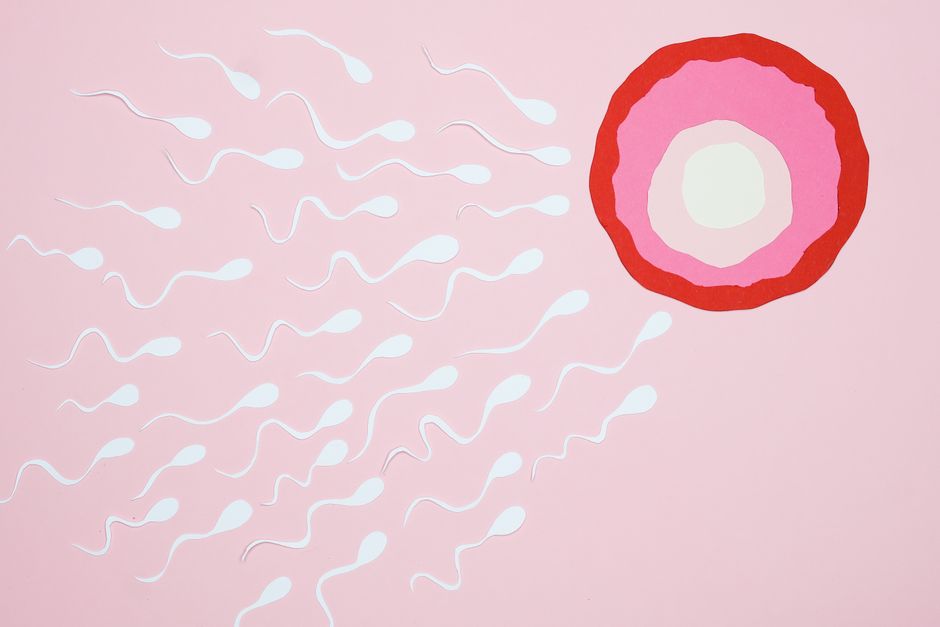
Ovulation is a short event. The egg itself is released from the ovary and survives for about 12 to 24 hours. If sperm does not fertilize it within that window, the egg dissolves and the cycle moves on. However, the fertile window—the days you can actually get pregnant—is much longer, lasting about six days. This guide explains the difference between the moment of ovulation and your overall fertile window, how to track it, and what the evidence actually says.
How Long Does One Ovulate For?
Ovulation is the release of a mature egg from one of your ovaries. The physical act of releasing the egg takes only a few minutes. Once released, the egg travels into the fallopian tube where it waits for sperm.
The egg’s lifespan is short. Most medical sources agree that an egg is viable for roughly 12 to 24 hours after ovulation. If sperm does not meet the egg during this time, fertilization cannot occur. This is why the “ovulation day” itself is so narrow.
But pregnancy is not limited to that single day. Sperm can survive inside the female reproductive tract for up to five days, sometimes longer. This means sperm from intercourse that happened days before ovulation can still be waiting when the egg arrives. When you combine sperm survival with egg survival, you get a fertile window of about six days: the five days before ovulation plus the day of ovulation itself.
What Happens During Ovulation
Ovulation is the midpoint of your menstrual cycle, but the exact timing varies from person to person. In a textbook 28-day cycle, ovulation happens around day 14. In reality, cycles range from 21 to 35 days, and ovulation can happen anywhere from day 11 to day 21.
The process starts in the brain. The hypothalamus releases gonadotropin-releasing hormone, which signals the pituitary gland to produce luteinizing hormone (LH) and follicle-stimulating hormone (FSH). FSH helps a follicle—a fluid-filled sac in the ovary—mature and grow. As the follicle grows, it produces estrogen.
When estrogen levels peak, the brain triggers a surge of LH. This LH surge is the trigger for ovulation. The mature follicle ruptures and releases the egg. This usually happens about 24 to 36 hours after the LH surge begins. The egg is then swept into the fallopian tube by finger-like projections called fimbriae.
After the egg is released, the empty follicle transforms into the corpus luteum. This structure produces progesterone, which thickens the uterine lining to prepare for a possible pregnancy. If pregnancy does not occur, the corpus luteum breaks down, progesterone drops, and menstruation begins about two weeks later.
How to Know When You Are Ovulating
Several methods can help you identify your fertile window. Each has different strengths and limitations.
Calendar tracking. This method uses your cycle history to predict ovulation. You track the length of your cycles and estimate that ovulation occurs about 14 days before your next period. This works best for people with regular cycles. It is less reliable for irregular cycles.
Cervical mucus changes. As estrogen rises before ovulation, cervical mucus becomes clearer, stretchier, and more like raw egg whites. This change helps sperm travel through the cervix. The presence of fertile-quality mucus is a practical sign that ovulation is approaching.
Basal body temperature (BBT). After ovulation, progesterone causes a small rise in body temperature—usually 0.5 to 1 degree Fahrenheit. You take your temperature every morning before getting out of bed. A sustained temperature rise confirms that ovulation has occurred. It does not predict ovulation in advance; it only confirms it after the fact.
Ovulation predictor kits (OPKs). These tests detect the LH surge in urine. A positive result means ovulation will likely happen within the next 24 to 36 hours. OPKs are highly accurate for detecting the LH surge, but a surge does not guarantee that ovulation will actually occur. Some people have an LH surge without releasing an egg, a condition called luteinized unruptured follicle syndrome.
Fertility monitors. Some devices track LH and estrogen levels in urine. Others use wearable sensors to track temperature and other physiological signals. These can provide more detailed data but are more expensive and not always more accurate than simpler methods.





The Fertile Window vs. Ovulation Day
Many people confuse the fertile window with the day of ovulation. They are not the same thing.
The fertile window is the six-day period ending on the day of ovulation. This includes the five days before ovulation and the day itself. Intercourse during any of these days can result in pregnancy because sperm can survive for days while waiting for the egg.
The day of ovulation is just one day within that window. The egg is only viable for 12 to 24 hours. This means the best chance of conception comes from having intercourse in the days leading up to ovulation, not on ovulation day itself.
Research consistently shows that pregnancy rates are highest when intercourse happens one to two days before ovulation. The probability of conception is lower on the day of ovulation itself and drops to near zero the day after.
How Long Does Sperm Survive?
Sperm survival is a key factor in understanding your fertile window. The quality of cervical mucus at the time of intercourse affects how long sperm can live.
In the presence of fertile-quality cervical mucus, sperm can survive for up to five days. This mucus is alkaline and nutrient-rich, providing an environment that keeps sperm alive and mobile. Without fertile mucus, sperm survival time drops significantly—often to just a few hours.
This is why timing intercourse before ovulation matters. If you have intercourse three days before ovulation, sperm can survive and wait for the egg. If you wait until the day of ovulation, you are relying on sperm meeting the egg within those 12 to 24 hours.
For couples trying to conceive, having intercourse every one to two days during the fertile window maximizes the chance of sperm being present when ovulation occurs.
Can You Ovulate More Than Once in a Cycle?
The traditional teaching is that one egg is released per cycle. Research published in the last two decades suggests this may not always be true.
Some studies using ultrasound monitoring have observed multiple waves of follicle development in a single cycle. This means the ovary may attempt to ovulate more than once. However, the clinical significance of this is not fully understood. It is rare for multiple ovulations in the same cycle to result in pregnancy from separate events.
What is clear is that twins and multiples can occur from a single ovulation releasing more than one egg, which is more common with fertility medications. But the idea that you can ovulate, get pregnant, and then ovulate again later in the same cycle is not supported by clinical evidence.
Irregular Cycles and Ovulation Timing
Not everyone ovulates on a predictable schedule. Conditions like polycystic ovary syndrome (PCOS), thyroid disorders, and perimenopause can affect ovulation timing or prevent it entirely.
With PCOS, ovulation may be irregular or absent. The LH surge may be unreliable, and OPKs can give false positive results because LH levels are chronically elevated in some people with PCOS. If you have irregular cycles and are trying to conceive, tracking cervical mucus and BBT may be more helpful than OPKs alone.
Perimenopause is another factor. As you approach menopause, cycles often become irregular and ovulation may not happen every month. The egg quality also declines with age, which affects fertility even when ovulation does occur.
If you are not getting regular periods, or if you have been trying to conceive for over a year without success, it is reasonable to speak with a healthcare provider about evaluation and options.
Does Ovulation Pain Mean Anything?
Some people feel a twinge or cramping sensation around the time of ovulation. This is called mittelschmerz, a German word meaning “middle pain.” It can last from a few minutes to a few hours, and it typically occurs on one side of the lower abdomen.
The exact cause is not fully understood. It may be related to the stretching of the ovarian capsule as the follicle grows, or the release of fluid and blood when the follicle ruptures. The pain is usually mild and does not require treatment.
Ovulation pain is not a reliable indicator of fertility. Some people feel it every month, some only occasionally, and many never feel it at all. If you experience sudden, severe pelvic pain, seek medical attention—this can be a sign of conditions like ovarian torsion, ectopic pregnancy, or appendicitis.
Frequently Asked Questions
How long is the egg viable after ovulation?
The egg is viable for about 12 to 24 hours after release. If sperm does not fertilize it within this window, the egg dissolves.
Can you get pregnant two days after ovulation?
It is very unlikely. The egg is only viable for 12 to 24 hours, so by two days after ovulation, the egg is no longer capable of being fertilized.
How many days before ovulation can sperm survive?
Sperm can survive up to five days in fertile cervical mucus. This is why intercourse in the days before ovulation can result in pregnancy.
Is the LH surge the same as ovulation?
No. The LH surge triggers ovulation, but ovulation happens about 24 to 36 hours after the surge begins. A positive OPK means ovulation is approaching, not that it has already occurred.
