
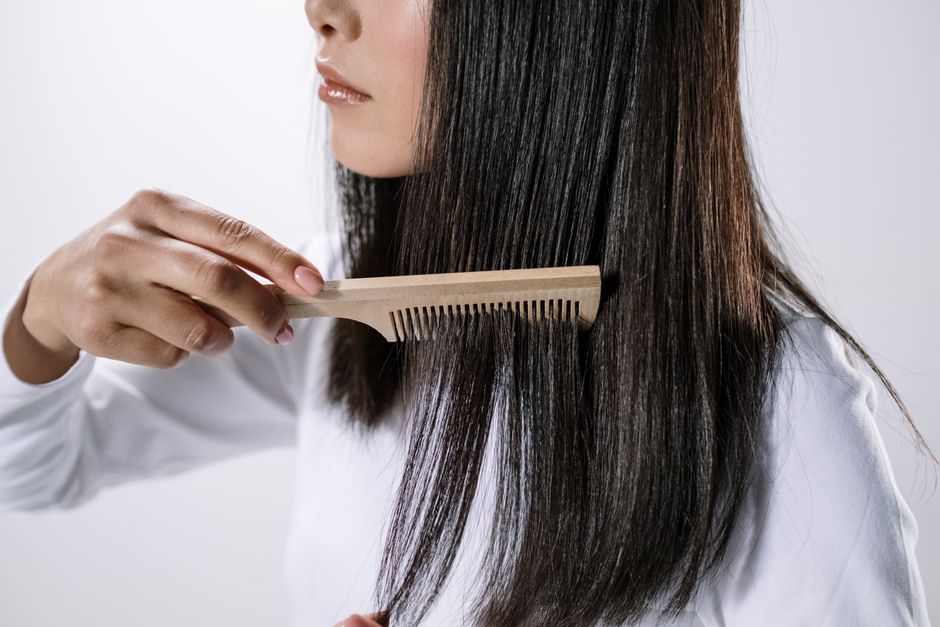
Stopping birth control can trigger a temporary increase in hair shedding, and for most women, this lasts about three to six months. The hair usually returns to its normal density within six to twelve months as your hormone levels settle. This condition, called telogen effluvium, is a reaction to a sudden hormonal shift, not a sign of permanent damage.
Why Does Hair Fall Out After Stopping Birth Control?
Every hair on your head follows a growth cycle. Most hairs are in the growing phase, called anagen, which lasts for years. A small percentage are in a resting phase, called telogen, before they shed and are replaced.
Birth control pills contain synthetic hormones that keep your natural hormone levels steady. When you stop, your body must readjust to producing its own estrogen and progesterone. This sudden change can push a large number of hair follicles into the resting phase at the same time.
About two to three months after this shift, those resting hairs begin to shed. That delay is why many women do not connect the hair loss to stopping the pill until weeks later. It is a normal physiological response, not a sign that something is wrong.
How Long Does Hair Loss Last After Stopping Birth Control?
The shedding phase typically lasts three to six months. During this time, you may notice more hair in your brush, in the shower drain, or on your pillow. It can feel alarming, but the process is self-limiting.
Once the shedding stops, the hair follicles re-enter the growing phase. Visible improvement in hair density usually becomes noticeable by the six-month mark. For most women, full recovery happens within twelve months of stopping the pill.
If you still see significant thinning after a year, the cause may be something other than the birth control change. At that point, a medical evaluation is appropriate.
How Much Hair Loss Is Normal?
It is normal to shed about 50 to 100 hairs per day. This is part of the natural cycle. With telogen effluvium, that number can rise to 300 or more hairs daily.
You might not notice the increase right away. Because the shedding is delayed by a few months, you may only realize it when you see clumps in the drain or a wider part in your hair.
The hair loss from stopping birth control is diffuse, meaning it happens evenly across the scalp rather than in patches. If you notice bald spots or a receding hairline, that points to a different condition, such as androgenetic alopecia or alopecia areata.



Does the Type of Birth Control Matter?
Yes, the type of pill you were taking influences how your body reacts when you stop. Combination pills contain both estrogen and progestin. Progestin-only pills, sometimes called the mini-pill, contain only progestin.
Combination pills provide a steady level of estrogen that supports hair growth. When you stop, the sudden drop in estrogen can trigger shedding. Women who take high-androgen index progestins may actually experience hair improvement after stopping, because those progestins can contribute to thinning while in use.
Other hormonal methods, such as the implant, the shot, or hormonal IUDs, can also cause post-discontinuation shedding. The mechanism is the same — a sudden change in your hormonal environment.
What Can You Do to Support Hair Recovery?
Your hair needs time and adequate nutrition to recover. There is no supplement that will instantly stop the shedding, but supporting your body during this period is reasonable.
Protein is essential for hair structure. Make sure you are getting enough from food sources like eggs, fish, beans, and lean meats. Iron deficiency can worsen hair loss, so if you have heavy menstrual periods, ask your doctor about checking your ferritin levels.
Biotin is often marketed for hair health, but the evidence for it is limited unless you have a true deficiency. Most people get enough biotin from their diet. Taking extra will not speed up the recovery of telogen effluvium.
Gentle hair care can reduce breakage while you wait. Avoid tight hairstyles, harsh chemical treatments, and high-heat styling. These do not cause the shedding, but they can make thin hair look worse.
When Should You See a Doctor?
If the shedding continues beyond six months without slowing, see a healthcare provider. Persistent hair loss may indicate an underlying issue unrelated to birth control.
Thyroid disease, iron deficiency anemia, and polycystic ovary syndrome can all cause hair thinning. Your doctor can run blood tests to check these conditions. They can also evaluate whether you have a pattern of hair loss that is genetic rather than hormonal.
Sudden patchy hair loss is not typical for post-birth-control shedding. If you see smooth, round bald spots, that may be alopecia areata, an autoimmune condition. This requires a different treatment approach.
No clinical guidelines currently exist for treating post-birth-control hair loss specifically. Most doctors recommend waiting for the hair cycle to normalize. In persistent cases, a dermatologist may consider treatments like minoxidil, but this is not standard for temporary shedding.
Does Hair Loss Come Back If You Restart the Pill?
For some women, restarting birth control can reduce the shedding. The synthetic hormones in the pill can again suppress your natural cycle and stop the telogen shift.
However, this is not a long-term solution for everyone. If you stopped the pill because of side effects or a desire to conceive, restarting may not be the right choice. The shedding will resolve on its own without restarting, just over a longer period.
If you are trying to conceive, know that the hair shedding is temporary and will not affect your pregnancy or your baby. Your hair density should improve during pregnancy itself, as higher estrogen levels prolong the growing phase.
Is There Anything That Makes It Worse?
Stress can prolong or intensify telogen effluvium. The physical stress of a hormonal shift is already triggering shedding. Adding significant emotional stress, illness, or rapid weight loss can extend the timeline.
Crash dieting is a common culprit. Severe calorie restriction deprives hair follicles of the nutrients they need. If you are already shedding from the birth control stop, an aggressive diet can make it worse.
Some research suggests that low vitamin D levels are associated with hair thinning. A blood test can tell you if you are deficient. If you are, correcting it may help, but there is no evidence that extra vitamin D prevents post-birth-control shedding in women with normal levels.
What Should You Expect Month by Month?
During the first two months after stopping, you likely will not notice any change. Your hormone levels are adjusting, but the hair cycle has not yet responded.
Around month three, shedding typically increases. This is when most women notice the change. The heavy shedding can last for several weeks.
By month six, the shedding usually slows noticeably. You may see baby hairs at your hairline as new growth begins. Full density may take until month twelve to return.
This timeline is a general pattern, not a guarantee. Some women shed for only a few weeks. Others experience shedding for closer to six months. Both are within the normal range.
Can You Prevent Post-Birth-Control Hair Loss?
There is no proven way to completely prevent telogen effluvium after stopping hormonal birth control. The shedding is a physiological response to a hormone change, and it will happen regardless of what you do.
What you can do is ensure your body is in good condition before and during the transition. Eat a balanced diet, manage stress, and treat any underlying health conditions. This will not stop the shedding, but it may help your hair recover more efficiently.
Some women choose to taper off the pill by alternating doses, but there is no evidence this reduces hair loss. The body still experiences a hormonal shift either way. Speak with your prescribing clinician about the best way to stop based on your specific pill and health history.
Frequently Asked Questions
Can stopping birth control cause permanent hair loss?
No, hair loss from stopping birth control is temporary. It is a form of telogen effluvium, and hair density typically returns within twelve months.
How long after stopping the pill does hair loss start?
Shedding usually begins two to three months after stopping. This delay is the time it takes for resting hair follicles to complete their cycle and fall out.
Does biotin help with hair loss after stopping birth control?
Biotin only helps if you have a true deficiency, which is rare. Most women do not need biotin supplements for post-birth-control shedding.
When should I worry about hair loss after stopping birth control?
See a doctor if shedding continues beyond six months or if you notice patchy bald spots. These may indicate a different condition that needs evaluation.
