
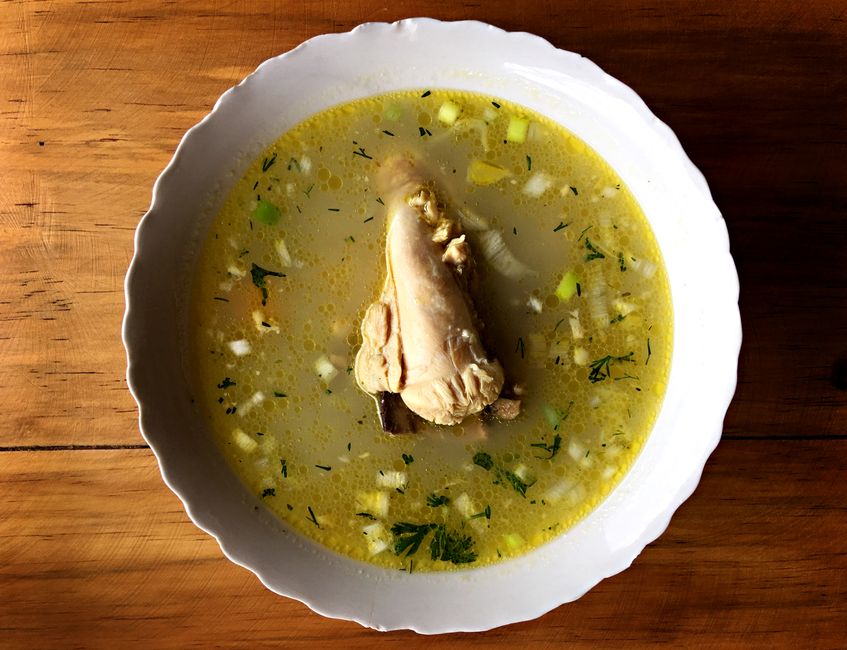
Homemade chicken soup keeps for about 3 to 4 days in the refrigerator when stored at 40°F (4°C) or colder. Store-bought soup follows the same timeline once you open the container. If you need it to last longer, freeze it within that window — soup can stay safe in the freezer for 2 to 3 months.
Those numbers come from USDA food safety guidance, and they apply to soup with meat, vegetables, and broth. The clock starts the day you cook it, not the day you get around to putting it away.
How Long Does Chicken Soup Last In Fridge?
Three to four days is the standard answer, and it holds for both homemade and store-bought soup.
The USDA’s Food Safety and Inspection Service sets this window for cooked poultry and most cooked dishes. Bacteria that cause foodborne illness do not change how food looks, smells, or tastes. A soup that seems fine on day five may not be fine. That is why the guidance is based on time, not appearance.
Refrigeration slows bacterial growth. It does not stop it. Below 40°F, most harmful bacteria multiply much more slowly, which buys you a few days but not a few weeks.
Store-bought soup has one wrinkle. An unopened, shelf-stable carton or can may carry a “best by” date months out. That date applies to the sealed product. Once you open it, the 3-to-4-day rule takes over.
Does Homemade Soup Last Longer Than Store-Bought?
No. Once opened or cooked, both last about the same amount of time.
People often assume homemade soup spoils faster because it lacks preservatives. That is not the main issue. The real variables are how quickly the soup cools, how it is stored, and how clean the containers and utensils are.
One thing that does matter: how fast you chill a big pot. A large pot of hot soup left on the stove can sit in the temperature range where bacteria multiply fastest for hours. The USDA calls this the “danger zone” — between 40°F and 140°F. The guidance is to refrigerate perishable food within 2 hours of cooking, or 1 hour if the room or outdoor temperature is above 90°F.
So the practical difference between homemade and store-bought is not the recipe. It is whether the soup spends too long cooling on the counter.
How Do You Store Chicken Soup Safely?
The single most useful step is dividing the soup into shallow containers so it cools fast.
A deep pot of soup can take many hours to drop below 40°F in the fridge, and during that time the center stays warm. Shallow containers, wide bowls, or splitting the batch into several smaller portions speeds cooling considerably.
- Refrigerate within 2 hours of cooking (1 hour if it is above 90°F where you are).
- Use shallow containers or portion the soup into smaller amounts.
- Leave the lid slightly off until the soup stops steaming, then cover.
- Keep the fridge at 40°F or below. A fridge thermometer removes the guesswork.
- Store in clean containers with tight lids.
If you are cooling a very large batch, you can set the pot in an ice bath and stir. This drops the temperature quickly and gets it into the fridge sooner.





Can You Reheat Chicken Soup More Than Once?
Reheat only the portion you plan to eat, and reheat it until it is steaming hot all the way through.
Every time soup moves between cold and hot, it passes through the temperature range where bacteria grow fastest. Reheating the whole pot, eating some, and putting the rest back means the entire batch makes that trip again. Ladling out a single bowl and heating that avoids the problem.
The USDA recommends reheating leftovers to 165°F, measured with a food thermometer. Soup should come to a rolling boil or be visibly steaming throughout, not just warm at the edges.
You can reheat a portion more than once in principle, but each cycle adds risk. If you find yourself reheating the same container repeatedly, the simpler fix is to freeze it in single servings.
Can You Freeze Chicken Soup, and For How Long?
Yes, and freezing is the best way to extend the life of soup you will not finish in a few days.
Freeze soup within the 3-to-4-day refrigerator window, not after. Freezing does not reliably kill bacteria — it pauses their growth. So soup that is already past its safe refrigerated life does not become safe again in the freezer.
For quality, the USDA suggests using frozen soup within 2 to 3 months. It stays safe beyond that, but flavor and texture decline. Soups with dairy, cream, or pasta tend to change texture more than broth-based soups.
A few practical points:
- Cool the soup completely before freezing.
- Leave headroom in the container — liquid expands as it freezes.
- Label with the date so you are not guessing later.
- Thaw in the refrigerator, not on the counter.
How Can You Tell If Chicken Soup Has Gone Bad?
You cannot rely on smell or taste to judge safety, because harmful bacteria often leave no trace.
That said, some signs do point to spoilage: a sour or off odor, a cloudy or ropy texture, visible mold, or a slick film on the surface. Any of these means throw it out. But the absence of these signs does not mean the soup is safe.
This is the part people get wrong. “It smelled fine” is not evidence of safety. The 3-to-4-day rule exists precisely because spoiled-looking and unsafe are not the same thing.
When in doubt, throw it out. That guidance is not cautious hand-waving — it reflects the fact that you have no reliable way to test for pathogens at home.
Does the Type of Soup Change the Timeline?
Not much. The 3-to-4-day window applies across most chicken soups.
Broth-based soups and cream-based soups both fall under the same cooked-food guidance. Ingredients like rice, noodles, or dairy may affect texture as they sit, but they do not extend the safe storage time. If anything, adding cooked rice or pasta to soup that will be stored can make it gummy, so many cooks add those fresh when serving.
What matters more than the recipe is temperature control — how fast the soup cooled, how cold the fridge stays, and how clean the storage was.
What About Soup Left Out Overnight?
Throw it out. Soup left at room temperature for more than 2 hours is not safe to eat, even if you reheat it.
Reheating can kill many bacteria, but some bacteria produce heat-stable toxins that cooking does not destroy. That is why the 2-hour rule is about prevention, not about fixing a mistake after the fact.
This is a common point of confusion. People reason that boiling will make it safe again. For certain toxins, it will not.
Frequently Asked Questions
How long does chicken soup last in the fridge?
About 3 to 4 days when kept at 40°F or below, per USDA guidance. The count starts from the day you cooked it or opened the container.
Can you eat chicken soup after 5 days in the fridge?
No. The safe window is 3 to 4 days, and soup that looks and smells fine at day five may still carry harmful bacteria.
Can you freeze chicken soup after 4 days in the fridge?
No. Freeze it within the 3-to-4-day window, because freezing pauses bacterial growth rather than reversing it.
How long can chicken soup sit out before it is unsafe?
No more than 2 hours at room temperature, or 1 hour if the temperature is above 90°F. After that, throw it out rather than reheating it.
