
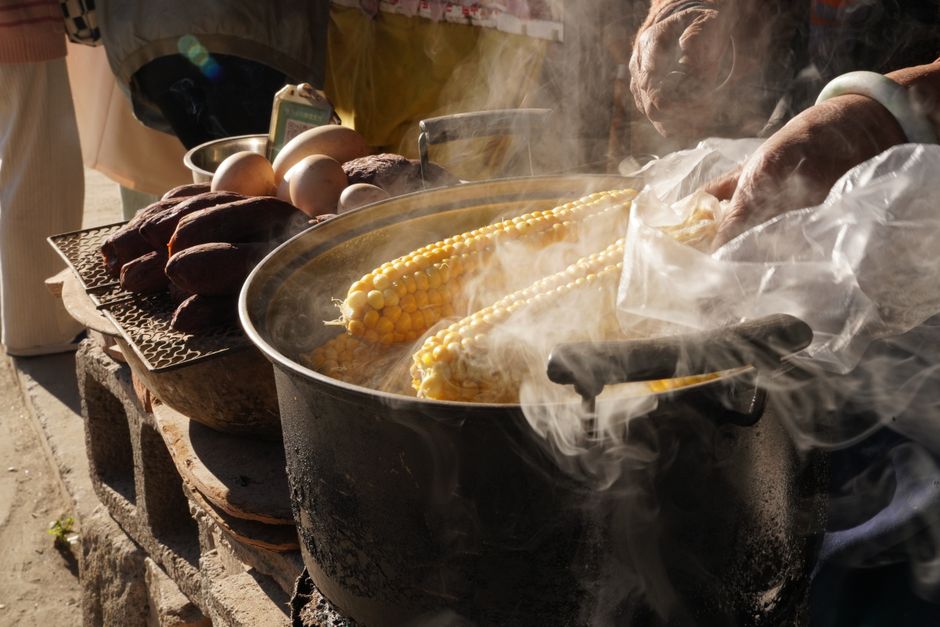
Boiling corn on the cob is one of the fastest ways to get fresh summer corn on the table. The sweet spot for most people is 4 to 6 minutes in boiling water. For the tenderest, sweetest kernels, drop the shucked cobs into a large pot of rapidly boiling water and cook them for exactly 4 minutes if you like a little crunch, or up to 6 minutes if you prefer softer kernels. Overcooking is the most common mistake — it turns the kernels mushy and dulls the sweet flavor.
How Long Do You Boil A Cob Of Corn? Timeline Guide
The short answer is 4 to 6 minutes for fresh corn. The exact time depends on how soft you want the kernels and how fresh the corn is. Corn picked that morning will cook faster than corn that has sat in the fridge for a few days.
Here is a simple timeline to follow:
- 3 to 4 minutes: Crisp, snappy kernels with a noticeable bite. This is ideal if you plan to slather the corn with butter and eat it right away.
- 5 to 6 minutes: Tender, fully cooked kernels that are soft but not mushy. This is the most common preference.
- 7 minutes or more: Soft, very tender kernels. Beyond 8 minutes, the corn starts to lose sweetness and the texture turns pasty.
If you are cooking frozen corn on the cob, add 2 to 3 minutes to these times. Frozen cobs need about 6 to 8 minutes in boiling water to heat through completely.
Does Adding Salt to the Water Matter?
Salt in the boiling water is a matter of personal taste, but it does affect the texture. Salt can toughen the skins of the kernels, making them slightly chewier. Many cooks prefer to boil corn in unsalted water and add salt after cooking, right with the butter.
If you want seasoned corn, add salt after cooking rather than to the pot. The kernels absorb very little of the salty water anyway. The outer skin acts as a barrier, so salting the water mostly seasons the outside of the cob, not the kernels themselves.
A common trick is to add a little sugar to the boiling water instead of salt. This does not make the corn sweeter in any meaningful way — the sugar in the water does not penetrate the kernels. The natural sweetness of the corn is locked in by the heat of the water, not by anything you add to it.
Should You Boil Corn with the Husks On or Off?
Shuck the corn before boiling. Remove the husks and the silk completely. Boiling corn with the husks on takes longer and makes the corn harder to handle when it is hot. The husks also trap water, which can make the corn waterlogged.
If you want to keep the corn moist and flavorful, grilling or roasting with the husks on is a better method. For boiling, shucked corn is the standard approach. It cooks faster, is easier to season, and is simpler to eat.
Some people boil corn with a few of the inner husks left on to add a subtle grassy flavor. This works, but it adds a minute or two to the cooking time and makes the corn harder to eat. For most home cooks, fully shucked corn is the better choice.




What Is the Best Way to Tell When Corn Is Done?
The color and texture of the kernels are the best indicators. A cooked kernel turns from a pale, milky yellow to a deeper, brighter yellow. The kernel plumps up and looks glossy. When you pierce a kernel with a fork or a knife, it should be tender but still hold its shape.
Another test is to pull a kernel off the cob and taste it. This is the most reliable method. If the kernel is crisp and slightly starchy, it needs more time. If it is tender and sweet, it is done.
Do not rely on the water returning to a boil as your signal. The water will come back to a boil quickly, but the corn may not be cooked through yet. Use a timer and test a kernel near the end of the cooking time.
How Long Do You Boil Corn for Different Recipes?
The cooking time changes depending on what you plan to do with the corn after boiling.
- Eating right off the cob: 4 to 6 minutes. This gives you the best balance of tenderness and flavor.
- Cutting kernels off for salads or salsas: 3 to 4 minutes. Shorter cooking keeps the kernels firm enough to hold their shape when mixed with other ingredients.
- Freezing cooked corn: 5 to 6 minutes. Slightly softer kernels freeze better and reheat without becoming tough.
- Reheating leftover corn: 1 to 2 minutes. Leftover corn is already cooked. Just warm it through in boiling water or in the microwave.
If you are making a corn chowder or a soup where the corn will cook further in the liquid, boil it for only 2 to 3 minutes first. The corn will finish cooking in the soup.
Does Boiling Time Affect Nutrition?
Boiling corn causes some water-soluble nutrients, like vitamin C and several B vitamins, to leach into the cooking water. The longer you boil, the more of these nutrients are lost. This is true for most boiled vegetables, not just corn.
The loss is modest. A 4-minute boil retains most of the nutritional value of the corn. A 10-minute boil loses a bit more, but the corn is still a healthy food. If you want to maximize nutrient retention, steam the corn instead of boiling it. Steaming uses no water bath, so fewer nutrients are lost.
Corn is a good source of fiber, thiamine, and folate. It also contains lutein and zeaxanthin, two antioxidants that are important for eye health. These compounds are fat-soluble, so they are not lost in the cooking water. Boiling does not significantly reduce the fiber or antioxidant content of corn.
What Are the Most Common Mistakes When Boiling Corn?
The biggest mistake is overcooking. Corn that boils for 15 or 20 minutes becomes mushy, waterlogged, and loses its sweetness. The natural sugars in corn begin to break down with prolonged heat, so the corn tastes starchy instead of sweet.
Another common mistake is boiling corn in a pot that is too small. The cobs need room to move in the water. If they are crowded, the water temperature drops and the corn cooks unevenly. Use a large pot and add the cobs in batches if needed.
Starting with cold water is also a mistake. Always bring the water to a rolling boil before adding the corn. Adding corn to cold water and bringing it to a boil together overcooks the outside of the corn before the inside is done.
Finally, do not add the corn to the pot and walk away without setting a timer. Four to six minutes is a short window. A timer keeps you from guessing.
Is It Better to Boil, Steam, or Grill Corn?
Boiling is the fastest and most consistent method. It is also the easiest to control. Steaming takes a few minutes longer but preserves slightly more nutrients. Grilling adds a smoky flavor but requires more attention and takes about 10 to 15 minutes.
Microwaving is another option. You can microwave corn on the cob in the husk for about 3 to 4 minutes per ear. This method steams the corn from the inside and preserves flavor well. The husk traps steam and keeps the kernels moist.
For most people, boiling is the best balance of speed, ease, and flavor. If you want a charred, smoky taste, grilling is worth the extra time. If you are cooking a single ear, the microwave is the most convenient choice.
How to Keep Boiled Corn Warm for a Crowd
If you are serving corn to a large group, you can boil the cobs ahead of time and keep them warm. After boiling, transfer the corn to a covered dish or wrap it in a clean kitchen towel. The corn will stay warm for about 15 to 20 minutes.
For longer holding, keep the corn in a pot of warm water set on low heat. Do not let the water simmer or boil. Just keep it warm enough to hold the corn at serving temperature. Corn held this way for more than 30 minutes will start to soften and lose flavor.
Another option is to boil the corn, cut the kernels off the cobs, and keep them in a covered bowl set over a pot of simmering water. This works well for buffets and potlucks where people serve themselves.
Frequently Asked Questions
Do you boil corn on the cob with the husk on or off?
Remove the husks and silk before boiling. Shucked corn cooks faster and is easier to handle and eat.
How long do you boil frozen corn on the cob?
Frozen cobs need about 6 to 8 minutes in boiling water. Add 2 to 3 minutes to the fresh corn cooking time.
Can you boil corn on the cob too long?
Yes. Boiling for more than 8 minutes makes the kernels mushy, waterlogged, and less sweet.
Do you salt the water when boiling corn?
Salt can toughen the kernel skins. Most cooks prefer to salt the corn after cooking instead of salting the water.
