
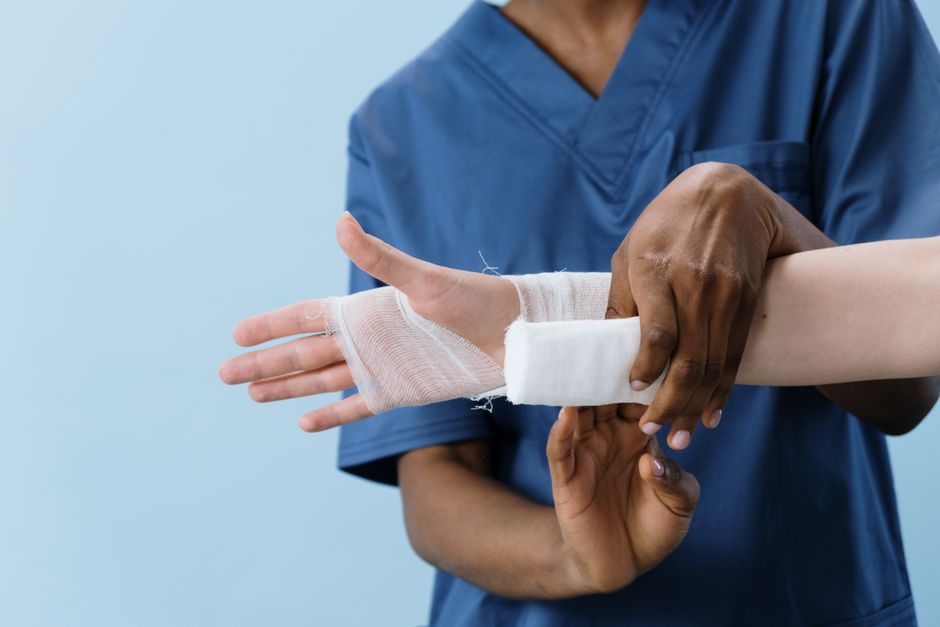
Hand injuries heal on wildly different timelines depending on what you damaged. A simple cut or bruise may settle in a few days, a sprained finger can take a few weeks, a broken bone usually needs 4 to 6 weeks to knit, and a tendon, nerve, or ligament injury can take months — sometimes with lasting changes that never fully reverse.
There is no single healing time for “a hand injury” because the hand is a dense package of bone, tendon, ligament, nerve, blood vessel, and skin. Each of those tissues heals at its own speed. Below is what the evidence actually shows about healing timelines, what treatment helps, and where the honest uncertainty lies.
How Long Do Hand Injuries Take To Heal?
The tissue that is injured sets the clock. Skin and soft tissue heal fastest, bone is in the middle, and tendons, ligaments, and nerves are the slowest because they have limited blood supply and heal through scar tissue rather than true regeneration.
A useful general guide:
- Skin cuts and scrapes: surface healing in several days; deeper cuts and surgical incisions typically close over 1 to 2 weeks.
- Bruises and minor crush injuries: discoloration and soreness usually ease within 1 to 2 weeks.
- Sprains and strains: mild ones often improve over 1 to 3 weeks; more significant ligament injuries take longer.
- Broken bones (fractures): early healing in about 4 to 6 weeks, but full strength and function often take several months, and hand fractures can need longer.
- Tendon injuries: repaired tendons are typically protected and then gradually loaded over roughly 8 to 12 weeks, with strength and function continuing to improve for months.
- Nerve injuries: nerves regrow slowly, on the order of about an inch per month, so recovery can stretch over many months and may be incomplete.
These are general patterns from clinical practice, not guarantees. Age, overall health, smoking, diabetes, the location and severity of the injury, and whether it was treated promptly all shift the timeline. A young, healthy non-smoker with a clean cut will usually heal faster than an older person with diabetes and a crush injury.
Why Do Different Hand Injuries Heal at Different Speeds?
Healing speed tracks blood supply and tissue type. Tissue with rich blood flow repairs faster and more reliably than tissue with poor blood flow.
Skin heals quickly because it is well supplied with blood and can rebuild itself. Bone has good blood supply too, and fractures heal by forming new bone across the break — a process that is reliable but takes weeks.
Tendons and ligaments are the problem. They have relatively poor blood supply, and when they heal they form scar tissue rather than restoring the original organized fibers. That scar tissue is weaker and less elastic, which is why a repaired tendon can take months to regain strength and why full recovery is not always achieved.
Nerves are the slowest. When a nerve is cut, the part beyond the injury must regrow from the injury site toward its target. That regrowth is genuinely slow — commonly described as roughly an inch per month — and the longer the distance, the longer the wait. Even then, regrowth does not always restore normal sensation or function.
One non-obvious point: how fast a wound looks healed and how fast it works again are different things. A cut can look closed in a week while the tissue underneath is still weak. This gap is why doctors restrict activity after certain hand injuries even when the surface looks fine.
What Are the Treatment Options for Common Hand Injuries?
Treatment depends entirely on what is injured, so the first step is almost always an accurate diagnosis — often with an X-ray to rule out fracture. Treating a fracture as a sprain, or a tendon injury as a bruise, is one of the most common ways hand injuries go wrong.
Cuts, scrapes, and bruises
Minor wounds are cleaned, and pressure is applied to stop bleeding. Deeper cuts may need stitches or skin glue. Bruises and minor crush injuries are generally managed with rest, ice, compression, and elevation in the early period, though the evidence for icing is more about comfort than proven faster healing.
Sprains and strains
Mild ligament and muscle injuries are usually treated with relative rest, splinting or taping for support, and gradual return to movement. Prolonged complete immobilization is generally avoided because it can stiffen the hand. Hand therapy to restore motion and strength is common and often important.
Fractures
Many hand fractures are treated with a splint or cast to hold the bone still while it heals. Some fractures are unstable or misaligned and need surgery with pins, screws, or plates. Whether surgery is needed depends on which bone, how displaced it is, and whether the joint surface is involved.
Tendon injuries
Many tendon injuries, especially cuts that sever a tendon, require surgical repair. After repair, the tendon is protected and then gradually moved under a structured rehabilitation program. This is a delicate balance: too little movement causes the tendon to stick to surrounding tissue, and too much can rupture the repair. Hand therapy guidance matters here.
Nerve injuries
Some nerve injuries recover on their own as the nerve regrows. Others need surgical repair. Recovery is slow and often incomplete, and this is one area where honest expectations matter — full return of normal sensation and strength is not guaranteed.





When Should You See a Doctor for a Hand Injury?
Some hand injuries are clearly emergencies, and delay can cost function permanently. Seek prompt medical care if any of these apply:
- You cannot move a finger or thumb, or a finger is bent at an odd angle.
- There is numbness, tingling, or loss of feeling that does not go away.
- You have a deep cut, or bleeding will not stop with pressure.
- You cannot make a fist or grip, or the hand looks deformed.
- There is severe pain, rapid swelling, or signs of infection — increasing redness, warmth, pus, or fever.
- The injury involved a puncture wound, a bite, or a dirty object.
Certain injuries are easy to underestimate. A small cut on the palm can sever a tendon or nerve even when it looks minor. A “jammed” finger can be a fracture. A bite wound can introduce infection deep into a joint or tendon sheath. When in doubt, getting it checked is the safer choice.
What Slows Down Hand Injury Healing?
Several factors reliably delay healing, and some are within your control.
Smoking is one of the most consistent. Nicotine narrows blood vessels and carbon monoxide reduces oxygen delivery, both of which slow tissue repair and increase complications after surgery. Diabetes, especially with poor blood sugar control, impairs healing and raises infection risk. Age slows healing somewhat, though healthy older adults still heal well. Poor nutrition, certain medications such as corticosteroids, and infection all work against recovery.
Getting the wrong initial treatment also delays healing. A fracture that is not immobilized, a tendon injury that is not repaired, or a wound that is not properly cleaned can all lead to worse outcomes than the injury itself would have caused.
How Can You Support Recovery After a Hand Injury?
Follow the specific plan your clinician gives you, because hand injuries are one area where generic advice can be actively wrong. Beyond that, a few things support healing in general.
Keep the injured area protected as instructed, and do not rush back to heavy use before you are cleared. Attend hand therapy if it is recommended — for many hand injuries, structured rehabilitation is what restores function, not the initial treatment alone. Avoid smoking, keep blood sugar controlled if you have diabetes, and eat adequately, since healing requires protein and calories.
Watch for signs of infection or a repair that has failed, such as sudden loss of movement, new numbness, or a pop followed by weakness. Report these promptly rather than waiting for a scheduled visit.
What Is the Bottom Line on Hand Injury Healing?
Hand injuries do not heal on one timeline. Skin and bruises recover in days to a couple of weeks, fractures typically take 4 to 6 weeks to knit and longer to fully strengthen, and tendon, ligament, and nerve injuries can take months with recovery that is sometimes incomplete.
The single most important factor in how well and how fast you heal is getting the right diagnosis and treatment early. If a hand injury involves loss of movement, numbness, a deep wound, or a suspected fracture, treat it as urgent rather than waiting to see if it improves.
Frequently Asked Questions
How long does a broken hand bone take to heal?
A hand fracture usually begins to knit in about 4 to 6 weeks, but full strength and function often take several months. Some fractures need surgery, which can change the timeline.
Can a hand injury heal on its own without treatment?
Minor cuts, bruises, and mild sprains often heal without specific treatment. But fractures, tendon injuries, and nerve injuries generally need medical care, and delaying treatment can cause permanent loss of function.
How long does a sprained finger or hand take to heal?
A mild sprain often improves over 1 to 3 weeks, while more significant ligament injuries take longer. If you cannot move the finger normally or have lasting pain, it should be evaluated.
What makes a hand injury heal more slowly?
Smoking, poorly controlled diabetes, older age, poor nutrition, infection, and certain medications such as corticosteroids all slow healing. Getting the wrong initial treatment also delays recovery.
