
What Happens During Wrist Fracture Healing
Your body starts repairing a fracture immediately. Blood collects around the break and forms a clot. Within days, that clot becomes soft cartilage callus. Over the next several weeks, that callus hardens into new bone.
This process does not happen overnight. The bone needs stability to heal straight. That is why a cast or splint is required. If the bone moves while healing, the repair is delayed or the bone heals in the wrong position.
The wrist contains several bones, but two are most often fractured. The radius is the large bone on the thumb side of the forearm. The scaphoid is a small bone near the base of the thumb. Scaphoid fractures are notorious for healing slowly because that bone has a poor blood supply.
How Long Do Fractured Wrist Take To Heal by Type
Not all wrist fractures heal at the same speed. The location and pattern of the break change the timeline.
Non-displaced fractures — where the bone cracks but stays in alignment — usually heal in about 6 weeks. These are treated with a cast.
Displaced fractures — where the bone ends have shifted apart — often require surgery to realign the bone with plates or pins. Surgery does not speed up bone healing. It simply holds the bone in place so healing can happen correctly. These fractures still take 6 to 8 weeks to form solid bone.
Scaphoid fractures are different. Because of the limited blood supply, healing often takes 8 to 12 weeks. Some scaphoid fractures take even longer, especially if the blood supply was damaged. Your doctor may keep you in a cast longer to be safe.
Open fractures — where the bone pierces the skin — carry a higher risk of infection and slower healing. These require urgent surgery and a longer recovery period.
Cast Removal Is Not the End of Recovery
The 6 to 8 week mark is when the bone is stable enough to remove the cast. It is not when the wrist feels normal again.
After weeks in a cast, the wrist joint stiffens. The muscles in the forearm weaken. The skin may be dry and flaky. This is expected.
Once the cast comes off, most people need physical therapy or a home exercise program to regain motion and strength. Without guided movement, stiffness can become permanent.
Range of motion often returns within a few weeks of starting exercises. Strength takes longer. Regaining full grip strength and wrist power commonly takes 3 to 6 months from the date of injury. For older adults or people with more severe fractures, it can take up to a year to reach maximum recovery.





Factors That Slow Down Wrist Healing
Several factors directly affect how quickly a wrist fracture heals. Some are within your control. Some are not.
Age is a major factor. Children heal faster than adults because their bones are still growing and their blood supply is more active. A child’s wrist fracture may heal in 4 to 6 weeks. Older adults heal more slowly, and osteoporosis makes the bone weaker to begin with.
Smoking significantly delays bone healing. Nicotine constricts blood vessels, reducing the oxygen and nutrients that reach the fracture site. Smokers have higher rates of non-union — where the bone simply fails to heal together. If you smoke, stopping during recovery is one of the most effective things you can do.
Nutrition matters. Bone healing requires adequate protein, calcium, and vitamin D. Most people get enough from a normal diet. Your doctor may recommend a supplement if your levels are low, but routine supplements are not proven to speed healing in well-nourished people.
Diabetes and other chronic conditions can slow bone repair. Poorly controlled blood sugar impairs the healing process at a cellular level.
Severity of the break matters most. A clean crack heals faster than a shattered bone with multiple fragments.
Signs the Wrist Is Healing Normally
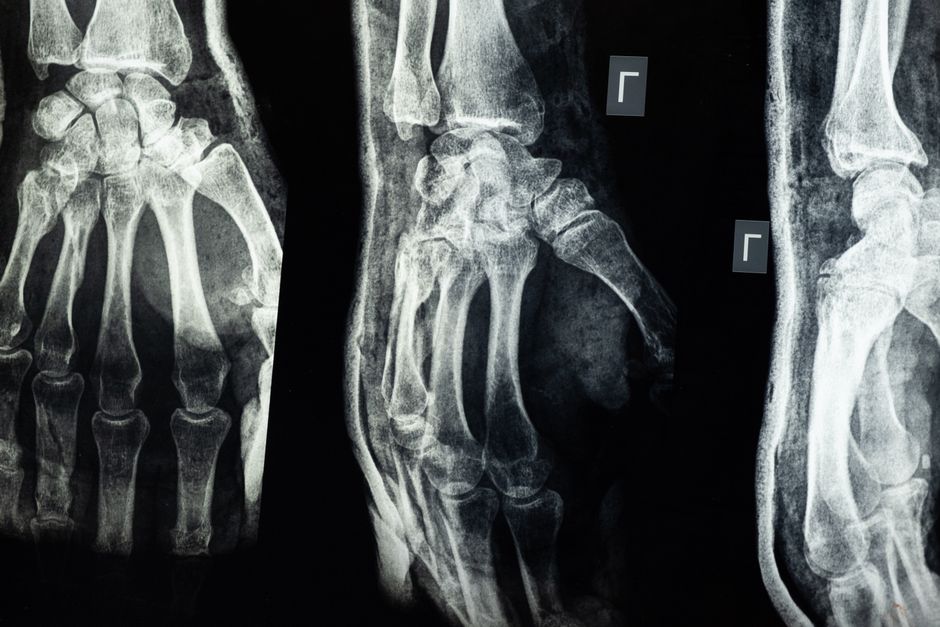
Your doctor will track healing with X-rays. At your follow-up visits, the X-ray will show new bone forming across the fracture line.
You will also notice practical signs. Pain gradually decreases. Swelling goes down. You can move your fingers more freely. By the time the cast comes off, the sharp pain at the fracture site should be mostly gone.
Some discomfort during healing is normal. But certain symptoms are not.
When to Call Your Doctor
Call your doctor immediately if you experience any of these during recovery:
- Pain that gets significantly worse instead of better
- Numbness or tingling in your fingers that does not go away
- Fingers that turn blue, pale, or cold
- A cast that feels too tight or causes burning pain
- Fever, which can signal infection
These symptoms can indicate compartment syndrome, nerve compression, or infection. These are emergencies. Do not wait for a scheduled appointment.
If the bone is not healing on schedule, your doctor will discuss options. These may include bone stimulation devices, which use low-level ultrasound or electromagnetic fields to encourage bone growth. Evidence for these devices is mixed, but some doctors recommend them for slow-healing fractures.
Tips for a Smoother Wrist Recovery
While the cast is on, keep your fingers moving. Gently bend and straighten them several times a day. This maintains tendon function and reduces stiffness.
Keep the cast dry. Moisture under a cast can cause skin breakdown and infection.
Elevate your wrist above heart level for the first few days to reduce swelling. This is especially important in the first 48 hours after injury.
After the cast is removed, follow your exercise plan consistently. Do not push through sharp pain, but do expect some discomfort as you stretch stiff tissues.
Avoid heavy lifting or impact activities until your doctor confirms the bone is solid. Returning to full activity too early increases the risk of re-fracture.
When Can You Return to Work and Sports
Returning to work depends on your job. Desk workers can often return within days of surgery or casting, using their non-dominant hand for typing. People with physically demanding jobs — construction, manufacturing, heavy lifting — may need 3 to 6 months before returning to full duty.
Returning to sports follows a similar pattern. Low-impact activities like swimming or stationary cycling can begin once the cast is off. Contact sports and activities with fall risk, like skiing or skateboarding, should wait until the wrist has full strength and the doctor confirms bone healing on X-ray. This is usually at least 3 months after injury, sometimes longer.
Does Surgery Change the Healing Time
Surgery does not shorten the time it takes for bone to heal. What surgery does is hold the bone in perfect alignment so healing can proceed without complications.
People who have surgery often regain motion faster after the cast comes off because they may not need a full cast. Some surgical patients wear only a splint for a few weeks. That means less stiffness and a quicker start to physical therapy.
But the bone itself still needs the same 6 to 8 weeks to form solid union. The surgical incision adds its own recovery time. Incision pain and swelling typically resolve within a few weeks.
Long-Term Outlook After a Wrist Fracture
Most people recover fully from a wrist fracture. However, some long-term effects are common.
Wrist arthritis can develop years later, especially after fractures that involved the joint surface. This is more likely with severe breaks or fractures that did not heal in perfect alignment.
Some people notice permanent stiffness or a slight loss of grip strength compared to before the injury. This is more common in older adults and in fractures that required extensive surgery.
Post-traumatic arthritis is not preventable in all cases. The cartilage damage happens at the moment of injury.
If you develop persistent wrist pain, swelling, or weakness months after healing, see your doctor. Imaging can determine whether arthritis or malunion — healing in the wrong position — is the cause.
Frequently Asked Questions
How long do fractured wrist take to heal in adults?
Most adult wrist fractures take about 6 to 8 weeks to heal enough for cast removal. Full return of strength and motion usually takes 3 to 6 months.
Can a fractured wrist heal in 4 weeks?
Some minor fractures in children can heal in 4 weeks, but adult wrist fractures rarely heal that quickly. Most require at least 6 weeks of immobilization.
How long do you wear a cast for a fractured wrist?
Most adults wear a cast for 6 to 8 weeks. Scaphoid fractures often require longer casting, sometimes up to 12 weeks.
How long does wrist surgery take to heal?
The bone takes the same 6 to 8 weeks to heal whether surgery was done or not. The surgical incision itself usually heals within 2 weeks.
