
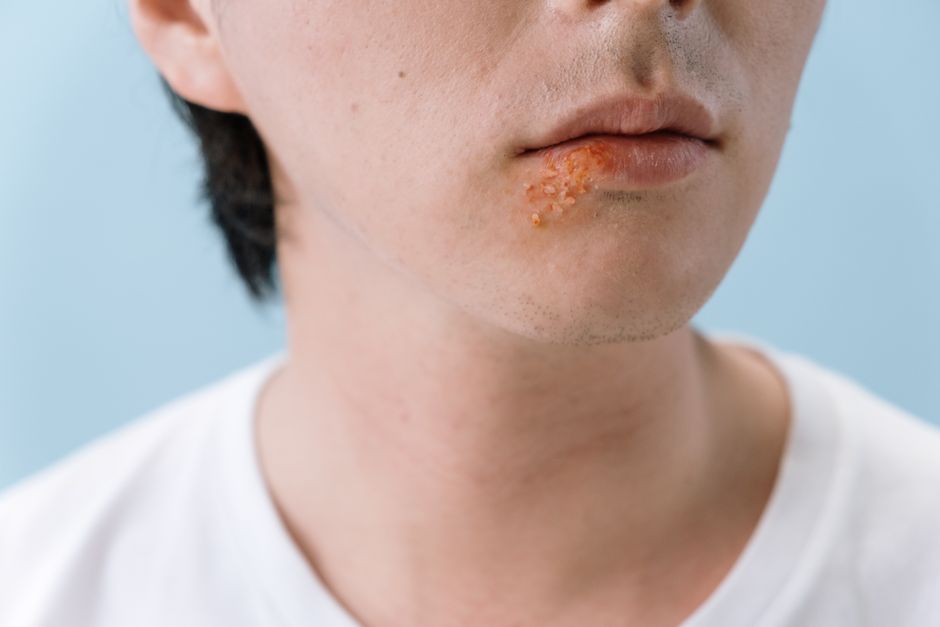
Cold sores follow a predictable pattern, and treatment can shorten it — but not as much as many people hope. With antiviral treatment started early, a cold sore usually heals in about 6 to 10 days. Without treatment, the same sore often lasts 10 to 14 days. The single biggest factor is not which cream you use. It is how fast you start treatment after the first tingle.
That timeline holds for most healthy adults. It can stretch longer in young children, people with weakened immune systems, and anyone who misses the early treatment window. Below is what actually happens during those days, what treatment can and cannot do, and when a cold sore stops being a minor nuisance and becomes something a doctor should see.
What Causes Cold Sores and Why They Keep Coming Back
Cold sores are caused by herpes simplex virus type 1, usually shortened to HSV-1. This is one of the most common viral infections in humans. Once it enters the body, it never leaves. It travels up a nerve and settles into a cluster of nerve cells, where it stays dormant for months or years at a time.
The virus reactivates when something disrupts the immune system’s ability to keep it quiet. Common triggers include:
- Fever or another infection
- Physical or emotional stress
- Sun exposure and wind
- Menstruation
- Skin injury or surgery near the mouth
- A weakened immune system
Not everyone who carries HSV-1 gets cold sores. Many people carry the virus with no symptoms at all. When sores do appear, they almost always show up in the same general spot, because the virus lives in the same nerve branch each time.
HSV-1 spreads mainly through direct skin-to-skin contact — kissing, sharing utensils, or touching a sore and then touching someone else. The virus can spread even when no sore is visible, though this is less common than spread during an active outbreak. This silent shedding is one reason cold sores are so widespread.
How Long Do Cold Sores Last With Treatment? The Real Timeline
The full course of a cold sore runs through five stages. Treatment changes how long each stage lasts, but it does not skip stages.
Stage 1: Tingling (Day 0 to Day 1)
This is the prodrome — the warning phase. You feel itching, burning, or a slight tingle at the spot where the sore will appear. No blister is visible yet. This is the most important window for treatment. Antiviral medication works best when the virus is still multiplying, before a visible blister forms.
Stage 2: Blistering (Day 1 to Day 3)
One or more small, fluid-filled blisters appear. They may be painful and sensitive to touch. The blisters often cluster together.
Stage 3: Weeping and Ulceration (Day 3 to Day 5)
The blisters break open and release fluid. This is the most contagious stage. The open sore is also the most uncomfortable. A crust begins to form at the edges.
Stage 4: Crusting (Day 5 to Day 8)
A yellow or brown crust covers the sore. The crust can crack and bleed, which is painful and can slow healing. Itching is common at this stage.
Stage 5: Healing (Day 8 to Day 10)
The crust dries, flakes off, and the skin underneath heals. A faint red or pink mark may remain for a few more days before fading completely.
With antiviral treatment started during the tingling stage, the total course typically shortens to about 6 to 10 days. Without treatment, it usually runs 10 to 14 days. The difference is real but modest — most people still deal with a visible sore for about a week even with treatment.
Does Treatment Actually Shorten a Cold Sore?
Yes, but the effect is smaller than most people expect. Antiviral medications can reduce how long an outbreak lasts and how severe it gets. They work by interfering with the virus’s ability to copy itself, which slows the spread of the infection within the skin.
The catch is timing. Antivirals produce the clearest benefit when started within the first 24 hours of symptoms — ideally during the tingling stage. Once a blister has fully formed, the medication can still help, but the benefit shrinks with every passing hour.
Two main approaches exist:
- Topical antivirals — creams applied directly to the sore. These are convenient and available over the counter, but they penetrate the skin poorly and tend to produce modest benefits.
- Oral antivirals — prescription pills that work throughout the body. These generally produce stronger effects than creams, especially when started early.
For people who get frequent or severe outbreaks, some clinicians prescribe antiviral medication to be taken at the first sign of a tingle, or even daily to prevent outbreaks. This is common clinical practice. Whether it is the right choice depends on how often outbreaks occur and how much they interfere with daily life.
One clarification worth making: cold sore creams sold at drugstores are not all the same. Some contain an antiviral. Others contain a drying agent, a numbing agent, or a moisturizer. These other ingredients may ease discomfort, but no evidence shows they shorten the outbreak itself.




What Helps a Cold Sore Heal Faster at Home
Beyond medication, a few practical steps support healing and reduce the chance of spreading the virus or irritating the sore.
- Keep the area clean and dry. Wash gently with mild soap and water.
- Avoid picking at the crust. This reopens the sore, invites bacteria, and can leave a scar.
- Apply a cool compress to ease pain and swelling.
- Use lip balm with sun protection on the lips and face to reduce sun-triggered outbreaks.
- Drink plenty of fluids and avoid very salty or acidic foods that sting open sores.
- Wash your hands often, especially after touching your face.
- Do not share cups, utensils, towels, or lip products during an outbreak.
Over-the-counter pain relievers can help with discomfort. Numbing gels containing a local anesthetic can also ease pain, though they do not speed healing.
Some people report that ice, lysine supplements, or other remedies help. The evidence for most of these is limited or mixed. Lysine, in particular, has been studied for decades with inconsistent results. Some studies suggest a possible benefit for prevention in certain people, but the findings are not strong enough to call it an established treatment. If you want to try it, it is worth mentioning to your doctor rather than replacing proven antiviral treatment with it.
When a Cold Sore Needs Medical Attention
Most cold sores heal on their own and do not need a doctor. Some situations are different.
See a healthcare provider if:
- The sore lasts longer than two weeks
- Sores are large, widespread, or unusually painful
- You have a weakened immune system from illness or medication
- Sores appear near the eyes, or you have eye pain, redness, or blurred vision
- You have frequent outbreaks — several per year
- You develop a fever or the sore looks infected (spreading redness, pus, or worsening pain)
Cold sores near the eye are a special concern. HSV can infect the eye and, in rare cases, cause serious damage if untreated. Any suspicion of eye involvement warrants prompt medical care.
Newborns and infants are another high-risk group. HSV infection in a newborn can be severe. If a baby develops blisters or sores around the mouth, or if a person with an active cold sore needs to care for a newborn, contact a doctor. Do not assume it is a minor issue in this age group.
How Long Are Cold Sores Contagious?
A cold sore is contagious from the first tingle until the sore has completely crusted over and healed. That covers the entire visible course — roughly 6 to 10 days with treatment, or 10 to 14 days without.
The weeping stage, when fluid is released from broken blisters, is the most contagious period. But the virus can spread at any stage while the sore is present. It can also spread in the absence of any visible sore, though this is less common.
The practical takeaway: avoid close contact with others during an outbreak, especially kissing and sharing items. This matters most around people with weakened immune systems and infants.
Frequently Asked Questions
How long do cold sores last with treatment?
With antiviral treatment started early, a cold sore usually heals in about 6 to 10 days. Without treatment, it typically lasts 10 to 14 days.
Does abreva really shorten a cold sore?
Topical antivirals can modestly shorten an outbreak when started at the first tingle. The benefit is smaller than most people expect, and timing matters more than the specific product.
Can a cold sore go away in 2 days?
No — a cold sore follows a set course through blistering, weeping, crusting, and healing that takes at least several days. No treatment currently skips these stages.
When is a cold sore no longer contagious?
A cold sore is contagious until it has fully crusted over and healed. That is roughly 6 to 10 days with treatment and 10 to 14 days without.
