
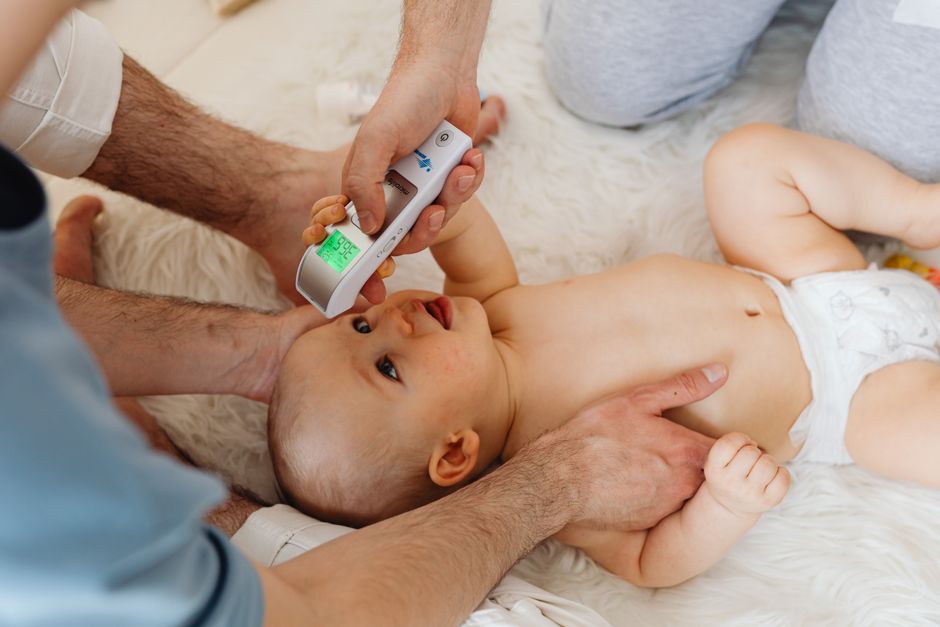
Newborns can usually fly within the first week or two of life, and there is no single federal rule in the United States that sets a minimum age for air travel. What matters most is your baby’s health, your pediatrician’s advice, and the airline’s own policy. Most healthy full-term infants are cleared for air travel once they are feeding well, gaining weight, and have no ongoing medical concerns. Premature babies and those with heart or lung conditions often need to wait longer.
When Can Infant Fly On Airplane? The Basic Timeline
There is no universal age at which a baby becomes “allowed” to fly. Airlines set their own rules, and those rules vary widely.
Some carriers accept infants as young as 2 days old. Others require a minimum of 7 days. A few international airlines ask for 14 days. Because policies differ, the practical answer is to check with your specific airline before booking.
From a medical standpoint, many pediatricians prefer that a healthy full-term newborn be at least a few weeks old before flying. This is not because flying is inherently dangerous for a newborn. It is because the first weeks are when serious health problems are most likely to appear, and being far from your usual medical care makes those situations harder to handle.
Two things drive the timeline more than any fixed number:
- How healthy and stable your baby is
- How mature your baby’s lungs and immune system are
A full-term baby who is feeding and growing well is in a very different position than a premature baby still working to breathe easily.
Why Premature Babies Need a Longer Wait
Premature infants generally need to wait longer before flying, and the reason is physiological rather than bureaucratic.
Preterm babies are more likely to have underdeveloped lungs and a higher risk of breathing problems. The lower oxygen levels in a pressurized cabin can be harder on lungs that are not fully mature. Some preterm infants also have apnea, in which breathing briefly stops, and this risk can persist for weeks or months after birth.
For these reasons, many clinicians recommend that premature babies be cleared by a doctor before any flight. Some hospitals and pediatricians advise waiting until the baby’s due date has passed, or longer if there are ongoing breathing or heart concerns. This is not a hard rule everywhere, but it reflects a real difference in risk.
If your baby was born early, the conversation with your pediatrician matters more than any general timeline. Ask specifically whether your baby needs supplemental oxygen or monitoring during the flight.
What About a Baby’s Ears During Takeoff and Landing?
Air pressure changes during takeoff and landing can be uncomfortable for babies, in the same way they can bother adults.
The cabin pressure shifts as the plane climbs and descends, and this creates a pressure difference between the inside and outside of the eardrum. For adults, swallowing or yawning equalizes this. Babies have smaller, narrower ear canals, which can make equalizing harder and the discomfort sharper.
Feeding during takeoff and landing is a common and reasonable approach. Sucking and swallowing help open the passage that equalizes pressure in the middle ear. Breastfeeding, bottle-feeding, or a pacifier can all serve this purpose.
One thing worth knowing: a baby with an active ear infection or a cold with significant congestion may have a harder time equalizing pressure and more discomfort. If your baby is clearly unwell, it is worth checking with a doctor before flying.





Is Flying Safe for a Healthy Baby?
For a healthy full-term infant, air travel is generally considered low risk. The main concerns are not the flight itself but the conditions around it.
Germs. A crowded cabin means recycled air and close contact with many people. A newborn’s immune system is still developing, which makes infections more likely and potentially more serious. This is one reason some doctors suggest avoiding unnecessary air travel in the first weeks, not because of the plane but because of the people on it.
Oxygen levels. Modern cabins are pressurized to a level roughly equivalent to an altitude of about 6,000 to 8,000 feet. Healthy babies handle this well. Babies with heart or lung conditions may not, which is why a medical clearance matters for them.
Dry air. Cabin air is dry, which can dry out a baby’s nose and throat. Offering fluids more often than usual can help.
The honest position: for a healthy baby, the flight is unlikely to cause harm. For a baby with medical issues, the risks are real and need a doctor’s input.
What Do Airlines Require for Infants?
Airline policies on infant age vary, and they can change. Always confirm directly with your airline before you book.
| Common airline requirement | Typical detail |
|---|---|
| Minimum age | Ranges from 2 days to 14 days, depending on the airline |
| Premature infants | Often require a doctor’s note or medical clearance |
| Lap infants | Usually under age 2, must be held by an adult |
| Documentation | Proof of age (birth certificate) may be requested |
| One adult, one lap infant | Standard on most carriers |
Some airlines also restrict how many lap infants can be on a single flight, and some require a separate seat for babies above a certain weight. These details are set by the airline, not by medical guidelines.
If you are flying internationally, additional rules may apply, including documentation for the baby. Check both the airline and the destination country’s requirements.
Lap Infant or Own Seat?
There is a genuine safety consideration here that is often overlooked.
The Federal Aviation Administration recommends that infants travel in an approved child restraint system, meaning their own seat, rather than being held on a lap. This is because a lap infant cannot be safely secured during sudden turbulence or an emergency. The FAA allows lap travel but encourages a separate seat for safety.
In practice, many families use a lap infant ticket because it costs less. If you choose this, know that holding your baby tightly is not the same as a seatbelt. Some airlines offer discounted fares for infants in their own seat, and a car seat approved for aircraft use can be brought on board.
This is a case where the safest option and the most common option are not the same thing.
Practical Steps Before You Fly With a Newborn
A little planning makes a real difference. Here is what tends to matter most.
- Talk to your pediatrician first, especially if your baby was premature or has any health condition.
- Confirm your airline’s minimum age and documentation rules in writing.
- Feed during takeoff and landing to help with ear pressure.
- Bring more diapers, formula, or expressed milk than you think you need.
- Wipe down surfaces and keep your baby close to reduce germ exposure.
- Consider a direct flight when possible to shorten travel time.
If your baby is unwell on the day of the flight, it is reasonable to reconsider. A congested or feverish baby may be more uncomfortable and more vulnerable to complications.
When to Delay the Trip
Sometimes waiting is the right call. Consider postponing if your baby:
- Was born prematurely and has not been cleared by a doctor
- Has a heart or lung condition
- Has an active infection or fever
- Is having trouble feeding or gaining weight
- Has apnea or breathing concerns
None of these automatically means your baby can never fly. They mean the decision should be made with a doctor, not by a general timeline.
Common Myths About Flying With a Newborn
Several claims about infant air travel get repeated often. Some are reasonable, and some are not supported.
“Babies can’t fly until they’ve had their first vaccines.” There is no rule requiring this, and the timing of vaccines does not line up with most early travel. The concern about infection is real, but it is not tied to a vaccine milestone.
“Cabin pressure will hurt a newborn’s brain.” There is no evidence for this. Healthy babies handle cabin pressure without harm.
“You need a doctor’s note for any infant to fly.” Most airlines do not require this for healthy full-term babies. Some do require it for premature infants or babies with medical conditions.
“Flying is more dangerous for babies than driving.” This is a comparison that does not hold up well. Both have risks, and the relevant factors differ. It is not a useful way to decide.
The Bottom Line on Timing
For a healthy full-term baby, there is no strict medical minimum age, and many airlines allow travel within the first week or two. The stronger recommendation from most pediatricians is to wait until your baby is feeding well, gaining weight, and has no health concerns, and to get clearance if anything is uncertain.
For premature babies and those with heart or lung conditions, the timeline is longer and depends on medical clearance. In every case, your airline’s rules and your pediatrician’s advice are the two things that should shape your decision.
Frequently Asked Questions
Can a 2-week-old baby fly on an airplane?
Yes, many airlines allow a 2-week-old to fly, and there is no federal minimum age in the United States. Check your specific airline’s policy and confirm with your pediatrician that your baby is healthy enough to travel.
How soon can a premature baby fly?
Premature babies usually need medical clearance and often a longer wait than full-term babies. Many clinicians advise waiting until the baby’s original due date has passed, or longer if there are breathing or heart concerns.
Do babies need a doctor’s note to fly?
Most airlines do not require a doctor’s note for healthy full-term infants. Some carriers require one for premature babies or infants with medical conditions, so confirm the rule with your airline.
How do I help my baby’s ears during a flight?
Feeding during takeoff and landing helps equalize ear pressure through sucking and swallowing. A pacifier can work too, and a baby with a cold or ear infection may have more discomfort.
