
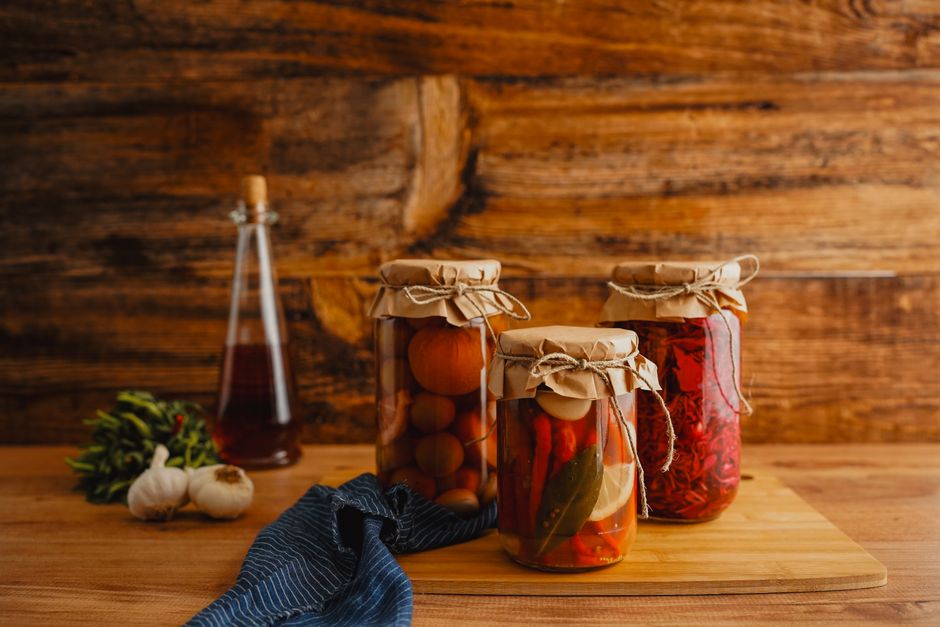
Vinegar is one of the oldest food preservation methods still in use. It works by creating an acidic environment that most spoilage bacteria and mold cannot survive. The actual preservation time depends heavily on the food being pickled, the vinegar strength, and how the food is stored. For most refrigerated pickled vegetables, expect 1 to 3 months of quality. For properly canned and processed items using tested recipes, shelf stability can last 12 months or more. The key difference is whether you are simply soaking food in vinegar or using a full canning process.
How Does Vinegar Actually Preserve Food?
Vinegar’s preserving power comes from acetic acid. This acid lowers the pH of the food and the surrounding liquid to a level where harmful microorganisms cannot grow. Most dangerous bacteria, including the ones that cause botulism, struggle to survive in highly acidic conditions.
The critical threshold is pH. For safe home preserving, the final acidity of the pickling liquid should be at or below 4.6 pH. Commercial vinegars sold for pickling contain 5% acetic acid. This is the standard strength used in tested canning recipes. Weaker vinegars, such as some wine vinegars, may not provide enough acidity for safe long-term preservation.
It is also important to understand that vinegar does not kill all organisms. It stops many from growing. Some molds can still grow on the surface of pickled foods. Yeasts can also survive in acidic environments. This is why refrigeration and clean handling remain necessary for most vinegar-preserved foods.
How Long Do Refrigerator Pickles Last?
Refrigerator pickles are the simplest form of vinegar preservation. You pack fresh vegetables in a jar, cover them with warm vinegar brine, and store them in the fridge. No heat processing is involved.
These pickles typically last 1 to 2 months in the refrigerator. The exact time depends on the vegetable and how it was prepared. Cucumbers tend to soften and lose quality faster than firmer vegetables like carrots or cauliflower.
Refrigerator pickles are not shelf-stable. They must stay cold from start to finish. If left at room temperature, the risk of spoilage increases quickly. Always look for signs of spoilage: cloudy liquid, off odors, soft spots, or any visible mold. When in doubt, throw it out.
How Long Do Canned Pickles Last?
Properly canned pickles use a boiling water bath process. This method heats filled jars to a temperature that destroys spoilage organisms and creates a vacuum seal. This is the only way to make vinegar-preserved foods shelf-stable.
Using a tested recipe, canned pickles maintain best quality for 12 months. They remain safe to eat well beyond that time if the seal holds. However, quality declines over time. Texture softens and flavor fades. The USDA recommends using home-canned foods within one year for best quality.
Never change the vinegar-to-water ratio in a canning recipe. The acidity level is calculated for safety. Adding more water or using a weaker vinegar can make the final product unsafe. Always follow recipes from reliable sources like the USDA or university extension services.



How Long Does Vinegar Preserve Different Vegetables?
Different vegetables respond differently to vinegar. The table below shows general expectations for refrigerator pickling. These times assume the vegetables are fully submerged in a brine made with 5% acidity vinegar.
| Food Type | Refrigerator Pickle Lifespan | Notes |
|---|---|---|
| Cucumbers | 1 to 2 months | Soften faster than other vegetables |
| Carrots | 2 to 3 months | Stay crisp longer |
| Cauliflower | 2 to 3 months | Retains texture well |
| Green Beans | 1 to 2 months | May become soft over time |
| Beets | 2 to 3 months | Hold up well in vinegar |
| Onions | 1 to 2 months | Flavor intensifies with time |
These are quality timelines, not safety cutoffs. Foods can remain edible past these points if no signs of spoilage appear. But texture and flavor will decline. The dates are practical guidelines for when the food is at its best.
Can Vinegar Preserve Eggs, Meat, or Fish?
Vinegar alone is not a reliable method for preserving animal proteins. The acid can slow bacterial growth, but it does not penetrate dense protein tissues effectively. This creates a risk of surface preservation while the interior remains vulnerable.
Pickled eggs have a long tradition, but they are not shelf-stable. Refrigerated pickled eggs last about 3 to 4 months when fully submerged in vinegar brine. They must remain refrigerated at all times. Never leave pickled eggs at room temperature.
Meat and fish preservation with vinegar is not recommended as a standalone method. Traditional recipes that combine vinegar with salt, sugar, and other preservation techniques exist in many cultures. These methods require careful control of multiple factors. They are not appropriate for home experimentation. If you want to preserve meat or fish, use methods with clearer safety records: freezing, pressure canning, or curing with tested recipes.
How Long Can Vinegar Preserve Food By Type: Fruits and Condiments
Fruits can be preserved in vinegar, but they typically need added sugar to balance the acid. These are often called pickled fruits or chutneys. The sugar acts as an additional preservative while improving flavor.
Refrigerated pickled fruits last 1 to 2 months. Canned versions following tested recipes last up to 12 months. Fruits have lower natural acidity than vegetables. This makes the vinegar concentration even more important for safety.
Vinegar-based condiments like hot sauce and vinaigrettes have different lifespans. A simple vinaigrette made with vinegar and oil lasts about 1 to 2 weeks refrigerated. Commercial hot sauces with high vinegar content and added preservatives can last months. Homemade versions without preservatives should be used within 1 month for best quality.
Some foods are not good candidates for vinegar preservation. Dairy products, cooked grains, and soups should not be preserved with vinegar alone. These foods have high moisture and protein content that supports bacterial growth even in acidic conditions.
What Factors Shorten or Extend Preservation Time?
Several factors determine how long vinegar preserves food. Understanding these helps you make better decisions about storage and consumption.
- Vinegar acidity: Use vinegar with at least 5% acetic acid for any preservation purpose.
- Cleanliness: Sterilized jars and clean utensils prevent introducing spoilage organisms.
- Submersion: Food must stay fully submerged in brine. Exposed food will spoil quickly.
- Temperature: Refrigeration slows all biological processes. Colder is better for quality.
- Processing: Boiling water bath canning creates shelf stability that refrigeration alone cannot.
- Salt and sugar: These ingredients add their own preservative effects and extend shelf life.
The most common cause of early spoilage is contamination. A single dirty spoon or unwashed hand can introduce mold spores that vinegar cannot overcome. Always use clean equipment and never dip fingers into the jar.
Signs That Vinegar-Preserved Food Has Spoiled
Vinegar preservation is not indefinite. Spoilage can happen, and it is not always visible. Trust your senses and be conservative.
Look for these warning signs:
- Cloudy liquid that was previously clear
- Visible mold on the surface or floating in the brine
- Unpleasant or fermented odor
- Fizzing or bubbling when the jar is opened
- Soft, slimy, or mushy texture in food that should be crisp
- Bulging lid or leaking jar, which indicates gas production
If any of these signs appear, discard the entire jar. Do not taste food to check for spoilage. The organisms that cause foodborne illness do not always produce visible changes or off flavors. When the condition of preserved food is uncertain, the safest choice is disposal.
Frequently Asked Questions
Does vinegar preserve food indefinitely?
No. Vinegar slows spoilage but does not stop it forever. Refrigerator pickles last 1 to 3 months, while properly canned items last about 12 months for best quality.
What is the minimum vinegar strength for safe pickling?
Use vinegar with 5% acetic acid for all home pickling and preservation. Weaker vinegar may not create a safe acidic environment.
Can I reuse pickling vinegar for another batch?
Reusing vinegar is not recommended. The acid strength drops after one use, and the liquid may contain spoilage organisms from the previous batch.
Are pickled foods safe to eat past their expiration date?
Refrigerator pickles can last slightly past their date if no spoilage signs appear. Canned pickles remain safe for years if the seal holds, but quality declines after 12 months.
