
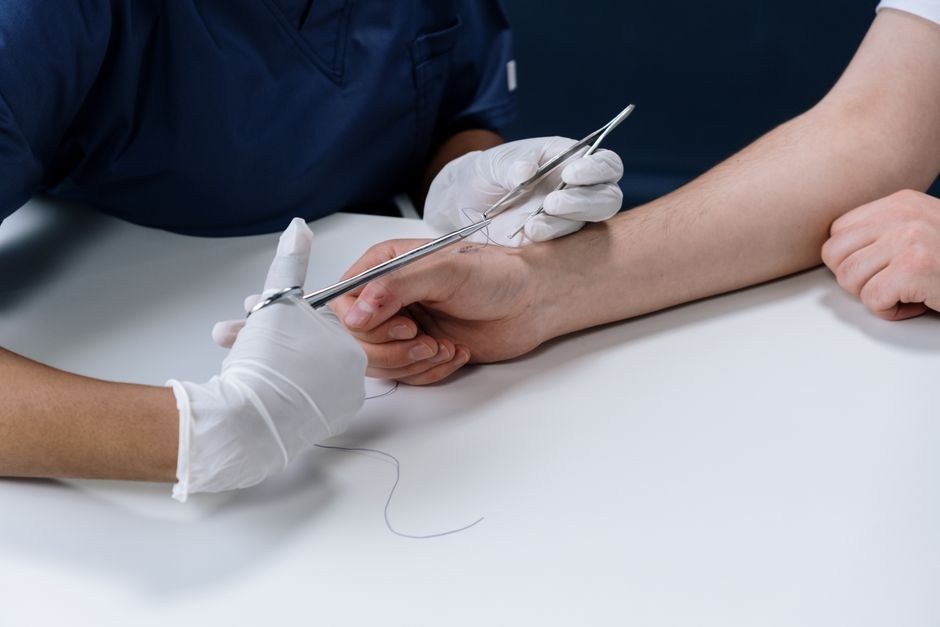
Sutures, commonly called stitches, are meant to be temporary. They hold a wound closed while your body builds new tissue to bridge the gap. Most sutures are designed to be removed after a specific period, usually between 5 and 14 days, depending on where they are on your body. Leaving them in too long can lead to scarring, infection, and skin marks that may become permanent. The exact time frame depends on the location of the wound, the type of suture used, and how well the healing is progressing.
Why Do Sutures Need to Be Removed?
Sutures are foreign objects. Your body recognizes them as not belonging. The longer they stay in, the more your skin reacts to them. This reaction can cause inflammation, which delays healing and increases the risk of infection.
More importantly, skin heals from the inside out. Once the underlying tissue has closed, the surface stitches are no longer needed. They simply hold the top layer of skin together. If they stay past that point, the skin may grow over the suture material. This makes removal harder and can leave track marks that look like small railroad ties on your skin.
Removal timing is a balance. Too early, and the wound may split open. Too late, and you risk scarring and infection. That is why your doctor gives you a specific date for removal.
How Long Can Sutures Stay In Based on Location?
The healing rate of skin varies by body part. Areas with good blood flow heal faster. Areas with less blood flow or more tension heal slower. Your doctor chooses a removal time based on this biology.
- Face and head: 3 to 5 days. The face has excellent blood supply and heals quickly. Sutures here are removed early to minimize scarring.
- Neck: 5 to 7 days.
- Scalp: 7 to 10 days.
- Arms and legs: 7 to 10 days. Joints like elbows and knees may take closer to 10 to 14 days because movement puts tension on the wound.
- Chest and back: 10 to 14 days. These areas have more skin tension.
- Hands and feet: 10 to 14 days. These areas experience a lot of movement and friction.
- Over joints: 10 to 14 days. Movement stresses the wound, so it needs more time to gain strength.
These are general ranges. Your specific situation may differ. A surgeon may keep sutures in longer after a complex procedure or remove them earlier if there are signs of infection.
Are All Sutures Removed?
No. There are two main categories of sutures: absorbable and non-absorbable.
Absorbable sutures break down in the body over time. They are made from materials that dissolve through enzymatic action or hydrolysis. These are used for internal wounds, deep tissue layers, and some skin closures. They do not need removal. The body absorbs them completely, usually within weeks to months depending on the material. Common uses include C-sections, episiotomies, and deep muscle repairs.
Non-absorbable sutures do not dissolve. They are made from materials like nylon, polypropylene, or silk. These must be physically removed by a healthcare professional. Most surface stitches on the skin are non-absorbable. This is why your doctor schedules a follow-up appointment for removal.
Some sutures are a hybrid. A surgeon may use absorbable sutures deep in the tissue to close the underlying layers and non-absorbable sutures on the surface. The surface sutures hold the skin edges together while the deep sutures provide long-term support.





What Happens If You Leave Sutures In Too Long?
Leaving sutures in past their intended time is not just a cosmetic issue. It carries real medical risks.
Infection risk increases. Sutures create a channel from the outside world into your tissue. Bacteria can travel along this channel. The longer the suture stays, the more time bacteria have to enter. Signs of infection include increasing pain, redness spreading beyond the wound edge, warmth, swelling, and pus.
Scarring worsens. When sutures stay in too long, they compress the skin. This creates permanent cross-hatch marks. These marks are often worse than the original wound scar. They are difficult to treat and may never fully disappear.
Skin grows over the sutures. If left long enough, the skin can completely cover the suture material. The suture becomes embedded. Removal then requires cutting the skin to access the suture, creating a new wound. This is more painful and requires more aftercare.
Wound breakdown is possible. Contrary to what you might think, longer is not stronger. A suture that stays too long can cause local tissue damage and inflammation. This can actually weaken the wound and cause it to reopen.
If you miss your removal appointment, call your doctor. Do not wait. A few extra days is usually manageable. A few extra weeks is not.
Can You Remove Sutures at Home?
You should not remove your own sutures. This is not a matter of convenience. It is a medical procedure that requires sterile instruments, proper lighting, and knowledge of suture technique.
Some sutures are simple interrupted stitches, where each stitch is tied and cut separately. Others are continuous running stitches, where one long thread weaves through the entire wound. Removing a running stitch incorrectly can cause the entire suture line to unravel. Removing an interrupted stitch incorrectly can leave suture fragments buried in the skin.
Healthcare providers use sterile suture removal kits that contain sharp, pointed scissors and forceps. These instruments are designed to cut the suture close to the skin and pull the thread out smoothly. Using household scissors or tweezers increases the risk of infection and tissue damage.
There is also the issue of judgment. A clinician assesses the wound before removal. If the wound has not healed fully, they may leave sutures in for a few more days. If there is an infection, they may remove sutures early and drain the wound. You cannot make these assessments on yourself.
What Does Suture Removal Feel Like?
Suture removal is quick and generally causes minimal discomfort. Most people describe it as a slight pulling or pinching sensation. It is not a painful procedure.
The clinician first cleans the area. They then use forceps to lift the suture slightly away from the skin. They cut the suture close to the skin surface with the scissors. Finally, they pull the suture out in one smooth motion. The entire process takes a few minutes for a typical wound.
After removal, the wound is cleaned again and covered with a sterile bandage or medical tape. The skin may feel tight or tender for a day or two. The wound itself is not fully healed at this point. It has gained enough strength to stay closed on its own, but it is still fragile.
You should keep the area clean and dry for at least 24 to 48 hours after removal. Avoid soaking the wound in water, such as in a bath or pool. Showering is usually fine, but pat the area dry gently afterward. Do not rub.
How Long Can Sutures Stay In Before Infection Becomes a Real Risk?
There is no single day when a suture suddenly becomes dangerous. Risk increases gradually the longer a suture stays in place. However, most clinicians consider sutures past their removal date to be a problem after about 5 to 7 extra days.
If your sutures are past due by more than a week, do not attempt home removal. See a healthcare provider. They may be able to remove them without issue, or they may need to make a small incision to access embedded sutures. Leaving them longer than this significantly increases the risk of permanent skin marks and infection.
Some people leave sutures in for weeks or even months without visible problems. This does not mean it is safe. The absence of visible infection does not mean tissue damage is not occurring below the surface. The skin reaction to the foreign material continues even if you cannot see it.
How to Care for Sutures While They Are In
Proper care reduces the risk of infection and helps the wound heal on schedule. Follow these general guidelines, but always defer to your doctor’s specific instructions.
- Keep the wound dry for the first 24 hours after suturing.
- After 24 hours, you may gently wash the area with mild soap and water. Pat dry with a clean towel. Do not rub.
- Do not soak the wound in water. No baths, pools, hot tubs, or lakes until sutures are removed.
- Cover the wound with a bandage if your doctor instructed you to. Change the bandage as directed.
- Do not pick at or scratch the sutures.
- Avoid activities that stretch the skin around the wound, especially if the wound is over a joint.
- Watch for signs of infection: increasing pain, redness, swelling, warmth, or discharge.
If you notice any of these signs, contact your doctor immediately. Do not wait for your scheduled removal appointment.
When to Contact a Doctor
Contact your healthcare provider if you experience any of the following:
- Fever above 100.4°F (38°C)
- Increasing pain that is not relieved by over-the-counter pain medication
- Redness spreading more than a quarter-inch from the wound edge
- Yellow or green discharge from the wound
- A foul odor from the wound
- The wound edges pulling apart
- Bleeding that does not stop with pressure
- Sutures that have broken or come loose
These signs may indicate an infection or wound breakdown that requires prompt medical attention. Do not try to manage these issues at home.
Frequently Asked Questions
How long can sutures stay in before they become a problem?
Most sutures should be removed within 5 to 14 days depending on location. Leaving them in more than a week past the removal date significantly increases the risk of permanent scarring and infection.
Can I remove my own stitches at home?
No. Self-removal risks infection, tissue damage, and incomplete suture removal. A healthcare provider uses sterile instruments and can assess whether the wound is ready.
What happens if a stitch is left in too long?
The skin may grow over the suture, making removal harder. You may also develop permanent cross-hatch marks, increased scarring, and a higher risk of infection.
Do dissolving stitches need to be removed?
No. Absorbable sutures break down on their own in the body. They are used for internal layers and some skin closures and do not require a removal appointment.
