
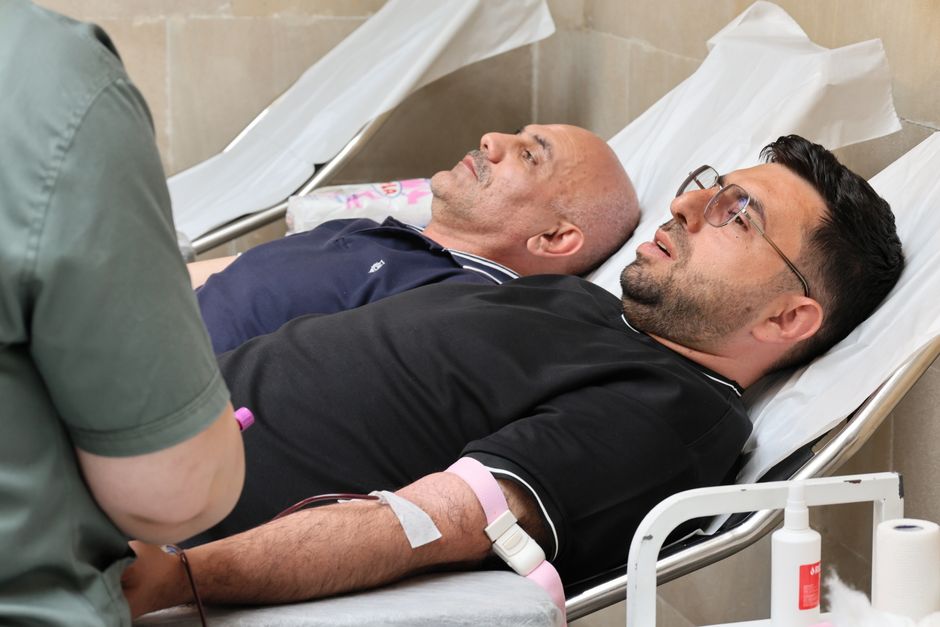
Platelet donation works like this: blood is drawn from one arm, spun in a machine to separate the platelets, and the rest of your blood is returned to you. The process is called apheresis, and it takes longer than a regular blood donation — usually somewhere between 90 minutes and two hours. You can donate platelets far more often than whole blood, because your body replaces them quickly.
How Is Platelet Donation Done Step by Step?
The donation itself is a closed loop. Blood leaves your body, gets separated, and most of it comes right back.
You sit in a reclining chair. A technician inserts a needle into a vein in one arm. That needle connects to tubing that runs into a cell-separating machine.
The machine pulls whole blood from your arm and spins it at high speed. Centrifugal force separates the blood into layers by weight. Red cells and white cells are heavier. Platelets and plasma are lighter. The machine collects the platelet layer and a portion of plasma.
Everything else — your red cells, most of your white cells, and much of your plasma — is returned to you through the same needle or a second needle in your other arm. Some machines use one needle for both draw and return, alternating between the two.
An anticoagulant is mixed into your blood as it circulates through the tubing. This chemical keeps the blood from clotting inside the machine. That anticoagulant is the main reason some donors feel a tingling sensation around their lips or fingertips. It is a known effect of the citrate used in the process, and it usually fades when the machine slows down or the technician adjusts the flow.
The entire cycle repeats several times. Each pass collects more platelets until the machine has gathered enough for one therapeutic dose. A single platelet donation can provide what would otherwise require several whole blood donations to collect.
How Long Does Platelet Donation Take?
Plan for about two hours from the time you sit down until you leave. The needle-to-needle time typically runs 90 to 120 minutes. Setup, screening, and post-donation rest add roughly 30 to 45 minutes on top of that.
Several things affect how long your session lasts:
- Your platelet count before donation — higher counts mean the machine can collect a full dose in fewer passes
- Your total blood volume, which relates to body size
- How well your veins cooperate with the needle
- The specific machine and protocol your donation center uses
Some centers can collect a double or triple dose from donors with high platelet counts. That takes longer but helps more patients from a single session.
Who Can Donate Platelets?
The eligibility rules for platelet donation are similar to whole blood donation, with a few differences.
Most centers require donors to be at least 17 years old, though some states allow 16-year-olds to donate with parental consent. There is no single national upper age limit — some centers set one, others assess older donors individually.
You generally need to weigh at least 110 pounds. For platelet donation specifically, some centers prefer donors who weigh more, because the machine processes a larger volume of blood and returns it to you. A higher body weight helps tolerate that circulation.
You need adequate veins. The needle used for apheresis is similar in size to a regular donation needle, but the vein needs to handle blood flowing in two directions if a single-needle system is used. Donors with small or difficult veins sometimes cannot complete a platelet donation even if they qualify for whole blood.
Medications matter more for platelets than for whole blood. Certain drugs — including some pain relievers and anti-inflammatory medications — can affect platelet function. Donation centers typically ask about medications during screening and may ask you to wait a certain number of days after taking specific ones. The rules vary by center, so it is worth calling ahead if you take daily medication.
Recent dental work, vaccinations, travel to certain regions, and pregnancy history can also affect eligibility. The screening questionnaire covers these. Answer honestly — the questions exist to protect both you and the recipient.





How Often Can You Donate Platelets?
More often than whole blood. The body replaces platelets within a few days, while red blood cells take weeks to regenerate.
The FDA allows platelet donation as frequently as every 7 days, up to 24 times per year. That is the regulatory maximum. Most donation centers set their own limits, and many recommend waiting longer between sessions. A common center guideline is no more than once every two weeks, or a maximum of 24 donations per year with at least 7 days between them.
Whole blood donation, by comparison, requires an 8-week wait between donations. That difference exists because platelet apheresis returns your red blood cells. You are not losing the component that takes the longest to rebuild.
If you donate platelets and whole blood in combination, the wait times change. Centers track your donation history and will tell you what you qualify for on any given day.
What Does Platelet Donation Feel Like?
Most donors describe it as boring rather than painful. The needle stick at the start feels like any blood draw. After that, you sit still for an hour or two.
The most common physical sensation is the citrate effect — a tingling or numbness around the mouth, lips, or fingers. This happens because the anticoagulant binds calcium in your bloodstream. It is temporary and not dangerous in this setting. Tell the technician if it bothers you. They can slow the return rate, and some centers offer a calcium supplement during the procedure.
Some donors feel cold. The fluids returning to your body are at room temperature, and a large volume circulates through the machine. Blankets are usually available.
You may feel tired afterward. Some donors feel fine immediately and go about their day. Others prefer to take it easy. There is no universal rule here — pay attention to how you feel.
Serious reactions during platelet donation are uncommon but possible. Fainting, bruising at the needle site, and lightheadedness can happen. Trained staff monitor donors throughout the procedure.
Why Platelets Matter More Than You Might Think
Platelets are the cell fragments that let blood clot. Without enough of them, even a minor injury can become a bleeding emergency.
Cancer patients are the largest group of platelet recipients. Chemotherapy suppresses bone marrow production, and platelet counts can drop dangerously low. Some cancer treatments require platelet transfusions to continue safely. Organ transplant patients, people with certain blood disorders, and trauma patients with massive bleeding also receive platelets.
Platelets have a short shelf life — typically 5 days. They cannot be frozen and stockpiled the way red blood cells can. That short window means the supply depends on a steady stream of donors showing up regularly, not on a few large donation drives.
This is the practical reason platelet donors are asked to commit to recurring appointments. A unit donated today will be transfused within days or it expires.
How to Prepare for Platelet Donation
Preparation affects how smoothly the donation goes.
Drink water starting the day before. Hydration makes veins easier to access and helps your body handle the fluid shifts during apheresis. Avoid alcohol on the day of donation.
Eat a normal meal within a few hours before your appointment. Avoid high-fat foods right before donating — fat in the bloodstream can affect how the machine separates blood components.
Skip aspirin and anti-inflammatory pain relievers for the number of days your center specifies. These medications affect platelet function, and the platelets collected from you may not work properly for the recipient. Acetaminophen is often acceptable, but confirm with your donation center.
Get a good night’s sleep. Bring something to do — a book, headphones, a charged phone. You will be sitting still for a long time.
Wear a shirt with sleeves that can roll up past your elbow. Avoid tight cuffs.
Eat iron-rich foods in the days before and after. Even though platelet donation returns most of your blood, some iron is lost with the small number of red cells that remain in the tubing and collection set.
What Happens to Your Platelets After Donation?
Your platelets are tested, typed, and stored. They are kept at room temperature on a gentle agitator that keeps them moving. Platelets that sit still can clump together and become unusable.
Before transfusion, the platelets are matched to a recipient. Platelets carry their own antigens, and some patients develop antibodies against certain platelet types. For those patients, donors may be matched more precisely — sometimes through a registry of donors with specific platelet types.
From donation to transfusion, most platelets are used within 5 days. The logistics are tight. That is why centers call donors when supplies run low and why regular donors are so valuable to the system.
Frequently Asked Questions
Is platelet donation painful?
The needle insertion feels like a standard blood draw, and the rest of the procedure is mostly boring rather than painful. Some donors feel temporary tingling around the lips or fingers from the anticoagulant, which fades when the flow is adjusted.
How long do you have to wait between platelet donations?
The FDA permits platelet donation as often as every 7 days, up to 24 times per year. Many donation centers recommend longer intervals, and a common guideline is no more than once every two weeks.
Can you donate platelets if you take medication?
It depends on the medication. Aspirin and certain anti-inflammatory drugs affect platelet function and usually require a waiting period before donation, while many other medications are acceptable. Call your donation center before your appointment to confirm.
Do you lose red blood cells during platelet donation?
Very few. The machine returns nearly all your red blood cells, which is why the waiting period between platelet donations is much shorter than for whole blood. A small number of red cells remain in the tubing and collection set.
