
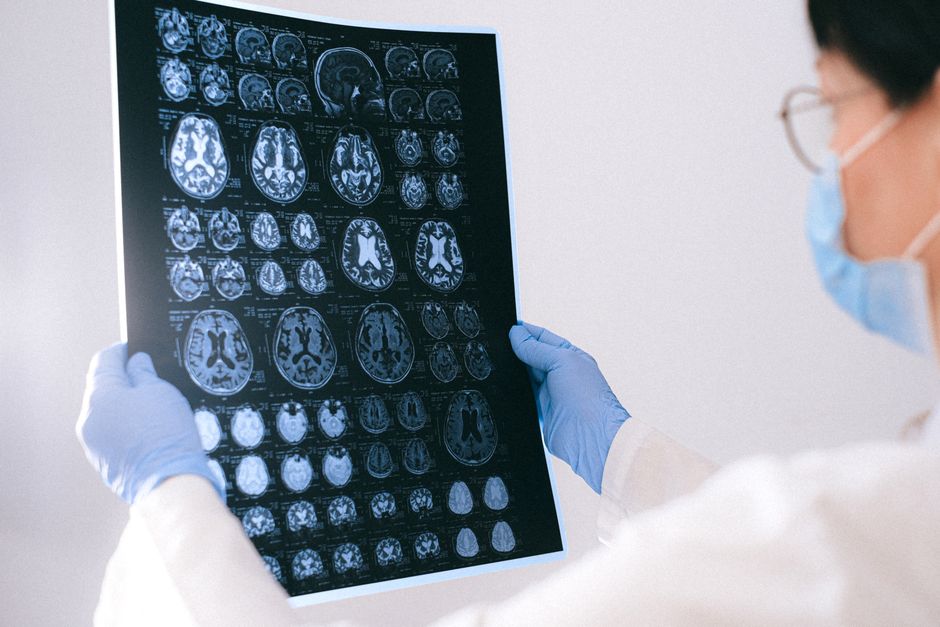
Tourette syndrome is a neurological condition that causes a person to make sudden, repeated movements or sounds called tics. These are not simply bad habits or something a person does on purpose. The science points to a disruption in the brain circuits that normally help us filter out unwanted movements and impulses. Understanding how Tourettes works means looking at the specific brain regions involved, how they communicate, and why the condition often changes over a person’s lifetime.
What Exactly Happens in the Brain to Cause a Tic?
Tics originate deep inside the brain, not from conscious thought. The key players are the basal ganglia, a group of structures that act like a braking system for movement. In a typical brain, the basal ganglia send constant “stop” signals to the motor cortex, which is the part of the brain that plans and executes movement. This prevents you from acting on every impulse your brain generates.
In Tourette syndrome, this braking system is faulty. The chemical messengers that carry these stop signals, primarily a neurotransmitter called GABA, are not working efficiently. With less inhibition, the motor cortex becomes overly active. Random, small impulses that would normally be suppressed break through and become a tic.
This is why tics are often described as an urge. The brain generates the impulse, the faulty filter lets it through, and the person feels a growing tension that is only relieved by performing the tic. It is a physical sensation, not a psychological choice.
How Does Tourettes Work The Neuroscience Of Tics and the Role of the Cortex?
While the basal ganglia start the problem, the cortex is where the tic actually plays out. The motor cortex is responsible for the specific movement, whether that is a head jerk, a shoulder shrug, or a vocalization. The premotor cortex, which helps plan sequences of movement, is also involved.
Imaging studies show that in people with Tourette syndrome, the connections between the cortex and the basal ganglia are different. The pathways that should be strong and direct are often disorganized. This means the brain is less efficient at processing the constant stream of movement commands, and it struggles to distinguish between a command worth acting on and one that should be ignored.
There is also a significant difference in the way the brain handles dopamine. Dopamine is a chemical involved in reward and movement. In Tourette syndrome, the brain appears to be hypersensitive to dopamine. This means even a normal release of dopamine can overstimulate the movement pathways, making it easier for a tic to be triggered.
What Causes the Brain to Develop This Way?
Tourette syndrome is a genetic condition. Research consistently shows that it runs in families. If a parent carries the genetic variation associated with Tourette syndrome, a child has a higher chance of developing it, though the expression can vary widely. One child might have full Tourette syndrome, while a sibling might only have a mild, transient tic disorder or no symptoms at all.
It is not a single gene. Scientists believe a combination of several genetic variations contributes to the risk. These genes are involved in the development and function of the basal ganglia and the neurotransmitter systems, which is why the brain circuits behave differently.
Environmental factors are also under study, but the evidence is less clear. Some research suggests that prenatal factors, such as low birth weight or maternal smoking during pregnancy, may increase the risk in a child who is already genetically predisposed. These factors do not cause Tourette syndrome on their own. They simply lower the threshold for the genetic risk to express itself.




Why Do Tics Change and Sometimes Disappear With Age?
The natural course of Tourette syndrome is one of change. Tics typically begin in early childhood, usually between the ages of 5 and 7. They often start with simple movements like eye blinking or throat clearing. Over time, they may become more complex, involving coordinated movements or phrases.
For most people, tics peak in severity during the pre-teen and early teenage years. This is a period of significant brain development and hormonal change, which can amplify the faulty circuits. Then, a remarkable shift often occurs. By late adolescence or early adulthood, many people experience a significant reduction in tic severity. For some, the tics disappear almost entirely.
The neuroscience behind this improvement is linked to brain maturation. As the frontal lobe, particularly the prefrontal cortex, matures, it gains more control over the lower brain structures. This region is the brain’s executive control center. It can send stronger “override” signals to the basal ganglia, effectively strengthening the braking system that was faulty in childhood. The brain essentially learns to compensate for its own wiring issues.
Is Suppressing a Tic Harmful?
Many people with Tourette syndrome can suppress their tics for short periods. This requires intense focus and mental energy. The brain is actively fighting a strong, involuntary impulse, which is exhausting.
Suppressing a tic is not physically harmful. It will not make the condition worse or cause a “rebound” explosion of tics later. However, it is not a sustainable strategy for daily life. The effort required can interfere with concentration, learning, and social interaction. A child spending all day suppressing tics in school may have little mental energy left for academic work.
The modern clinical approach is not to force suppression. Instead, treatment focuses on reducing the urge itself. Behavioral therapies like Comprehensive Behavioral Intervention for Tics (CBIT) teach people to recognize the early warning signs of a tic and perform a competing, less noticeable movement that satisfies the urge without the full tic. This works by rewiring the habit loop in the brain, giving the person a sense of control without the exhausting effort of pure suppression.
What Are the Treatment Options Based on the Neuroscience?
Because the core problem is a chemical imbalance and a faulty circuit, treatments target these specific areas. Medication is one option, but it is not required for everyone. Many people with mild tics need no treatment at all. The decision to treat is based on how much the tics interfere with daily life, school, work, or social functioning.
When medication is used, it often targets the dopamine system. Drugs that block or reduce dopamine activity can reduce the frequency and intensity of tics. These medications can be effective, but they come with potential side effects, including weight gain, sedation, and movement problems. They are not a cure, and they do not fix the underlying brain structure.
Behavioral therapy is the first-line treatment recommended by most clinical guidelines. CBIT is not a biological treatment, but it works by changing brain function. By practicing a competing response, the person strengthens the prefrontal cortex’s ability to inhibit the basal ganglia. This is a form of neuroplasticity, where the brain physically changes its wiring in response to repeated practice.
In severe, treatment-resistant cases, deep brain stimulation (DBS) is a surgical option. This involves implanting electrodes into the basal ganglia and delivering a continuous electrical pulse. The stimulation disrupts the abnormal signals that trigger tics. DBS is reserved for adults with debilitating tics that have not responded to other treatments. It is not a first-line therapy and carries surgical risks.
Does Tourette Syndrome Affect Thinking or Intelligence?
Tourette syndrome does not affect intelligence. People with the condition have the same range of IQ scores as the general population. The tics are a motor problem, not a cognitive one.
However, Tourette syndrome is often accompanied by other conditions. Attention-deficit/hyperactivity disorder (ADHD) and obsessive-compulsive disorder (OCD) are common co-occurring diagnoses. These conditions can affect attention, focus, and impulse control. When they are present, they may impact learning and daily functioning more than the tics themselves. Treating these co-occurring conditions is often a priority, as improving attention can significantly improve quality of life.
Frequently Asked Questions
Is Tourette syndrome a psychological or neurological condition?
Tourette syndrome is a neurological condition rooted in brain circuit dysfunction, not a psychological disorder. The tics are caused by abnormal signaling in the basal ganglia and related movement pathways.
Can a person with Tourette syndrome control their tics?
Yes, many people can suppress tics for short periods, but it requires intense mental effort and is exhausting. Behavioral therapy can teach more effective management strategies than pure suppression.
Do tics always go away in adulthood?
Many people see a significant reduction in tics by late adolescence, and some become tic-free. However, the course is variable, and some adults continue to have tics, though often less severe than in childhood.
Are tics caused by something a child sees or copies?
Copying a tic does not cause Tourette syndrome. The condition is genetic and involves specific brain wiring. A child might mimic a tic temporarily, but this is not the same as having the neurological condition.
