
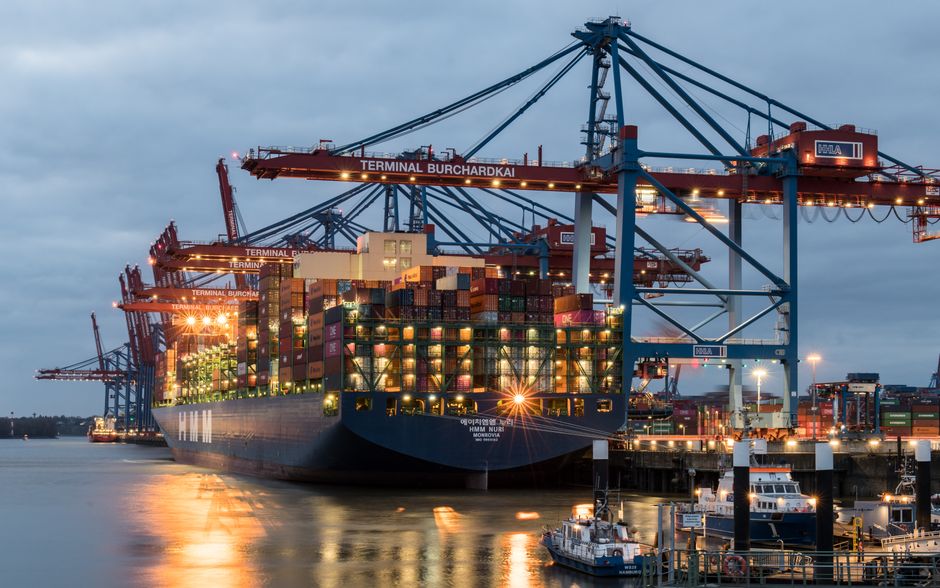
Working on a cargo ship with no experience is possible, but it requires a specific strategy. The most direct entry point is an entry-level position like a Wiper, Utility Worker, or Steward, which typically requires no prior maritime background. You must obtain a Merchant Mariner Credential (MMC) and a Transportation Worker Identification Credential (TWIC) before applying to jobs through union halls or online maritime job boards.
What Jobs On A Cargo Ship Require No Experience?
Entry-level positions on merchant vessels are the standard gateway for newcomers. These roles do not require previous sea time or maritime training.
The most common entry-level roles are:
- Wiper: Works in the engine room cleaning machinery and assisting the engine department. This is the traditional starting point for a career as an engineer.
- Ordinary Seaman (OS): Works on deck performing maintenance, painting, and lookout duties. This is the first step toward becoming an Able Seaman.
- Steward or Utility Worker: Works in the galley and living quarters, handling food preparation and cleaning. This is the entry point for the culinary department.
These jobs are physically demanding. You will work long shifts, often seven days a week, for the duration of the contract. Contracts typically last between 60 and 120 days, followed by equal time off.
What Credentials Do You Need Before Applying?
You cannot simply show up at a port and board a ship. The U.S. Coast Guard regulates all mariners working on U.S.-flagged vessels. Two credentials are mandatory before any company will consider your application.
The first is the Transportation Worker Identification Credential (TWIC). This is a federally issued security card. You apply at a TSA enrollment center, provide fingerprints, and pass a background check. This process takes several weeks.
The second is the Merchant Mariner Credential (MMC). This is your license to work at sea. You apply through the U.S. Coast Guard National Maritime Center. For entry-level positions, you must pass a physical exam, a drug test, and a basic background check. You will also need to complete basic safety training, which covers firefighting and lifeboat operations.
Both credentials require fees. The MMC application fee is around $145, and the TWIC costs around $125. Budget for these costs before you start the process.
How Do You Get Basic Safety Training?
Basic safety training is not optional. International maritime law requires all seafarers to complete Basic Safety Training (BST) before working on a vessel. This training is part of the Standards of Training, Certification, and Watchkeeping (STCW) convention.
Training covers five core areas:
- Personal survival techniques
- Fire prevention and firefighting
- Elementary first aid
- Personal safety and social responsibility
- Basic marine environmental awareness
Approved maritime academies and training centers offer this course. It typically takes about five days to complete and costs between $800 and $1,200. Some maritime unions offer this training at reduced cost or free if you join their apprenticeship program first.
Do not skip this step. Shipping companies will not hire you without the STCW certificate on file with your MMC.





Should You Join A Maritime Union?
Joining a union is the most reliable path to your first job. The two major unions for unlicensed mariners in the United States are the Seafarers International Union (SIU) and the International Organization of Masters, Mates & Pilots (MM&P) for licensed officers.
The SIU runs the Harry Lundeberg School of Seamanship in Piney Point, Maryland. This is a paid apprenticeship program. You train for several weeks, earn your entry-level credentials, and then get placed on a ship through the union hiring hall. You attend the school for free and earn a small stipend while training.
Union membership has clear advantages for newcomers:
- Access to union hiring halls that place you on ships
- Negotiated wages and benefits
- Free or subsidized training
- Job security and seniority rights
Non-union jobs exist, but they are harder to find for someone with zero experience. Shipping companies prefer to hire through union halls because the vetting and training process is already complete.
What Is The Application Process Like?
Once you have your TWIC, MMC, and STCW certificates, you can start applying. The process is straightforward but competitive.
For union members, you report to the union hiring hall. The dispatcher assigns you to an available berth based on your qualifications and seniority. As a new member, you take whatever entry-level job is available. This is often the fastest way to sea.
For non-union applicants, online job boards are the primary tool. Major shipping companies like Crowley, Matson, and American Roll-On Roll-Off Carrier post entry-level openings on their websites. Maritime job boards like GCaptain and Rigzone also list openings.
Your resume should emphasize physical fitness, mechanical aptitude, and any experience with tools or maintenance. Prior military service is viewed favorably, especially if you have any mechanical or deck experience.
Be prepared for a drug test and a physical exam. These are mandatory for all maritime workers. A history of drug use or certain medical conditions can disqualify you.
How Much Do Entry-Level Mariners Earn?
Entry-level maritime wages are competitive with skilled trades on land. The exact pay depends on the company, the union contract, and the type of vessel.
An Ordinary Seaman or Wiper typically earns between $400 and $600 per day. This translates to roughly $25,000 to $45,000 for a standard 90-day contract. Because you live on the ship, you have almost no living expenses while working. Many entry-level mariners save most of their income.
Overtime is common. Port watches, cargo operations, and emergency repairs often require extra hours. Union contracts generally pay overtime at one and a half times the regular rate.
Pay increases quickly with experience. After accumulating sea time, you can upgrade your MMC to Able Seaman or Qualified Member of the Engine Department. These roles pay significantly more, often $600 to $800 per day.
What Is Life Actually Like On A Cargo Ship?
Life at sea is not for everyone. Understanding the reality before you commit is important.
You work seven days a week while on board. Shifts are typically four hours on, eight hours off, repeated twice daily. You will work in all weather conditions. The work is physical and can be monotonous.
You share a cabin with another crew member at the entry level. Private cabins are reserved for senior officers. Internet access is limited and often slow. You are away from family and friends for months at a time.
The food is generally good. Stewards prepare three meals daily, and most ships have a well-stocked galley. Dietary restrictions can be accommodated, but you should discuss this with the company before signing on.
Seasickness affects most new mariners during the first week. Most people adapt, but some do not. If you cannot handle the motion, you will not last in this career.
Are There Alternative Paths Without A Merchant Mariner Credential?
Yes, but they are limited. If you want to work on a cargo ship without going through the MMC process, your options are narrow.
Working on a foreign-flagged vessel is one option. Foreign ships often hire crew from developing nations directly, but they rarely hire U.S. citizens. U.S. citizens working on foreign-flagged ships face complex tax and visa issues.
Another option is working as a contractor on a ship while it is in port. Longshoremen, shipyard workers, and port technicians work on cargo ships daily without maritime credentials. These jobs are physically demanding and often require union membership through the International Longshoremen’s Association.
Neither path leads to a seagoing career. If your goal is to sail on a cargo ship, the MMC route is the only legitimate path.
How Long Does The Entire Process Take?
The timeline from decision to first day at sea is roughly three to six months. This is a common question from people considering this career change.
The TWIC takes four to six weeks. The MMC application takes six to eight weeks after you submit your paperwork. The STCW training takes one week. If you join the SIU apprenticeship program, you add four to six weeks of training at Piney Point.
Waiting for your first assignment at the union hall can take anywhere from a few days to several weeks. It depends on the shipping market and the availability of entry-level berths.
Start the TWIC process first. It has the longest lead time and requires a background check that can delay everything else if an issue arises.
Frequently Asked Questions
Can I get a job on a cargo ship with no experience at all?
Yes, entry-level positions like Wiper, Ordinary Seaman, and Steward require no prior maritime experience.
You still need a Merchant Mariner Credential, TWIC card, and basic safety training before any company will hire you.
How much does it cost to get started as a merchant mariner?
Plan for roughly $1,000 to $1,500 in fees for your TWIC, MMC application, and STCW safety training.
Joining the SIU apprenticeship program reduces this cost because they provide training as part of the program.
How long does it take to get hired after completing the credentials?
After completing all credentials, the hiring process takes anywhere from a few days to several weeks.
Union hiring halls typically place new members faster than direct applications to shipping companies.
Do I need to know how to swim to work on a cargo ship?
Yes, basic swimming ability is required for the STCW personal survival techniques course.
The Coast Guard requires proof of swimming competency as part of the basic safety training certification.
