
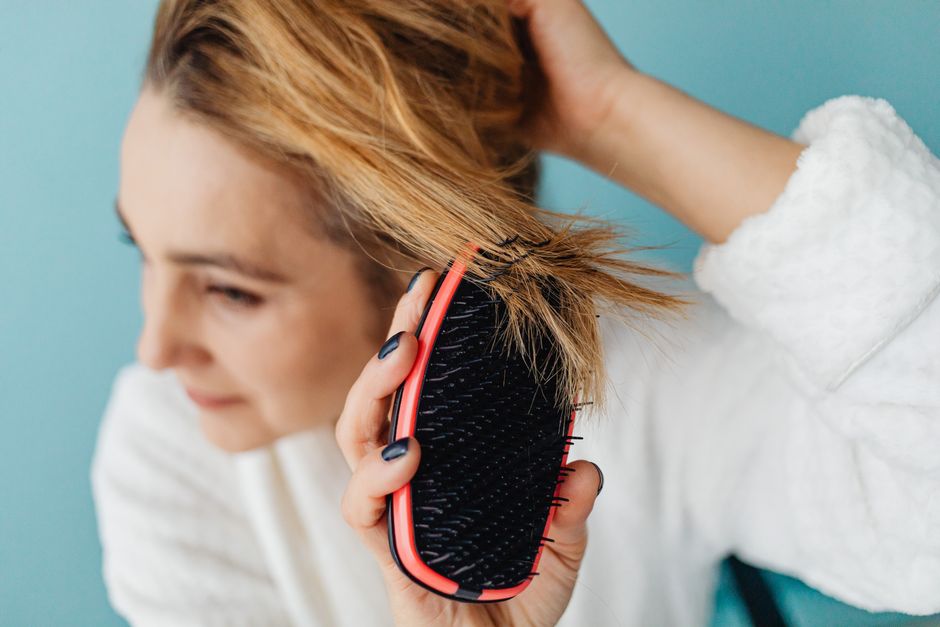
A hairbrush collects more than loose hair. It gathers oil, dead skin cells, styling products, and dust from the air. Every time you use it, some of that goes right back into your hair. Washing your hairbrush keeps your scalp cleaner and your brush working properly. Here is the step by step process: remove the hair, soak the brush in warm water with a few drops of gentle shampoo, scrub with a toothbrush or your fingers, rinse thoroughly, and let it dry completely with the bristles facing down.
Why Do You Need To Wash Your Hairbrush?
Your scalp produces sebum, which is a natural oil. That oil transfers to your hairbrush every time you brush. Dead skin cells flake off and collect between the bristles. Hair products like spray, gel, and mousse leave sticky residue behind.
Dust and lint from the air stick to all of that buildup. A dirty brush pushes this mixture back into clean hair. This can make hair look dull and greasy faster. It can also transfer bacteria to the scalp, which may contribute to irritation in some people.
Most dermatologists and hair care professionals recommend washing your hairbrush every one to two weeks. If you use heavy styling products daily, wash it more often. If you rarely style your hair, once a month is usually enough.
What You Need To Wash A Hairbrush
You do not need special tools for this task. Most supplies are already in your home.
- Gentle shampoo or mild dish soap
- Warm water — not hot, which can damage some brush materials
- A wide-tooth comb or an old toothbrush for scrubbing
- A clean towel for drying
- A small bowl or sink filled with water
Baking soda works as an extra cleaning agent for very dirty brushes. Mix a small amount into the water if you want deeper cleaning. Do not use harsh chemical cleaners. They can damage the bristles and leave residue that later touches your scalp.
How Do You Wash A Hairbrush: Step By Step
Follow these steps in order. The whole process takes about ten minutes.
Step 1: Remove the hair. Use the wide-tooth comb or your fingers to pull out loose hair. Work from the outside edges toward the center. Do this over a trash can. If hair is wrapped tightly around the bristle base, use scissors to cut it free carefully.
Step 2: Fill a bowl with warm water. Add a small amount of shampoo or dish soap. Swirl the water to create suds. Do not use hot water. High heat can warp wooden handles and damage natural bristles.
Step 3: Soak the brush. Place the brush in the soapy water, bristles facing down. Only submerge the bristles. Keep the handle and the cushioned pad mostly out of the water. Soaking the pad too long can loosen the glue that holds the bristles in place. Let it soak for five to ten minutes.
Step 4: Scrub the bristles. Use the old toothbrush to scrub between the bristles. Work from the base to the tips. This loosens oil, product buildup, and dead skin. For a cushioned brush, scrub the pad gently too. Pay extra attention to the base of the bristles where buildup collects.
Step 5: Rinse thoroughly. Hold the brush under running warm water. Keep the bristles pointing down so water flows away from the handle. Rinse until the water runs clear and no soap remains. Leftover soap will dry into a film on the bristles.
Step 6: Dry the brush. Shake off excess water. Lay the brush on a clean towel with the bristles facing down. This lets water drain out and air circulate. Never dry a brush standing upright on its bristles, because that traps moisture at the base. Allow it to dry completely before using it again. This usually takes a few hours.




How To Wash Different Types Of Hairbrushes
Not all brushes are the same. The material affects how you should clean it.
Plastic and nylon brushes are the easiest to wash. They can handle full submersion and regular scrubbing. These are the most durable brushes for frequent washing.
Wooden brushes need more care. Wood absorbs water, which can cause cracking or warping. Wash these quickly and avoid soaking. Wipe the handle with a damp cloth instead of submerging it. Dry the brush immediately after washing.
Boar bristle brushes should not be soaked in water. Natural bristles can soften, bend, and lose their shape when wet. Instead, wipe the bristles with a damp cloth and a little shampoo. Rinse the cloth and wipe again to remove soap. Some people use a dry brush cleaner between washes.
Cushioned brushes have a rubber or foam pad with bristles embedded in it. Water can get underneath the pad and weaken the glue. Keep the pad as dry as possible. Clean around the edges carefully and tilt the brush so water does not pool under the cushion.
How Often Should You Clean Your Hairbrush?
Frequency depends on how you use your brush. There is no single rule that fits everyone.
People who use styling products daily should wash their brush weekly. The products leave the heaviest residue. People who wash their hair daily and use minimal products can wash their brush every two weeks. Those who rarely style their hair can wash it monthly.
Remove loose hair from the brush after every use. This takes ten seconds and prevents tangles from building up. It also reduces the amount of oil and dirt trapped in the bristles between washes.
If you have dandruff or a scalp condition, consider washing your brush more often. Some dermatologists recommend cleaning brushes weekly for people with scalp issues to reduce the spread of bacteria and yeast. The evidence for this practice is limited, but it is a reasonable precaution.
Common Mistakes When Washing A Hairbrush
Several mistakes reduce the life of your brush or leave it less clean than you think.
Soaking the whole brush. Submerging the handle and pad can loosen the bristles and damage wood. Only the bristles need to get wet.
Using hot water. Heat can warp plastic, crack wood, and damage natural bristles. Warm water cleans just as well without the risk.
Skipping the rinse. Soap left on the bristles dries into a film. That film transfers to your hair the next time you brush. Always rinse until the water runs completely clear.
Putting the brush away wet. Moisture trapped at the base of the bristles can breed bacteria and mold. Always let the brush dry fully before storing it.
Scrubbing too hard. Aggressive scrubbing can bend bristles and pull them out. Use gentle pressure and let the soapy water do most of the work.
Signs You Need To Replace Your Hairbrush
Washing extends the life of a brush, but it does not last forever. Inspect your brush regularly for signs of wear.
Bent, cracked, or broken bristles are a clear sign. Damaged bristles can scratch the scalp and snag hair. Missing bristles leave gaps that make brushing less effective. Worn cushioning that no longer springs back should also be replaced.
Splitting or rough spots on a wooden handle can harbor bacteria that washing cannot fully remove. If the brush has an odor that does not go away after cleaning, replace it. That smell usually means buildup has penetrated the material.
Most brushes last several years with proper care. A brush that needs frequent replacement is not necessarily a bad brush — it may just be heavily used.
Can You Wash A Hairbrush In The Dishwasher?
Some people try to save time by putting brushes in the dishwasher. This is not recommended for most brushes.
The heat and water pressure can damage the bristles, loosen the glue, and warp the handle. Plastic brushes may survive a top-rack cycle, but natural bristle and wooden brushes will not. Hand washing is safer and takes only a few extra minutes.
If you do use the dishwasher for a plastic brush, place it on the top rack and skip the heated dry cycle. But know that hand washing gives you more control and is gentler on the brush.
Frequently Asked Questions
How often should I wash my hairbrush?
Wash it every one to two weeks for regular use. Wash it more often if you use heavy styling products daily.
Can I soak my wooden hairbrush in water?
No. Wood absorbs water and can crack or warp. Wipe the bristles with a damp soapy cloth and dry it immediately.
What is the best way to remove hair from a brush?
Use a wide-tooth comb to lift hair out from the base of the bristles. For tightly wrapped hair, cut it free with scissors.
How do I dry a hairbrush after washing?
Lay it on a clean towel with the bristles facing down. Let it air dry completely before using it again.
