
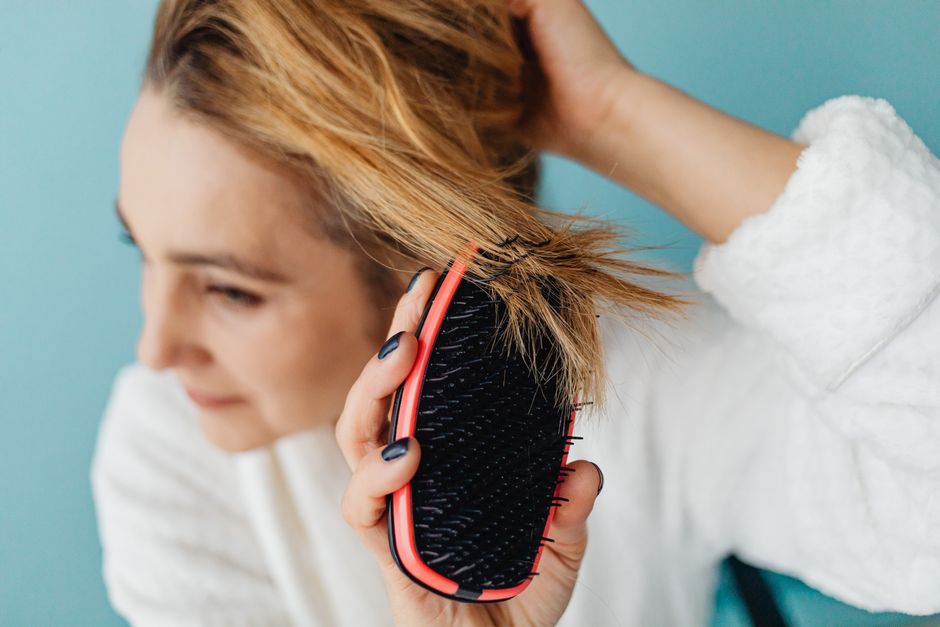
Cleaning your hairbrush every one to two weeks keeps it free of oil, dead skin, and old hair products. The simplest method is to remove all hair from the bristles, soak the brush in warm water with a few drops of gentle shampoo for 10 to 15 minutes, then scrub with an old toothbrush, rinse thoroughly, and let it air dry with the bristles facing down. A clean brush helps your hair look cleaner longer and reduces the transfer of dirt back onto your scalp.
Why Should You Clean Your Hairbrush?
Your hairbrush collects more than loose hairs. It traps sebum, which is your scalp’s natural oil. It also holds onto dead skin cells, dust, and leftover product from sprays, gels, and dry shampoo.
Every time you run that brush through clean hair, you are pressing that buildup right back onto your strands. The American Academy of Dermatology notes that dirty brushes can spread oil and dirt, making hair look greasy faster. Some people also report that a dirty brush irritates their scalp or causes more flakes.
Research published in the Journal of Investigative Dermatology has found that scalp health affects hair growth. Keeping your brush clean is a small step that supports a healthier environment for your hair follicles.
What Do You Need to Clean Your Hairbrush?
You likely have everything in your home already. Gather these items:
- A comb or a pointy tool (like a chopstick or a tail comb) to remove hair
- Warm water — not hot, as heat can damage natural bristles
- Gentle shampoo or a mild liquid soap
- An old toothbrush or a small scrub brush
- Baking soda (optional, for deep cleaning)
Avoid harsh chemicals like bleach or strong detergents. They can break down the bristles and the cushion pad over time.
How To Clean Your Hairbrush Step by Step
Start by removing all the hair wrapped around the bristles. Use the end of a comb or a chopstick to lift the hair out. Do this over a trash can. For brushes with a cushion pad, you may need to pull hair from underneath the bristles as well.
Fill a bowl or sink with warm water. Add a squirt of gentle shampoo. Swish the water to create some suds. Place the brush in the water with the bristles facing down. Let it soak for 10 to 15 minutes. This loosens the oil and product residue.
After soaking, scrub between each row of bristles with an old toothbrush. Focus on the base of the bristles and the cushion pad. If you see stubborn buildup, make a paste of baking soda and water and scrub gently. Rinse the brush thoroughly under cool running water.
Shake off excess water. Place the brush on a clean towel with the bristles facing down. Let it air dry completely before using it again. This usually takes a few hours. Never put a wet brush back into a drawer or a closed container — moisture can cause mold.


How Often Should You Clean Your Hairbrush?
For most people, once every one to two weeks is enough. If you use heavy products like gels, pomades, or dry shampoo frequently, clean it weekly. If you have a very oily scalp, weekly cleaning also helps.
If you share a brush with someone else, clean it after each use. This reduces the spread of bacteria and fungi. The Centers for Disease Control and Prevention advises against sharing personal care items like brushes, but if you must, disinfecting them between uses is wise.
Remove hair from the brush after every use. This takes ten seconds and prevents large tangles from forming. It also keeps the brush working effectively for longer.
Can You Clean Different Types of Hairbrushes the Same Way?
Not all brushes handle water the same way. Here is a quick comparison:
| Brush Type | Cleaning Method | Important Note |
|---|---|---|
| Plastic or nylon bristle brush | Soak in warm soapy water, scrub, rinse | Safe for regular soaking |
| Natural boar bristle brush | Wipe bristles with a damp cloth, avoid soaking | Soaking can warp the bristles and loosen them |
| Wooden brush | Wipe with a barely damp cloth, dry immediately | Wood absorbs water and can crack or swell |
| Cushion pad brush | Soak carefully, dry bristles facing down | Water can get trapped under the pad and cause mold |
| Round brush | Soak bristles only, keep handle dry | Handles often have a hollow core that traps water |
For natural bristle and wooden brushes, the best approach is a dry clean. Remove hair, then wipe the bristles with a cloth dipped in diluted rubbing alcohol. This disinfects without water damage.
What Happens If You Do Not Clean Your Hairbrush?
A dirty brush transfers old oil and product back onto clean hair. This can make your hair look flat and greasy within hours of washing. Some people also notice their scalp feels itchier or develops small bumps.
Bacteria and fungi can grow in the buildup on a brush. A study in the International Journal of Trichology found that shared hair tools can carry Staphylococcus aureus and other microbes. While this does not mean every dirty brush will cause an infection, it is a risk worth avoiding.
Over time, heavy buildup can also damage the brush itself. The bristles may become sticky, bent, or loose. A brush that does not glide through hair can cause breakage and tangles.
Common Misconceptions About Cleaning Hairbrushes
Myth: You can clean a brush by just running it under hot water. Hot water alone does not remove oil or product. You need soap and friction to break down the residue.
Myth: Vinegar is the best cleaner. Vinegar can help with mineral buildup from hard water, but it does not remove sebum well. Shampoo or mild soap works better for everyday cleaning.
Myth: You must replace your brush every few months. A well-maintained brush can last for years. Cleaning it regularly extends its life. The only reason to replace a brush is if bristles break or the cushion pad tears.
Myth: Alcohol will ruin the bristles. Rubbing alcohol evaporates quickly and does not damage most synthetic bristles. It is safe for disinfecting between deep cleans. Avoid it on natural boar bristles, which can dry out.
Frequently Asked Questions
How do you clean a hairbrush with baking soda?
Make a paste of three parts baking soda to one part water. Apply it to the bristles with an old toothbrush, scrub gently, then rinse thoroughly.
Can you put a hairbrush in the dishwasher?
No. The high heat and strong detergent can melt plastic parts and damage natural bristles. Hand washing is safer.
How do you get hair out of a brush with a cushion pad?
Use the pointed end of a comb or a chopstick to lift hair from underneath the bristles. Pull slowly to avoid tearing the cushion.
Is it safe to clean a hairbrush with hydrogen peroxide?
Yes, for disinfecting. Dilute it with equal parts water, dip a cloth, and wipe the bristles. Avoid soaking the brush in peroxide.
