
Hair loss is common, and most of what people call “natural” treatment has never been shown to regrow hair in a rigorous trial. The honest answer is that a small number of approaches have real evidence behind them, a few have weak or mixed evidence, and most of what you see marketed online has none. What you can do naturally falls into two buckets: fixing a genuine deficiency or lifestyle trigger that is driving the loss, and using the handful of non-drug options that studies actually support. Everything else is mostly hope with a price tag.
What Actually Causes Hair Loss?
Most hair loss in adults comes down to genetics, hormones, age, and a few medical or nutritional problems. Knowing which one you are dealing with determines whether anything natural will help at all.
The most common form is androgenetic alopecia, often called male or female pattern hair loss. It is driven by genetics and the hormone dihydrotestosterone (DHT), which gradually shrinks hair follicles and shortens the growth phase of each hair. This is a progressive condition. No supplement reverses the underlying genetic process.
Other causes behave very differently. Telogen effluvium is a temporary shedding triggered by illness, major stress, surgery, rapid weight loss, or childbirth. It usually resolves on its own once the trigger passes. Alopecia areata is an autoimmune condition. Thyroid disorders, iron deficiency, and low vitamin D can all contribute to shedding. So can certain medications, including some antidepressants and blood pressure drugs.
This distinction matters because a person with a nutritional deficiency may see real improvement from correcting it. A person with pattern hair loss will not. Before spending money on anything, it is worth understanding which category you fall into. A dermatologist can usually tell the difference with a scalp exam and, in some cases, a blood test.
Can You Stop Hair Loss Naturally Without Medication?
Sometimes. It depends entirely on the cause. If shedding is driven by a deficiency, stress, or a medical issue, addressing that root cause can stop the loss. If it is genetic pattern loss, natural approaches can slow it at best, and the evidence for most of them is thin.
It helps to separate two goals that people often blur together. Stopping further loss is easier than regrowing hair that is already gone. Once a follicle has fully miniaturized, it does not come back without medical intervention. So “stopping” and “regrowing” are not the same target, and no natural method has strong evidence for the second one.
A reasonable order of operations looks like this:
- Rule out medical causes with a doctor, including thyroid problems and anemia.
- Check for genuine nutrient deficiencies rather than assuming you have one.
- Review your medications with a clinician if shedding started after a new prescription.
- Reduce known physical stressors if they apply, such as extreme dieting.
- Only then consider the evidence-based non-drug options below.
Skipping straight to supplements is the most common mistake. It treats a guess instead of a cause.
Which Natural Treatments Have Real Evidence?
Two stand out: rosemary oil and correction of a true deficiency. A few others have weaker or mixed support. The rest do not have human evidence to back them.
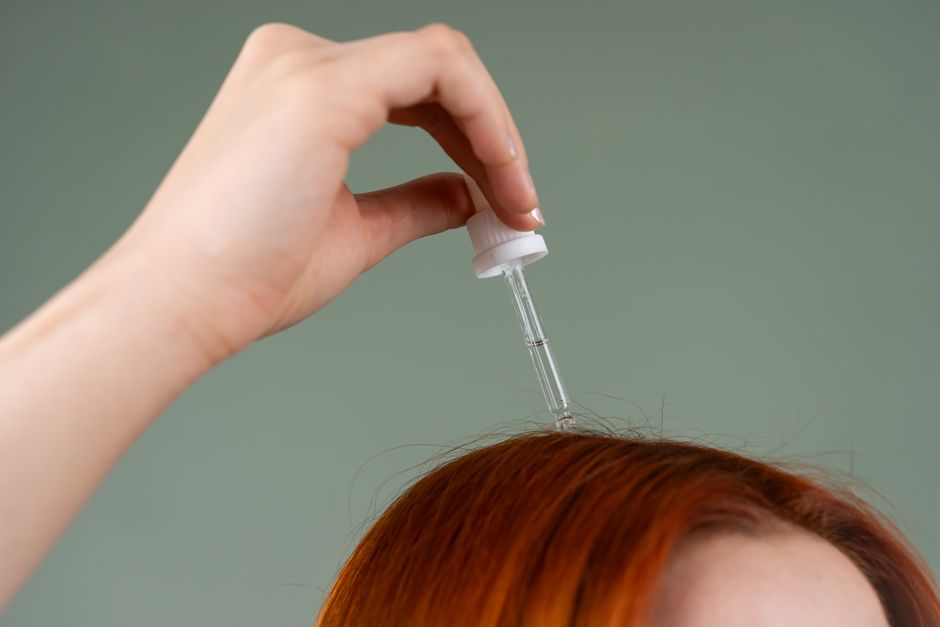
Rosemary oil has the most interesting data among plant-based options. Some studies suggest it may perform comparably to a standard topical treatment for pattern hair loss, though the research is limited and the trials are small. It is not a proven equivalent, and it is not a cure. But it is one of the few natural options with any human data at all. It is typically diluted in a carrier oil and applied to the scalp, and it can irritate sensitive skin.
Correcting a real deficiency is the other one. If blood work shows low iron, low vitamin D, or low zinc, treating that deficiency can reduce shedding. This is not the same as taking these nutrients when your levels are normal. In people with normal levels, supplementing has not been shown to help hair. In fact, too much zinc can cause problems, and excess vitamin A is itself associated with hair loss.
Things like onion juice, garlic, biotin for people who are not deficient, and most “hair growth” blends fall into the no-evidence category. Some have small studies, but nothing that would hold up as proof. Biotin in particular is heavily marketed and rarely useful unless a person is genuinely deficient, which is uncommon.




Does Diet and Nutrition Affect Hair Loss?
Yes, but mainly at the extremes. Hair is a fast-growing tissue that needs steady nutrition, so severe restriction, crash diets, and eating disorders commonly trigger shedding. Ordinary healthy eating is enough for most people.
Protein matters because hair is largely made of it. Very low protein intake over time can contribute to hair loss. Iron and vitamin D are the two nutrients most often linked to shedding when they are low. Zinc plays a role in hair growth, but deficiency is uncommon in people eating a varied diet.
There is one important caution here. More is not better. High-dose vitamin A and certain other fat-soluble vitamins can be toxic and can themselves cause hair loss. Taking large doses of nutrients you do not need is not a neutral act.
If you suspect a deficiency, the right move is a blood test, not a guess. A clinician can tell you whether your levels are actually low and whether correcting them is likely to help.
Can Stress and Lifestyle Changes Stop Hair Loss?
Stress can trigger temporary shedding, and reducing it can allow hair to recover. But stress-related loss is usually self-limiting, meaning it tends to resolve on its own once the stressor passes, often over several months.
The type of stress that most reliably affects hair is physical rather than emotional. Surgery, serious illness, high fever, childbirth, and rapid weight loss are common triggers. Emotional stress can play a role too, but the link is harder to measure. When shedding follows a major physical event, it typically appears a few months later and then gradually improves.
Lifestyle factors that support general health also support hair as a side effect. Not smoking, sleeping adequately, managing chronic conditions, and avoiding extreme diets all help. None of these is a targeted hair treatment, and none will reverse genetic pattern loss. They simply remove obstacles that can make shedding worse.
If shedding continues for many months without an obvious trigger, that is a reason to see a doctor rather than wait it out.
What Does Not Work, Despite the Marketing?
Most natural hair products sold online have never been tested in a proper human trial. That does not automatically mean they are useless, but it does mean nobody can honestly tell you they work.
Common claims to treat with caution:
- Biotin supplements for people who are not deficient, which have little evidence of benefit.
- Collagen powders marketed for hair, which lack human trials showing they regrow hair.
- Onion juice, garlic paste, and similar home remedies, which have weak or no supporting data.
- “DHT-blocking” herbal blends, which rarely have the human studies needed to support the claim.
- Scalp massagers marketed as regrowth tools, where the evidence is limited and mixed.
The pattern is consistent. A plausible mechanism gets turned into a confident marketing claim without the trials to back it. Biological plausibility is not the same as proven benefit. If a product promises to regrow hair and cites no solid human research, that is the tell.
When Should You See a Doctor About Hair Loss?
See a doctor if the loss is sudden, patchy, accompanied by scalp pain or itching, or happening alongside other symptoms like fatigue or weight changes. These can point to a medical cause that natural approaches will not fix.
Also see a clinician if you have tried reasonable steps for several months with no improvement, or if the pattern suggests genetic hair loss. For pattern loss, there are prescription treatments with far stronger evidence than any natural option. A doctor can explain what is available and what to expect. Natural approaches and medical treatment are not mutually exclusive, but it helps to know which one is actually doing the work.
One clarification worth stating plainly. There is no natural method that has been shown to fully reverse established genetic pattern hair loss. Anyone who tells you otherwise is selling something.
Frequently Asked Questions
Can hair loss be reversed naturally?
It depends on the cause. Hair loss from a deficiency, stress, or a medical issue can improve once that cause is addressed, but genetic pattern hair loss cannot be fully reversed by natural methods. No natural option has been shown to regrow hair lost to pattern baldness.
Does rosemary oil really help with hair loss?
Some small studies suggest rosemary oil may be comparable to a standard topical treatment for pattern hair loss, but the evidence is limited. It is one of the few natural options with any human data, though it is not a proven cure.
Does biotin help stop hair loss?
Biotin only helps if you are genuinely deficient, which is uncommon in people eating a normal diet. In people with normal biotin levels, supplementing has not been shown to reduce hair loss.
How long does it take to see results from natural hair loss treatments?
Hair grows slowly, so any real change typically takes several months to become visible. If you see no improvement after a few months, that is a reason to check with a doctor about other causes.
