
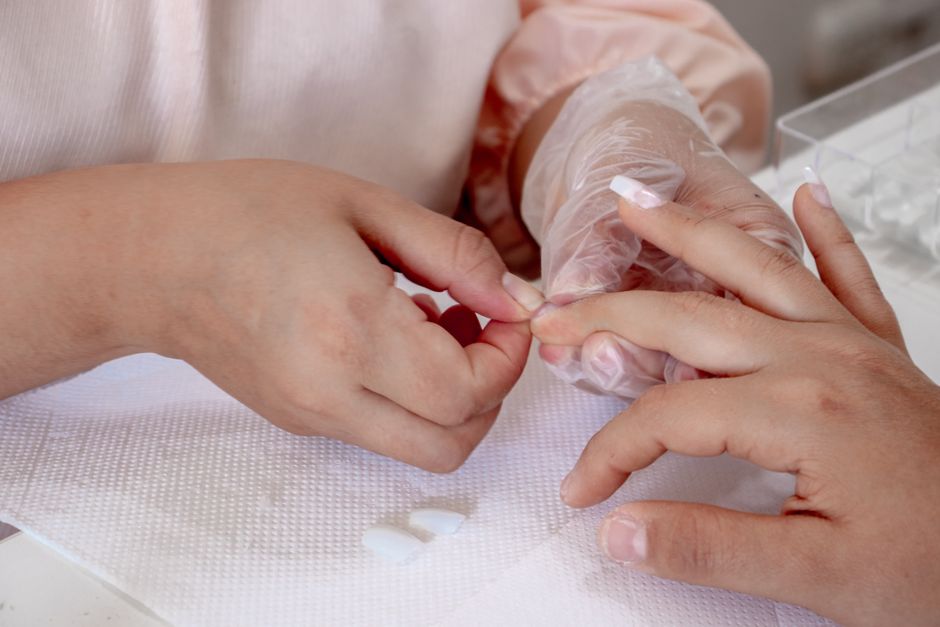
Removing acrylic nails at home is possible, but doing it wrong can damage your natural nail bed. The safest method involves soaking your nails in pure acetone, which dissolves the acrylic bond without forcing or prying. You should never rip, tear, or peel acrylic nails off, as this can strip away layers of your natural nail and lead to thin, brittle, or infected nails.
What Happens If You Remove Acrylic Nails Incorrectly?
Acrylic nails are bonded to your natural nail with a strong adhesive and a chemical reaction. When you pull them off, you are not just removing the enhancement—you are often removing the top layers of your natural nail plate with it.
This can leave your nails paper-thin, ridged, and painful. In more serious cases, peeling them off can create splits in the nail bed that become entry points for bacteria or fungus. This can lead to paronychia, an infection of the skin around the nail, or green nail syndrome, which is a bacterial infection that turns the nail green.
Another common mistake is using metal tools like cuticle pushers to pry the nail off. If you slip, you can cut the nail bed or the surrounding skin. Even if you do not cut yourself, prying creates micro-tears in the nail plate that weaken the entire structure.
How Do You Remove Acrylic Nails Safely at Home?
The only safe way to remove acrylics at home is to dissolve them with acetone. This is the same chemical used in professional nail salons, though professionals often use higher concentrations and faster techniques.
Here is the standard safe method:
- Clip the acrylic nail down as short as possible using nail clippers. The shorter the nail, the less acetone you need to dissolve.
- File the top shiny surface of the acrylic with a coarse nail file. This breaks the seal and allows acetone to penetrate faster.
- Soak cotton balls in pure acetone and place one on each nail.
- Wrap each finger in aluminum foil to hold the cotton ball in place and prevent the acetone from evaporating.
- Wait 20 to 30 minutes.
- Check one nail. The acrylic should look soft and cloudy. Gently push it off with a wooden cuticle stick. If it does not slide off easily, re-wrap and wait another 10 minutes.
Do not scrape the nail bed with force. The acrylic should release on its own once fully dissolved. If you have to scrape hard, it is not ready yet.
What Is the Fastest Safe Removal Method?
The fastest safe method is the same acetone soak, but you can speed it up by filing more of the acrylic off first. The thinner the acrylic layer, the quicker the acetone works.
Some people use a technique called the “foil and acetone” method, which is exactly what is described above. It takes about 30 to 40 minutes total. This is the method most nail technicians recommend for home use.
There is no shortcut. Heat can speed up the chemical reaction, but heating acetone at home is dangerous because it is highly flammable. Do not microwave acetone or soak your nails in warm acetone. The risk of burns is not worth saving a few minutes.
Some salons use an electric nail drill to remove the bulk of the acrylic quickly. This is safe when done by a trained professional. At home, drills cause more harm than good because it is easy to over-file and remove natural nail tissue.





What Should You Do After the Acrylic Is Off?
Once the acrylic is completely removed, your natural nails will likely feel weak and thin. This is normal. The top layer of your nail plate has been stripped or dehydrated by the acetone.
Wash your hands thoroughly to remove any acetone residue. Acetone is a solvent, and leaving it on your skin can cause dryness and irritation.
Apply a cuticle oil or a rich hand cream immediately. Acetone strips natural oils from the skin and nail. Replenishing moisture is the most important step for recovery.
Do not reapply nail polish or new acrylics immediately. Give your nails at least a few weeks to grow out and strengthen. Keep them trimmed short to reduce the risk of bending or breaking.
You can apply a nail hardener, but the evidence that these strengthen nails is limited. The best thing you can do is keep them moisturized and let them grow.
How Long Does It Take for Natural Nails to Recover?
Full recovery depends on how much damage was done. If you removed them properly with acetone, your nails should feel more normal within two to three weeks as new nail grows in.
If you peeled or ripped them off, recovery can take several months. A fingernail takes about six months to fully regrow from the cuticle to the tip. Toenails take even longer—up to a year.
During recovery, you may notice white spots, ridges, or peeling. These are signs of trauma to the nail matrix, which is the tissue at the base of the nail that produces new nail cells. These changes are temporary and will grow out.
If you notice redness, swelling, pus, or severe pain around the nail, you may have an infection. See a doctor or a dermatologist. Do not try to treat an infected nail at home with over-the-counter remedies alone.
Is It Better to Get Them Removed by a Professional?
Yes. A professional removal is safer and faster than any home method. Nail technicians have access to professional-grade acetone, electric files, and the training to avoid damaging the natural nail.
If you have diabetes, poor circulation, or a history of nail infections, you should always have acrylics removed professionally. Your natural nail is more fragile, and the risk of complications is higher.
Professional removal typically costs between $10 and $30 at a nail salon. This is a small price to pay to avoid months of nail damage.
If you cannot get to a salon, the acetone soak method described above is the best home alternative. It is not as fast as professional removal, but it is the closest you can get to safe at home.
What Should You Avoid During Removal?
Do not use nail polish remover that does not contain acetone. Non-acetone removers are not strong enough to dissolve acrylic nails. They will soften the polish but leave the acrylic intact.
Do not soak your nails in acetone for more than 45 minutes at a time. Prolonged exposure can cause severe dryness and chemical burns on the skin.
Do not use a metal cuticle pusher. Metal is too sharp and can cut the nail bed. Use a wooden or plastic cuticle stick instead.
Do not attempt to remove acrylics if you have an open wound, cut, or infection on or around your nails. Acetone will sting badly and can make the infection worse.
Do not use the “dental floss” trick that circulates on social media. This involves sliding floss under the acrylic to pop it off. It is painful, damages the natural nail, and is not recommended by any nail care professional.
Can You Reapply Acrylics Right Away?
You can, but you should not. Your natural nails need time to recover from the acetone exposure and any minor trauma from filing.
If you reapply acrylics immediately, you are sealing in damaged tissue. This can trap moisture and lead to fungal infections. It also means the new acrylics will not adhere well because the nail plate is uneven and weak.
Most nail technicians recommend waiting at least two to four weeks before getting a new set. This gives your nails time to grow out a few millimeters of healthy new nail.
If you want the look of long nails in the meantime, consider press-on nails with adhesive tabs. These do not require acetone or filing, and they come off with warm soapy water. They are a safer temporary option for damaged nails.
Frequently Asked Questions
Can I remove acrylic nails with just nail polish remover?
No, only pure acetone will dissolve acrylic nails. Standard nail polish remover contains other solvents and is not strong enough to break down the acrylic resin.
How long should I soak my nails in acetone?
Soak for 20 to 30 minutes, then check if the acrylic is soft. If it is not, re-wrap and wait another 10 minutes, but do not exceed 45 minutes total.
What do I do if my natural nail hurts after removal?
Mild soreness for a day or two is normal. If the pain is severe, or if you see redness, swelling, or pus, see a doctor because you may have an infection.
Is it safe to use a nail drill at home to remove acrylics?
No, at-home nail drills are risky because it is easy to file through the acrylic and into your natural nail. Leave drill use to trained professionals.
