

Building lean muscle mass comes down to two things you have full control over: telling your muscles they need to grow and giving them the materials to do it. You tell them by lifting heavy enough weights close to failure. You give them materials by eating enough protein and calories. That is the simple truth. Everything else — timing, supplements, special routines — is detail that matters far less than getting those two fundamentals right.
What Does “Lean Muscle Mass” Actually Mean?
The word “lean” gets thrown around a lot in fitness content. Most people use it to mean “muscle without fat.” That is not quite accurate. Muscle tissue itself is already lean — it contains about 79 percent water, 20 percent protein, and minimal fat. When someone says they want lean muscle, what they really mean is they want to add muscle without adding noticeable body fat.
This is an important distinction because it changes your approach. Building muscle requires a calorie surplus. You need extra energy to synthesize new tissue. But that surplus does not have to be large. Research published in the Journal of the International Society of Sports Nutrition found that a surplus of 300 to 500 calories per day is enough to support muscle growth without excessive fat gain. Eating 1,000 extra calories thinking more is better will produce more fat along with the muscle.
The other side of this is body fat percentage. A person at 15 percent body fat who adds five pounds of muscle will look dramatically leaner than someone at 25 percent body fat who adds the same five pounds. The muscle is the same. The visual difference comes from what is covering it. That is why diet and training must go together.
How Do You Build Lean Muscle Mass With Resistance Training
Resistance training is the only reliable way to signal your body to build muscle. Cardio does not do it. Stretching does not do it. You have to challenge your muscles with load they are not used to. The American College of Sports Medicine recommends training each muscle group two to three times per week with at least 48 hours of rest between sessions.
The weight you lift matters more than the number of reps you do. Research consistently shows that sets taken within a few reps of failure produce similar growth whether you are lifting heavy for 6 reps or moderate for 15 reps. What matters is that the last few reps are hard. If you can easily do 15 reps with a weight, it is too light for building muscle. You need to be struggling by rep 10 or 12.
Progressive overload is the mechanism that keeps growth happening. Your body adapts to stress quickly. If you lift the same weight for the same reps for months, your muscles stop getting a signal to grow. You must either increase the weight, increase the reps, or decrease rest time between sets. A study in the journal Medicine and Science in Sports and Exercise found that adding just one rep per set each week produced measurable muscle gains over eight weeks.
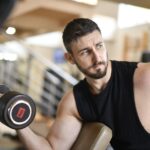
Compound exercises give you more growth per minute spent. Squats, deadlifts, bench presses, rows, and pull-ups work multiple muscle groups at once. Isolation exercises like bicep curls or leg extensions are useful for targeting specific areas but should come after your main lifts, not replace them.
What Protein Intake Is Needed for Building Lean Muscle
Protein is the single most important nutrient for muscle building. Your body breaks down dietary protein into amino acids and uses them to repair and build muscle tissue damaged during training. Without enough protein, your training effort produces minimal results. The Academy of Nutrition and Dietetics recommends 1.6 to 2.2 grams of protein per kilogram of body weight per day for people actively trying to build muscle. For a 175-pound person, that is roughly 127 to 175 grams daily.
Distribution across the day matters almost as much as total intake. A study in the Journal of Nutrition found that spreading protein evenly across three to four meals stimulated muscle protein synthesis more than eating the same amount in one or two meals. Each meal should contain roughly 30 to 40 grams of protein. That is about four to five ounces of chicken, fish, lean beef, or a scoop and a half of protein powder.
Protein timing around workouts gets more attention than it deserves. Eating protein within two hours before or after training is helpful but not critical. What matters far more is that you hit your daily total consistently. Missing one post-workout shake matters little if your overall intake for the day is adequate. The obsession with the “anabolic window” has been overstated by supplement companies looking to sell products.


How Does Sleep Affect Lean Muscle Growth
Sleep is when your body actually builds muscle. Training breaks muscle fibers down. Sleep is when repair and growth happen. Growth hormone, which plays a direct role in muscle protein synthesis, is released primarily during deep sleep stages. The National Sleep Foundation reports that adults need seven to nine hours per night for optimal physical recovery.
A study published in the journal Sleep followed athletes over several weeks and found that those who slept fewer than six hours per night lost muscle mass even when their training and nutrition were adequate. Cortisol, a stress hormone that breaks down muscle tissue, stays elevated when you are sleep-deprived. High cortisol directly opposes the muscle-building process.
Practical advice here is straightforward. Prioritize sleep the same way you prioritize your workouts. If you are training hard but sleeping poorly, you are leaving results on the table. No supplement or training program can compensate for chronic sleep deprivation.
What Role Do Calories and Carbohydrates Play
Many people trying to build lean muscle make the mistake of cutting calories too aggressively. They want to see muscle definition and assume that means eating very little. The problem is that muscle building is an energy-intensive process. Your body needs a modest calorie surplus to synthesize new tissue. Eating at maintenance or in a deficit will limit how much muscle you can add.
Carbohydrates are not the enemy here. Carbs provide the glycogen your muscles use for energy during training. Training without adequate glycogen stores means you fatigue faster and cannot lift as heavy. A review in the Journal of the International Society of Sports Nutrition concluded that carbohydrate intake of 3 to 5 grams per kilogram of body weight per day is appropriate for muscle building in most people. That is roughly 240 to 400 grams for a 175-pound person.
Healthy fats also matter. Testosterone production, which supports muscle growth, depends on dietary fat intake. Dropping fat too low — below 20 percent of total calories — can suppress hormone levels. A balanced approach with 20 to 30 percent of calories from fat keeps your hormonal environment favorable for growth.
Common Misconceptions About Building Lean Muscle
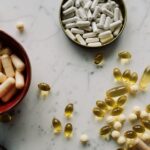
The biggest myth is that you need expensive supplements to build muscle. Creatine monohydrate is the only supplement with strong evidence supporting its use for muscle growth. The International Society of Sports Nutrition states that creatine can enhance strength and lean mass gains when combined with resistance training. Everything else — BCAAs, pre-workouts, testosterone boosters — has either weak evidence or no evidence at all. Protein powder is convenient but not necessary. You can get all the protein you need from food.
Another myth is that women who lift heavy will get “bulky.” This is biologically unlikely for most women. Women have roughly 10 to 20 times less testosterone than men. Building significant muscle mass requires years of dedicated training and a calorie surplus. The “bulky” look most women fear actually comes from high body fat covering moderate muscle. Lifting heavy builds shape and density without causing excessive size.
The idea that you need to train for hours every day is also false. Muscle growth happens during recovery, not during training. Training a muscle group for more than 15 to 20 working sets per week produces diminishing returns. More volume does not equal more growth beyond a certain point. Quality of effort matters more than quantity of time.
| Factor | What Works | What Does Not Work |
|---|---|---|
| Training frequency | Each muscle group 2-3 times per week | Training once per week for hours |
| Weight selection | Weight that makes last 2-3 reps very hard | Weight you can lift easily for 15+ reps |
| Protein intake | 1.6-2.2 g per kg body weight daily | One large protein shake at night |
| Calorie balance | 300-500 calorie daily surplus | Eating at maintenance or deficit |
| Sleep | 7-9 hours per night | Less than 6 hours consistently |
| Supplements | Creatine monohydrate only | BCAAs, test boosters, pre-workout blends |
- Prioritize compound exercises over isolation work
- Increase weight or reps every 1-2 weeks
- Eat protein at every meal, not just after workouts
- Keep training sessions under 60 minutes
- Track your progress in a log to ensure overload
Frequently Asked Questions
How long does it take to build visible lean muscle?
Most people see noticeable changes in 8 to 12 weeks of consistent training and proper nutrition. Genetics and starting point affect the timeline significantly.
Can you build lean muscle without lifting heavy weights?
Yes, bodyweight exercises and resistance bands can build muscle if you take sets close to failure. Progressive overload is still required regardless of equipment.
Do you need protein powder to build muscle?
No. Whole food sources like chicken, eggs, fish, and dairy provide everything your body needs. Protein powder is only a convenience tool.
Is cardio bad for building lean muscle?
Moderate cardio does not interfere with muscle growth. Excessive cardio that creates a large calorie deficit will limit gains.
