
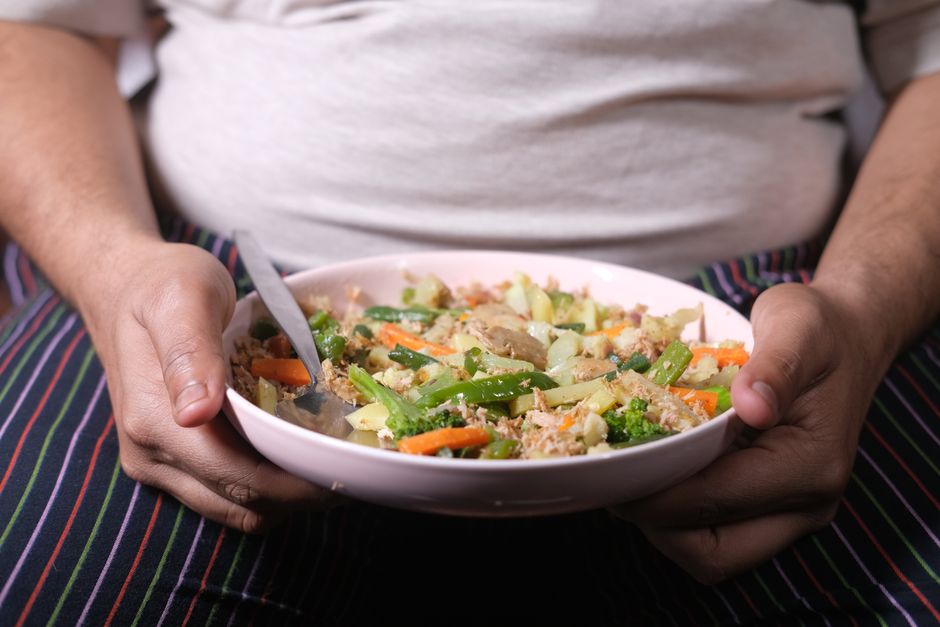
Reheating food for hot holding means bringing it to a safe internal temperature quickly, then keeping it hot enough that bacteria cannot grow. The core rule from food safety guidance is this: reheat to at least 165°F (74°C) within two hours, and hold it at 135°F (57°C) or above. Reheat only food that was cooled properly in the first place, and reheat it once.
Those two numbers — 165°F for reheating and 135°F for holding — are the backbone of safe hot food service. Everything else in this guide explains why they matter, how to hit them reliably, and where people commonly go wrong.
How Do You Reheat Food For Hot Holding?
You reheat it fast, to a safe temperature, and then hold it hot. Speed matters as much as temperature.
The standard guidance from food safety authorities is to reheat cooked food to 165°F (74°C) for at least 15 seconds within two hours. That two-hour window is not arbitrary. Bacteria multiply fastest in the temperature range between 41°F and 135°F (5°C to 57°C) — the range food safety professionals call the “danger zone.” The longer food sits in that range, the more opportunity bacteria have to multiply.
Reheating slowly in a warm oven or on a low stovetop setting stretches out the time food spends in the danger zone. That is the mistake most home cooks and even some food service workers make. A gentle reheat feels safer because nothing burns, but it is actually the riskier approach.
After reheating, transfer the food to a hot holding unit, chafing dish, or warming tray set to maintain 135°F (57°C) or higher. Check the food’s internal temperature — not the equipment’s dial — with a food thermometer.
Why Does the 165°F Reheating Temperature Matter?
165°F (74°C) is the temperature at which a wide range of foodborne bacteria are rapidly killed. It is the same target used for cooking poultry and reheating leftovers.
Different bacteria have different heat tolerances. Most common foodborne pathogens — Salmonella, E. coli, Listeria — are destroyed well below 165°F when held at temperature for long enough. The 165°F target builds in a margin that accounts for uneven heating, thick pieces of food, and the reality that a thermometer reading in one spot does not guarantee the whole dish reached that temperature.
This is why stirring matters. A pot of stew can read 165°F at the center and be cooler near the edge of the pot or at the bottom. Stirring during reheating distributes heat more evenly, and checking temperature in several spots gives a more honest picture than a single reading.
One clarification worth making: 165°F is a target for the food, not the oven or the microwave setting. Equipment thermostats are often inaccurate. The only reliable measure is a probe thermometer inserted into the thickest or coldest part of the food.
What Is the Danger Zone and Why Does It Matter for Hot Holding?
The danger zone is the temperature range where bacteria multiply most rapidly: between 41°F and 135°F (5°C to 57°C). Food held below 135°F is, by definition, in that range.
Hot holding equipment exists specifically to keep food out of the danger zone. A chafing dish with a lit Sterno can, a commercial warming cabinet, or a slow cooker set to “keep warm” all serve this purpose — but only if they actually maintain the food at 135°F or above. Many home slow cookers on their lowest setting do not reliably hold food at that temperature, especially when the lid is opened repeatedly.
The practical implication is straightforward. If you are holding food hot for more than a short period, you need to verify the temperature of the food itself at intervals, not assume the equipment is doing its job. Food safety guidance generally recommends checking held food at least every few hours and discarding anything that has dropped below 135°F.
There is also a time limit on hot holding. Even at safe temperatures, food quality and safety degrade over time. Many food safety programs set a maximum hot holding time — often four hours — after which food should be discarded rather than cooled and reused. The exact limit varies by jurisdiction and local health code.




What Equipment Do You Need to Reheat and Hold Food Safely?
A probe thermometer is the single most important tool. Without one, you are guessing.
Look for a digital instant-read thermometer that reads accurately to within a degree or two. Calibrate it periodically using the ice-point method: fill a glass with ice and water, stir, and check that the thermometer reads 32°F (0°C). If it does not, adjust it according to the manufacturer’s instructions or replace it.
For reheating, the fastest methods are usually a microwave, a stovetop over medium-high heat with stirring, or a convection oven. For holding, you need equipment designed to maintain heat:
- Chafing dishes with fuel cans, for buffet-style service
- Commercial warming cabinets or holding ovens
- Slow cookers, but only if verified to hold at 135°F or above
- Insulated hot boxes for transport
Whatever you use, the thermometer is the check. Equipment fails, fuel runs out, and lids get left off. The thermometer tells you what is actually happening to the food.
Can You Reheat Food More Than Once?
No. Food safety guidance is consistent on this point: reheat food only once.
Each cooling and reheating cycle gives bacteria another window to multiply. It also degrades food quality. The safe pattern is to cook, cool properly, reheat once, hold hot, and then discard what is left rather than cooling and reheating it again.
Cooling properly matters as much as reheating. If food was cooled slowly — left on the counter for hours, or put into a large deep container in the fridge where the center stays warm — it may already have allowed bacterial growth before it ever reaches the reheat stage. Reheating kills bacteria, but it does not reliably destroy the toxins some bacteria produce. That is an important distinction. Some foodborne toxins are heat-stable and survive reheating even at 165°F. This is why preventing bacterial growth during cooling and storage matters so much.
Standard cooling guidance is to bring food from 135°F to 70°F (57°C to 21°C) within two hours, and then down to 41°F (5°C) or below within a further four hours. If food did not cool within those windows, reheating it does not make it safe.
What Foods Are Riskiest to Reheat and Hold?
Some foods carry more risk than others when reheated and held. The differences come down to moisture, protein content, and how evenly heat moves through them.
Rice is a well-known example. Cooked rice can harbor Bacillus cereus, a bacterium whose spores survive cooking. If rice is left at room temperature, the bacteria multiply and produce toxins. Reheating does not reliably destroy those toxins. This is why rice should be cooled quickly and refrigerated promptly, and why it is a poor candidate for long hot holding.
Other foods that warrant extra care:
- Poultry and dishes containing poultry, which need to reach 165°F throughout
- Ground meat dishes like chili or meat sauce, where heat penetrates unevenly
- Creamy sauces and gravies, which can separate and heat unevenly
- Large cuts of meat or whole stuffed dishes, where the center may lag behind the surface
Thin, uniform foods reheat more predictably than thick, dense ones. When in doubt, stir, check multiple spots, and give it more time at temperature rather than less.
How Do You Reheat and Hold Food Safely at Home Versus in Food Service?
The underlying rules are the same. The difference is scale and documentation.
Commercial food service operations are generally held to local health codes that specify reheating temperatures, holding temperatures, time limits, and record-keeping. Many require temperature logs. The 165°F reheat target and 135°F holding minimum are widely reflected in these codes, though specific requirements vary by jurisdiction.
At home, the same principles apply without the paperwork. Reheat to 165°F, hold at 135°F or above if you are keeping food out for guests, check with a thermometer, and discard food that has been sitting out too long. For a dinner party or holiday meal, a chafing dish and a probe thermometer cover most of what you need.
One practical note for home cooks: the two-hour rule for food left at room temperature is a useful benchmark. Perishable food that has sat out longer than that is generally considered unsafe to reheat and serve, regardless of how hot you get it.
Frequently Asked Questions
What temperature should reheated food be held at?
Hold hot food at 135°F (57°C) or above. Anything below that is in the danger zone where bacteria multiply.
How long can you hold food hot before it needs to be discarded?
Many food safety programs set a maximum hot holding time of about four hours, though the exact limit varies by local health code. Check your local guidance and discard food that has dropped below 135°F.
Can you reheat food in a slow cooker?
Not reliably for reheating, because slow cookers heat too gradually and food spends too long in the danger zone. Use a stovetop, microwave, or oven to reheat to 165°F first, then transfer to a slow cooker only if it holds at 135°F or above.
Does reheating food kill all bacteria?
Reheating to 165°F kills most foodborne bacteria, but it does not reliably destroy heat-stable toxins some bacteria produce. That is why proper cooling and storage before reheating matter so much.
