
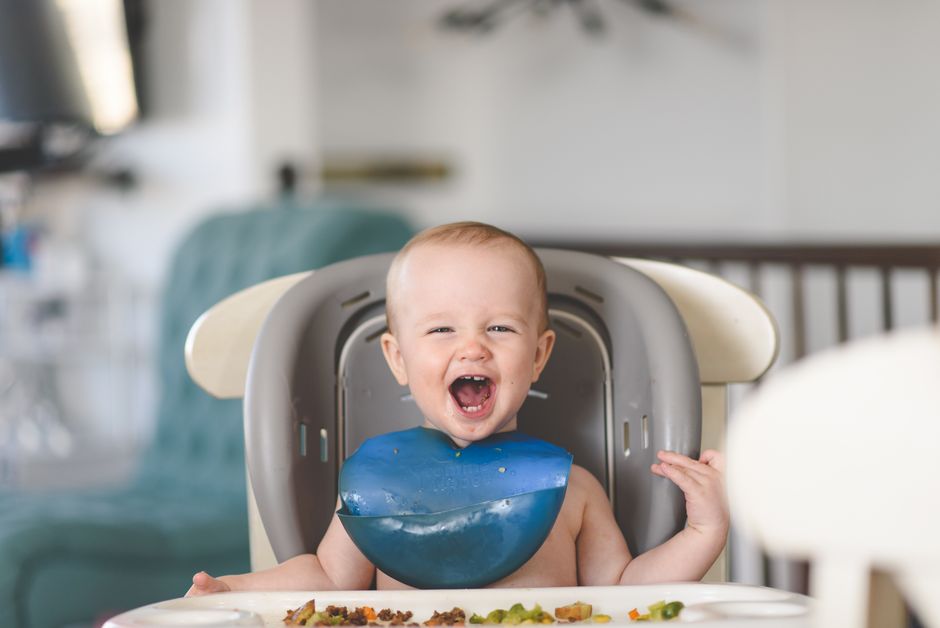
Most babies are ready to start solid foods at around 6 months of age. That is the age range recommended by major health organizations, including the World Health Organization and the American Academy of Pediatrics. Before 6 months, breast milk or infant formula meets all of a baby’s nutritional needs, and a baby’s body is not yet ready to handle solid food safely. Starting too early or too late both carry risks, so the timeline matters.
When Can Babies Eat Baby Food?
Babies can begin eating baby food at about 6 months old. This is when most infants show the physical skills and developmental signs that make swallowing solids safe. The exact week varies from baby to baby, but 6 months is the standard starting point.
Two things change around this age. First, a baby’s digestive system matures enough to handle food beyond milk. Second, babies develop the coordination to move food to the back of the mouth and swallow it. Before this point, the tongue-thrust reflex pushes food back out. That reflex is a protective mechanism, not a sign of pickiness.
Iron is a major reason the timeline matters. Babies are born with iron stores that begin to run low around 6 months. Breast milk alone does not supply enough iron after that point, so iron-rich foods become important. Infant formula is fortified with iron, which is one reason formula-fed babies may have slightly different needs, but the 6-month starting point still applies to most babies.
What Signs Show a Baby Is Ready for Solids?
Readiness is about skills, not just age. A baby who is 6 months old but cannot hold their head steady is not ready. Watch for several signs together, not just one.
- Holds head up steadily without support
- Sits with minimal support and can control the neck
- Shows interest in food, such as watching you eat or reaching for food
- Opens the mouth when food is offered
- Can move food to the back of the mouth and swallow rather than pushing it out
- Has lost the tongue-thrust reflex that pushes food forward out of the mouth
One common myth is that a baby who wakes more at night or seems hungry is ready for solids. Waking more often is normal at many ages and is not a reliable sign of readiness. Size is also not a reliable sign. A large baby is not automatically ready earlier, and a small baby is not automatically delayed.
Why Not Start Before 6 Months?
Starting solids before 4 months is not recommended, and starting before 6 months is generally discouraged unless a clinician advises it for a specific medical reason. Early introduction carries real risks.
A baby’s swallowing skills are not fully developed before 6 months. Early solids raise the risk of choking. Babies who start solids too early may also take in less breast milk or formula, which can affect growth and nutrition. There is also some evidence that very early introduction of solids is associated with a higher risk of certain digestive and allergic issues, though the research on this is not fully settled.
There are rare exceptions. Some babies with specific medical conditions, such as certain feeding or growth problems, may be guided by a pediatric specialist to start earlier. That decision belongs with a clinician, not a general timeline.




What About Starting Later Than 6 Months?
Waiting well past 6 months is not ideal either. Babies who start solids late may miss the window when they are most willing to try new tastes and textures. Delaying too long can also make it harder to meet iron needs from food alone.
Some babies are not ready at exactly 6 months and may need a few more weeks. That is normal. The concern is prolonged delay, not a slight variation. If a baby is not showing readiness signs by around 7 months, talk with a pediatrician. A clinician can check for feeding or developmental issues that may need attention.
What Is the Step-by-Step Timeline for Baby Food?
The first year of eating unfolds in stages. Each stage builds on the skills learned in the one before it. The ages below are general guides, not strict rules.
| Age | What to Expect |
|---|---|
| 0–6 months | Breast milk or formula only. No water, juice, or solids needed. |
| Around 6 months | First solids begin. Single-ingredient purees or soft, mashed foods. Small amounts once or twice a day. |
| 6–8 months | More textures and flavors. Purees, mashed foods, and soft finger foods. Two to three small meals a day alongside milk. |
| 8–10 months | More finger foods and self-feeding practice. Lumpy textures and soft pieces. Three meals a day is common. |
| 10–12 months | Mostly soft table foods. Baby practices picking up and chewing. Milk remains a key part of the diet. |
| 12 months and beyond | Transition to family foods. Whole cow’s milk can be introduced after 12 months. |
Breast milk or formula stays the main source of nutrition through the first year. Solids are a supplement, not a replacement, until closer to 12 months.
Which Foods Should Come First?
There is no single required first food. Single-ingredient foods are easiest to start with because they let you watch for reactions. Iron-rich foods deserve attention early because of the iron gap around 6 months.
Good early options include iron-fortified infant cereal, pureed meats, mashed beans, and soft cooked vegetables or fruits. Some parents start with vegetables before fruit to encourage a taste for savory foods, though there is no strong evidence that order matters much in the long run.
Introduce one new food at a time and wait a few days before adding another. This makes it easier to spot a reaction if one occurs. Reactions are uncommon, but this approach helps identify them.
On allergens: current guidance from major allergy organizations supports introducing common allergens, such as peanut and egg, early and regularly, often starting around 6 months. This is a change from older advice to delay allergens. Babies at higher risk of allergies should have this discussion with their pediatrician first. Never give whole nuts or large dollops of peanut butter to a baby, because these are choking hazards. Thinned peanut butter or peanut powder mixed into food is the safer form.
What Foods and Textures Should Be Avoided?
Some foods are unsafe for babies under 12 months. The reasons are choking risk, contamination risk, or nutritional harm.
- Honey, because of the risk of infant botulism in babies under 12 months
- Whole nuts, popcorn, and hard raw vegetables, which are choking hazards
- Whole grapes and large chunks of food, unless cut into small, safe pieces
- Choking-risk shapes like hot dog rounds, which should be quartered lengthwise
- Cow’s milk as a main drink before 12 months, though small amounts in cooking are generally fine
- Added salt and sugar, which babies do not need
- Unpasteurized foods and drinks
Texture matters as much as the food itself. A food that is safe mashed may be unsafe as a whole piece. Always match the texture to the baby’s skills.
How Much Should a Baby Eat at First?
First meals are tiny. A few teaspoons once a day is a normal starting amount. The goal at the beginning is practice, not calories.
Over weeks, appetite and intake grow. By around 8 to 10 months, many babies eat three small meals a day plus snacks, while still drinking breast milk or formula. Follow the baby’s cues rather than forcing a set amount. Pushing food past fullness can work against the goal of learning to self-regulate.
Milk intake usually stays fairly steady at first. If a baby suddenly drinks much less milk once solids start, that is worth mentioning to a pediatrician.
How Do You Know When to Move to the Next Stage?
Move to the next texture stage when the baby shows they can handle the current one. Signs include chewing motions, picking up food with fingers, and swallowing lumpier textures without gagging.
Gagging is not the same as choking. Gagging is a normal protective reflex that helps a baby learn to manage food. Choking is silent and involves a blocked airway. Knowing the difference matters, and every caregiver should know infant choking first aid and CPR.
There is no need to rush stages. Some babies move quickly through purees to finger foods. Others take longer. Both are normal. The pace should follow the baby, not a chart.
Frequently Asked Questions
Can I start baby food at 4 months?
Most major health organizations recommend waiting until about 6 months. Starting at 4 months is generally not advised unless a pediatrician recommends it for a specific medical reason.
What should a baby’s first food be?
There is no single required first food, but iron-rich options like iron-fortified cereal, pureed meat, or mashed beans are good choices. Single-ingredient foods make it easier to spot any reaction.
How do I know my baby is ready for solids?
Look for head control, the ability to sit with support, interest in food, and loss of the tongue-thrust reflex. Several signs together matter more than any single one.
Can babies have water with their food?
Small sips of water from a cup can be offered with meals starting around 6 months. Breast milk or formula should remain the main drink through the first year.
