
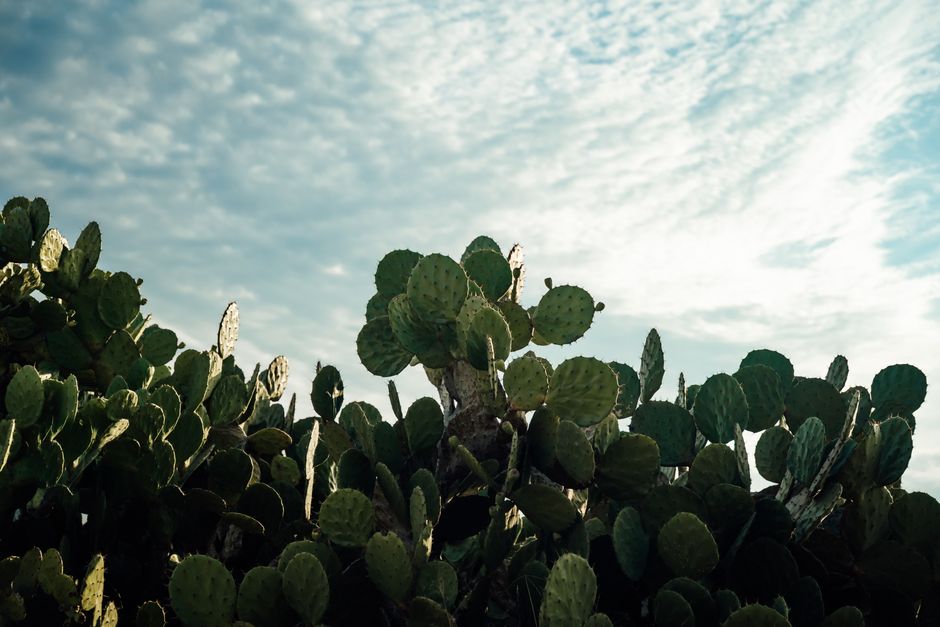
Nopales are the flat green pads of the prickly pear cactus, and preparing them comes down to four steps: trim the edges and spines, scrape both sides to remove the tiny hair-like glochids, slice or dice the pads, then boil or grill them until tender. Fresh nopales are ready in about 10 to 20 minutes of cooking. The one thing that surprises most first-time cooks is the sap — nopales release a slippery liquid called mucilage, and knowing how to handle it is the difference between a slimy result and a clean-tasting vegetable.
What Are Nopales and What Do They Taste Like?
Nopales are the edible pads of Opuntia cacti, a traditional food in Mexico and the southwestern United States. They have a mild, slightly tart flavor that some people compare to green beans or the stem of a green pepper, with a faint vegetal sourness.
When raw, the pads are firm and crisp. Cooked, they soften considerably and can turn slippery if handled carelessly. That texture is the main reason people either love nopales or avoid them.
You will find them in three main forms:
- Fresh pads — sold whole in produce sections and Latino markets, sometimes already cleaned
- Jarred or canned — packed in brine, already cooked, ready to rinse and use
- Dried — less common outside Mexico, needs rehydration before cooking
Fresh pads are best for grilling and salads. Jarred nopales are convenient for stews and scrambled eggs, though they lose some firmness.
How Do You Prepare Nopales Step by Step?
Start with pads that are firm, bright green, and about the size of your hand. Smaller, thinner pads are more tender. Larger, older pads can be tough and fibrous.
Here is the full process.
Step 1: Hold the pad safely
Spear the pad with a fork or hold it with tongs. Do not grip it bare-handed. Even pads labeled “spine-free” usually still carry glochids.
Step 2: Trim the edges
Use a sharp knife to slice off the outer rim of the pad, about 1/8 to 1/4 inch all the way around. This removes the thicker edge and any spines growing there.
Step 3: Scrape both sides
Lay the pad flat and scrape the surface with the blade at a shallow angle, moving away from your hand. This removes the small bumps where glochids sit. Flip and repeat on the other side. A vegetable peeler also works.
Step 4: Rinse and check
Rinse under cool water. Run your fingers lightly over the surface — with care — to feel for remaining glochids. Scrape again if needed.
Step 5: Cut to shape
Slice into strips, dice into cubes, or leave the pad whole for grilling. Strips about 1/4 inch wide work well for tacos and salads.
Step 6: Cook
Boil sliced nopales in salted water until tender, roughly 10 to 20 minutes depending on thickness. Or grill whole pads over medium heat until they soften and char slightly, turning once.
Why Are Nopales Slimy and How Do You Reduce It?
The slipperiness comes from mucilage, a gel-like substance the cactus stores water with. It is the same basic material found in okra and aloe. It is not harmful, and some people like the texture in stews where it thickens the broth.
If you want less of it, a few techniques help:
- Boil briefly, then drain. Some of the mucilage leaches into the water. Discard that water rather than using it in the dish.
- Grill or dry-sear. High, dry heat reduces the gel texture more than boiling does. Grill whole pads or sear slices in a hot pan with little liquid.
- Rinse after boiling. A quick rinse under running water removes surface mucilage.
- Salt early. Salting sliced nopales and letting them sit draws out moisture and some mucilage, though this is a technique rather than a proven method with measured results.
One clarification worth knowing: the sliminess is not a sign the nopales are spoiled or undercooked. It is a normal property of the plant. Jarred nopales are less slippery because the brining and canning process removes much of the mucilage.




How Do You Handle the Spines and Glochids Safely?
Glochids are the real hazard, not the large spines. They are tiny hair-like bristles with barbs that lodge in skin and are difficult to pull out. They can cause irritation for hours or days.
Protect yourself with these habits:
- Wear thick gloves if you are cleaning more than one or two pads
- Hold pads with tongs or a fork, never bare hands
- Scrape over a bowl or sink so glochids do not scatter onto the counter
- Wipe the cutting board and knife with a damp paper towel afterward, then wash thoroughly
If glochids get into your skin, do not rub. Try pressing a piece of tape or a layer of warm wax over the area and peeling it off. If a bristle is deeply embedded or the area becomes red and swollen, seek medical care. Do not try to dig it out with a needle at home.
Some stores sell nopales already cleaned and diced. If handling the spines is a concern, that is a reasonable option.
What Are the Common Ways to Cook Nopales?
Nopales are versatile and take well to several cooking methods. Each produces a different texture.
Boiling is the most common approach for diced nopales. Cook in salted water until tender, drain, and rinse. The result is soft and works well in salads, scrambled eggs, and fillings.
Grilling whole pads gives a firmer texture and a light char. Brush with oil, grill over medium heat, and turn once. Grilled pads can be sliced into strips or served whole as a side.
Sautéing sliced nopales in a hot pan with onion and a little oil cooks off moisture quickly and keeps them from turning too soft. This is a practical method for tacos.
Pickling is traditional in Mexico. Cooked nopales are packed in a vinegar brine with onion, garlic, and herbs and refrigerated. They keep for weeks and are used as a condiment.
Cooked nopales keep in the refrigerator for several days in a sealed container. They do not freeze well — the texture breaks down further after thawing.
Are Nopales Nutritious?
Nopales are low in calories and a source of fiber, vitamin C, and manganese. According to USDA nutritional data, one cup of raw sliced nopales contains roughly 14 calories and about 3 grams of carbohydrate, with a modest amount of fiber.
They also contain antioxidant compounds, including pigments called betalains. That part is well documented in laboratory analysis.
What is less clear is whether eating nopales produces meaningful health effects in people. Some small studies have looked at nopales and blood sugar response, but the evidence is not strong enough to support claims that nopales treat or prevent diabetes. Anyone managing blood sugar should treat nopales as a vegetable, not a remedy, and follow their clinician’s guidance.
One practical note: nopales are often cooked with salt and oil, which changes the nutritional picture. A boiled, drained serving is very different from nopales fried with chorizo.
What Should You Know Before Buying Nopales?
Look for pads that are firm, evenly green, and free of soft spots or dark patches. Slight wrinkling means they are older and likely tougher. Very large pads tend to be more fibrous than small ones.
Fresh nopales keep in the refrigerator for about one to two weeks if stored dry in a paper bag or loosely wrapped. Do not wash them until you are ready to cook — moisture speeds spoilage.
If you buy jarred nopales, rinse them well before using. The brine is salty and can dominate a dish. Taste before adding extra salt.
Frequently Asked Questions
Do you have to boil nopales before eating them?
No, but they should be cooked in some way before eating. Grilling or sautéing works as well as boiling, and all three methods soften the pads and reduce the mucilage.
How do you get the slime out of nopales?
Boil them briefly and discard the cooking water, or use dry high heat such as grilling or searing. Rinsing after boiling also removes surface mucilage.
Can you eat the spines on nopales?
No. The large spines and the tiny glochids must both be removed before cooking, since glochids can lodge in the mouth and throat.
Are jarred nopales already cooked?
Yes, jarred and canned nopales are cooked during processing and can be eaten after rinsing. Many cooks still heat them briefly to improve texture and flavor.
