
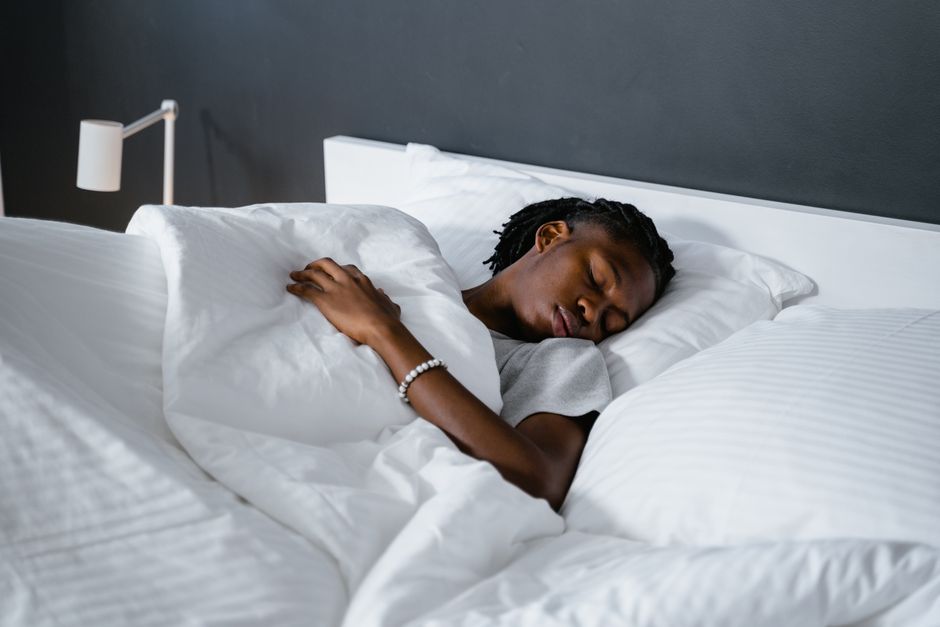
If you want to fall asleep fast, the most reliable approach is to stop trying to force it. Sleep onset is a physiological process driven by rising sleep pressure and a drop in arousal, not by willpower. The strategies that work best are the ones that lower your core body temperature, quiet your nervous system, and remove the mental engagement that keeps the brain alert. Most people who struggle to fall asleep are accidentally doing the opposite of these things.
What Actually Happens in Your Body When You Fall Asleep?
Sleep onset is not a switch. It is a gradual shift involving several systems working together.
Your core body temperature drops slightly as you approach sleep. This is one of the most consistent findings in sleep physiology. The drop in core temperature is part of the signal that tells your brain it is time to sleep. A warm environment that prevents this drop can delay sleep onset.
At the same time, activity in the arousal systems of the brain — including regions that regulate alertness and stress response — decreases. The hormone melatonin rises in the evening in response to darkness. Melatonin does not knock you out. It signals to your body that night has arrived. Its role is timing, not sedation.
Adenosine, a chemical that builds up in the brain the longer you are awake, creates what researchers call sleep pressure. The longer you have been awake and the more adenosine has accumulated, the easier it is to fall asleep. This is why a person who has been awake for 18 hours will typically fall asleep faster than someone who napped in the afternoon.
The transition from wake to sleep normally takes somewhere between 10 and 20 minutes for most healthy adults. Consistently falling asleep in under 5 minutes can actually be a sign of significant sleep deprivation rather than good sleep health.
How Do You Make Yourself Go To Sleep Fast When You’re Lying Awake?
If you are already in bed and cannot sleep, the worst thing you can do is stay there trying harder. Lying awake in bed for extended periods teaches your brain to associate the bed with frustration and alertness. This is a well-documented phenomenon in behavioral sleep medicine.
The standard clinical recommendation — used in cognitive behavioral therapy for insomnia, which is the first-line treatment for chronic insomnia — is to get out of bed if you have been awake for roughly 20 minutes and do something calm and low-stimulation in dim light until you feel sleepy. Then return to bed. Repeat as needed.
This feels counterintuitive. Getting up when you want to sleep seems like the opposite of what you should do. But the goal is to protect the association between your bed and sleep. This approach is supported by decades of clinical research and is more effective for chronic insomnia than sleep medication over the long term.
While you are up, keep the lights low. Do not check your phone. Do not turn on a bright screen. Reading a physical book under a dim lamp or sitting quietly are reasonable options. The goal is to let sleep pressure build without adding stimulation.
Why Can’t I Fall Asleep Even When I’m Tired?
Feeling tired and being able to fall asleep are not the same thing. This confuses a lot of people.
Mental arousal — racing thoughts, worry, planning, replaying conversations — can override physical tiredness. The brain’s arousal system is powerful. It evolved to keep you alert in threatening situations, and it does not always distinguish between a real threat and anxiety about tomorrow’s meeting.
Caffeine is another common culprit. Caffeine blocks adenosine receptors in the brain. It does not reduce adenosine levels; it just prevents adenosine from doing its job. The half-life of caffeine in healthy adults is typically around 5 to 6 hours, though this varies widely between individuals. That means a significant portion of a 3 p.m. coffee may still be circulating at 9 p.m. Individual differences in caffeine metabolism are substantial and partly genetic.
Alcohol is another factor. Many people believe a drink helps them sleep. Alcohol does tend to make people feel drowsy initially, but it disrupts sleep architecture later in the night and can cause early waking. It also relaxes the muscles in the upper airway, which can worsen snoring and breathing disruptions during sleep.
Other common reasons for difficulty falling asleep despite tiredness include:
- Irregular sleep schedule that confuses the body’s internal clock
- Bright light exposure in the evening, especially from screens
- A bedroom that is too warm
- Stress or anxiety that activates the nervous system
- Certain medications, including some antidepressants and steroids
- Untreated sleep disorders such as sleep apnea or restless legs syndrome
If difficulty falling asleep is a persistent pattern lasting months, it is worth talking to a doctor. Chronic insomnia is common and treatable, and it can also be a symptom of an underlying condition.





What Can You Do in the Hour Before Bed to Fall Asleep Faster?
The hour before bed matters more than most people realize. What you do in that window either supports or undermines the sleep process.
Keeping the bedroom cool is one of the most practical steps. Most sleep researchers suggest a room temperature somewhere in the mid-to-upper 60s Fahrenheit, though comfortable range varies by person. The key principle is that a cooler room supports the natural drop in core body temperature that accompanies sleep onset.
Dimming lights in the evening helps melatonin release. Bright overhead lighting and screens emit light that can suppress melatonin. The effect is strongest with blue-light-heavy screens, but any bright light in the evening has some impact. Reducing light exposure in the last hour or two before bed is a reasonable habit.
A warm bath or shower about an hour or two before bed can help some people. The reasoning is that the warm water draws blood to the skin’s surface, and when you get out, your core temperature drops more quickly. This temperature drop may support sleep onset. The evidence for this is moderate but consistent.
Writing down what is on your mind — a to-do list for tomorrow, a worry, a plan — can reduce the mental rehearsal that keeps people awake. Some research suggests that writing a specific to-do list before bed helps people fall asleep faster than writing about completed tasks. The mechanism appears to be that the brain stops trying to hold onto unfinished items.
Keeping a consistent wake-up time is arguably more important than a consistent bedtime. Waking at the same time every day — including weekends — helps anchor the circadian rhythm, which in turn makes it easier to fall asleep at the same time each night.
Does Your Sleep Environment Affect How Fast You Fall Asleep?
Yes, and the effects are well established. The bedroom environment sends signals to the brain about whether this is a place for sleep or for being awake.
Darkness matters because light is the primary signal that regulates the circadian system. Even dim light from a hallway or a charging device can be enough to affect sleep in some people. Blackout curtains or an eye mask can help if complete darkness is not possible.
Noise is a factor, but the type of noise matters. Sudden, unpredictable sounds disrupt sleep more than steady background noise. Some people find white noise or a fan helpful because it masks unpredictable sounds. The evidence for white noise specifically improving sleep onset is limited, but many people report it helps.
The bed itself should be reserved for sleep and intimacy. Working, eating, watching TV, or scrolling in bed weakens the mental association between bed and sleep. This is a core principle in behavioral sleep medicine.
Pets and partners can affect sleep quality, though the research here is mixed and highly individual. Some people sleep better with a partner; others do not. There is no universal recommendation.
What About Melatonin and Other Sleep Aids?
Melatonin is a hormone, not a sedative. It shifts the timing of the circadian clock. It is most useful for jet lag and for people with delayed sleep phase — those who naturally fall asleep very late. For general difficulty falling asleep at a normal hour, the evidence for melatonin is modest.
If you do use melatonin, the doses studied in research are typically much lower than what is sold over the counter. Many commercial products contain far more melatonin than the amounts used in clinical studies. The actual melatonin content in supplements can also vary significantly from what the label states, which is a documented issue with dietary supplements in the United States.
Over-the-counter sleep aids — most of which contain antihistamines — can cause drowsiness, but they are not designed for long-term use. Tolerance can develop, and side effects include daytime grogginess, dry mouth, and confusion, especially in older adults. They also do not address the underlying cause of insomnia.
Prescription sleep medications exist and can be appropriate for short-term use in some situations. They carry risks including dependence, next-day impairment, and complex sleep behaviors. These are decisions to make with a doctor, not from a supplement aisle.
The most effective long-term treatment for chronic insomnia is cognitive behavioral therapy for insomnia, often called CBT-I. It is not a pill. It is a structured program that addresses the thoughts and behaviors that perpetuate insomnia. Multiple clinical guidelines list it as the first-line treatment for chronic insomnia in adults.
Frequently Asked Questions
How long should it take to fall asleep?
For most healthy adults, falling asleep takes about 10 to 20 minutes. Consistently falling asleep in under 5 minutes may indicate significant sleep deprivation rather than good sleep.
Does counting sheep actually help you fall asleep?
No good evidence supports counting sheep as a sleep aid, and some research suggests it may be too boring or too engaging to help. More distracting mental tasks tend to work better for most people.
Is it bad to look at your phone before bed?
Yes, bright screen light in the evening can suppress melatonin and delay sleep onset. The content on the screen — messages, news, social media — can also increase mental arousal, which makes it harder to fall asleep.
Can you train yourself to fall asleep faster?
Yes, sleep onset can improve with consistent behavioral changes, including a fixed wake time, a cool dark room, and getting out of bed when you cannot sleep. These approaches are the basis of cognitive behavioral therapy for insomnia, which is the first-line treatment for chronic insomnia.
