
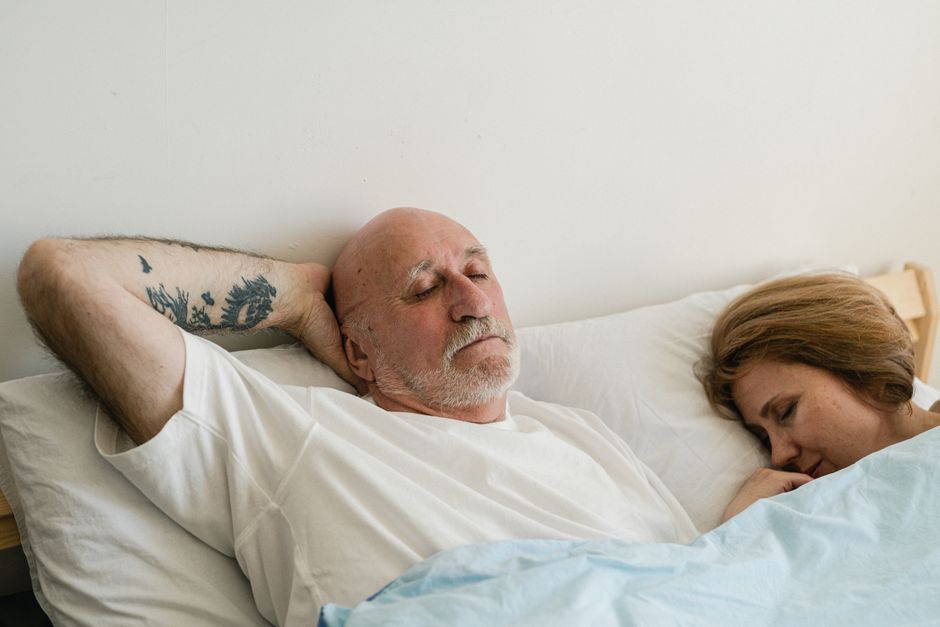
A home sleep apnea test lets you measure your breathing during sleep in your own bed, using a small kit you pick up or receive by mail. You wear a few sensors overnight, return the device, and a sleep physician reviews the recording for signs of sleep apnea. It is not a full sleep study, and it does not diagnose insomnia, narcolepsy, or restless legs syndrome. But for many adults with suspected obstructive sleep apnea, it is the first test a doctor orders.
What Is a Home Sleep Study, Exactly?
A home sleep study — often called a home sleep apnea test, or HSAT — is a limited recording of your breathing, oxygen levels, and heart rate during sleep. It is a screening and diagnostic tool for one specific problem: sleep-disordered breathing.
The device typically includes a nasal cannula or airflow sensor, a band around your chest or abdomen to detect effort, a pulse oximeter on your finger, and sometimes a snore microphone or body position sensor. Most kits record three to five channels of data. A full in-lab sleep study, by contrast, records brain waves, eye movements, muscle activity, and leg movements — a much richer picture.
That difference matters. Because a home test does not record brain waves, it cannot measure how long you actually slept. It estimates breathing events per hour of recording time, not per hour of sleep. If you lie awake for two hours, that time still counts. This tends to make results look slightly better than they are, which is one reason home tests are not used when the pretest probability of severe apnea is very high.
Who Can Do a Sleep Study at Home?
Home testing is generally appropriate for adults with a moderate to high likelihood of obstructive sleep apnea and no significant heart, lung, or neurological disease. Your doctor assesses this using symptoms like loud snoring, witnessed pauses in breathing, and daytime sleepiness, plus risk factors like weight and neck circumference.
It is not the right choice for everyone. Home testing is generally not recommended when:
- You have significant heart failure, chronic lung disease, or a neuromuscular condition
- Your doctor suspects central sleep apnea rather than obstructive
- You have another suspected sleep disorder, such as narcolepsy or periodic limb movement disorder
- You are being evaluated for a treatment like a mandibular advancement device or surgery
- You have severe daytime sleepiness that could be dangerous — for example, you drive for a living
Children are a separate case. Pediatric sleep apnea is usually evaluated with an in-lab study, and home testing is not standard for children. No clinical guidelines currently support using home sleep apnea tests to diagnose sleep apnea in children.
How To Do A Sleep Study At Home: Step by Step
The process is less complicated than most people expect. Here is what it typically looks like.
Step 1: Get a referral. A home sleep test requires a prescription or order from a physician. You cannot buy a legitimate diagnostic test over the counter. Direct-to-consumer kits exist, but their results are screening information, not a diagnosis, and many sleep physicians will want to repeat testing.
Step 2: Pick up or receive the kit. Some clinics hand you the device at an appointment. Others mail it. You will usually get instructions and a phone number for technical support.
Step 3: Prepare for the night. Shower and wash your face before bed. Oils and lotions interfere with sensor adhesion. Trim chest hair where the effort bands go if needed. Avoid alcohol that evening — it can worsen apnea and change the recording. Take your usual medications unless your doctor says otherwise.
Step 4: Apply the sensors. Place the nasal cannula so prongs sit just inside your nostrils. Put the pulse oximeter on your index finger, and check that the cable will not pull tight when you roll over. Fit the chest and abdomen belts snugly but not so tight that they restrict breathing. Most kits have color-coded cables that only fit one way.
Step 5: Run a signal check. Nearly every device has a light or display that confirms each sensor is reading. Do this before you turn off the lights. A loose oximeter is the most common reason a study comes back unusable.
Step 6: Sleep. Aim for your normal bedtime and at least four to six hours of recording. You do not need a full eight hours, but the more usable data the better.
Step 7: Return the device. Drop it off or ship it back the next morning, usually in the packaging provided.
Step 8: Review results with your doctor. A sleep physician or your referring clinician interprets the data. Do not try to read the raw numbers yourself — the scoring rules are technical and context matters.
What Do the Results Mean?
The main number is the apnea-hypopnea index, or AHI. It counts how many times per hour your breathing stops or becomes shallow enough to reduce oxygen.
Established clinical thresholds define severity:
- Normal: fewer than 5 events per hour
- Mild: 5 to 15 events per hour
- Moderate: 15 to 30 events per hour
- Severe: more than 30 events per hour
These cutoffs come from standard diagnostic criteria and are widely used in clinical practice. But the AHI is not the whole story. Oxygen desaturation, how long each event lasts, and whether events cluster in REM sleep all affect how much the apnea is likely to matter for your health.
A negative home test does not always mean you do not have sleep apnea. Home tests are less sensitive than in-lab studies, partly because they record less data and partly because people often sleep worse with sensors attached. If your symptoms are strong but the home test is negative, your doctor may still recommend an in-lab study.
Home Study vs. In-Lab Sleep Study
These are different tools with different jobs. Neither is universally better.
| Feature | Home Sleep Apnea Test | In-Lab Polysomnography |
|---|---|---|
| Where | Your own bed | Sleep lab |
| Channels recorded | Typically 3 to 5 | Usually 7 or more, including brain waves |
| Measures sleep stages | No | Yes |
| Detects central apnea reliably | Limited | Yes |
| Detects narcolepsy, limb movements | No | Yes |
| Cost | Generally lower | Generally higher |
| Typical use | Suspected obstructive sleep apnea in adults | Complex cases, other sleep disorders, treatment titration |
Home testing became far more common after major clinical guidelines endorsed it for selected patients, and it is now widely used in the US. That shift has improved access. It has also led to some cases where the wrong test was ordered for the wrong patient — which is why the pretest evaluation matters as much as the device itself.
What Can Go Wrong With a Home Test?
Roughly a meaningful share of home studies come back technically inadequate and need to be repeated. The usual culprits are simple: a sensor fell off, the oximeter lost contact, the battery died, or the recording was too short to interpret.
Other limitations are built in. A home test cannot tell whether you slept. It cannot reliably distinguish obstructive from central events in every case. It cannot detect sleepwalking, REM behavior disorder, or narcolepsy. And it does not measure sleep quality in any meaningful way.
If you have a negative home test but continue to feel exhausted, that is not a reason to stop looking for answers. It is a reason to talk to a sleep physician about whether a full study is warranted.
Can You Buy a Sleep Test Without a Doctor?
Yes, direct-to-consumer sleep tests are sold online and in some pharmacies. Most use a finger-based oxygen sensor or a wearable ring. They can flag patterns consistent with sleep apnea.
What they cannot do is diagnose it. A diagnosis of sleep apnea requires a physician to interpret the data in the context of your symptoms, medical history, and physical exam. Consumer devices vary widely in accuracy, and no regulatory pathway currently clears most of them as diagnostic tools. If a home kit suggests you may have apnea, the next step is a conversation with a clinician, not a purchase of a CPAP machine.
Frequently Asked Questions
How many hours do you need to sleep for a home sleep study?
Most devices need at least four hours of usable recording to produce a valid result. If the recording is shorter or the sensors lose contact, the study may need to be repeated.
Can I take melatonin or sleep aids during a home sleep study?
Ask your doctor first. Some clinicians allow usual sleep aids, while others prefer you avoid anything that could change your breathing or sleep architecture on the night being measured.
Is a home sleep study as accurate as a lab study?
For diagnosing moderate to severe obstructive sleep apnea in adults, home tests perform reasonably well. They are less accurate for mild apnea and cannot detect most other sleep disorders.
What happens if my home sleep study is negative?
A negative result does not rule out sleep apnea. If your symptoms continue, your doctor may recommend an in-lab sleep study for a more complete evaluation.
