
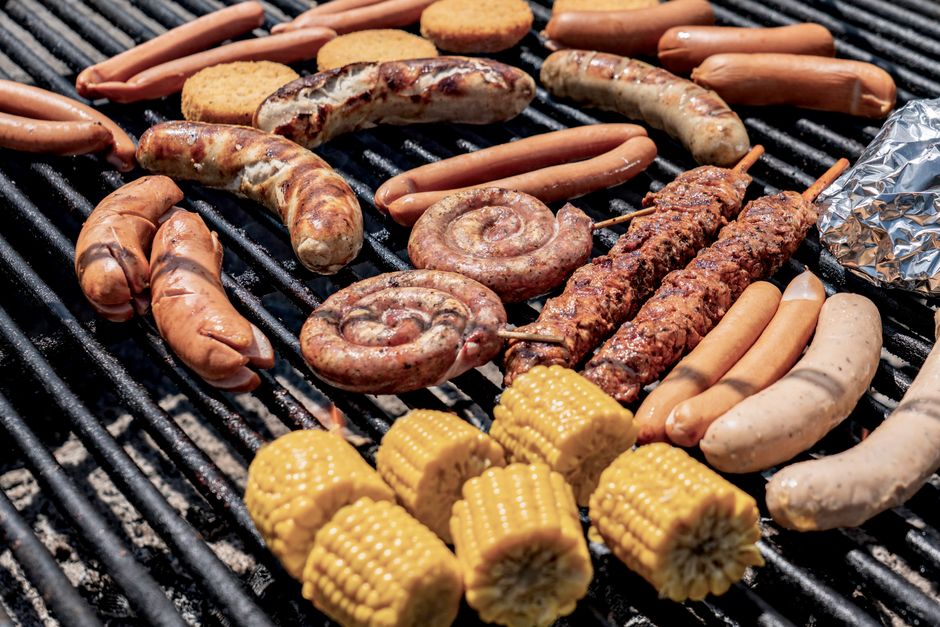
You can tell sausages are cooked by checking their internal temperature with a food thermometer. The USDA says ground meat, including pork, beef, and poultry sausages, must reach a safe minimum internal temperature of 160°F. Color, firmness, and juices running clear are not reliable signs on their own. A thermometer is the only way to know for certain.
That answer sounds simple. The problem is that most people don’t use a thermometer on sausages. They cut one open, look at the color, poke it, and guess. Sometimes the guess is right. Sometimes it isn’t. And with ground meat, the margin for error is thinner than with whole cuts.
Why Isn’t Pink Color a Reliable Sign?
Pink pork is one of the most persistent myths in home cooking. Many people were taught that pink means raw and grey means done. That rule fails often enough to be dangerous.
Several things can keep ground meat pink even after it reaches a safe temperature. Nitrates and nitrites, used in cured sausages and some fresh ones, react with myoglobin and hold a pink color through cooking. Young animals have more myoglobin in their muscle tissue than older ones, so meat from a young pig can stay pinkish even when fully cooked. Smoked sausages can also show a pink ring, called a smoke ring, that has nothing to do with doneness.
The reverse is also true. Meat can turn brown before it’s safely cooked. Myoglobin starts changing color at temperatures well below the point where bacteria are killed. So a brown sausage is not automatically a safe sausage.
This is why food safety agencies stopped using color as a doneness cue for ground meat years ago. The color of ground meat is a chemical reaction, not a safety gauge.
What Internal Temperature Should Sausages Reach?
The safe minimum internal temperature for ground meat is 160°F. This applies to fresh pork sausages, beef sausages, and most fresh sausage varieties sold in the US.
Poultry sausages, including chicken and turkey sausage, need to reach 165°F. That’s the same standard applied to all poultry products, and it reflects the higher risk of Salmonella and Campylobacter in poultry.
Here’s a detail many people miss. The temperature needs to be reached in the thickest part of the sausage, and the probe needs to avoid touching the pan, the casing edge, or a bone if there is one. Touching metal or bone gives a false high reading. Touching fat gives a false low one.
For thin sausages like breakfast links, the window between undercooked and overcooked is small. They can hit 160°F in a matter of minutes on a hot pan. For thick sausages like bratwurst or kielbasa, the center takes longer to catch up to the surface.
Does the Type of Sausage Change the Target Temperature?
Yes, and this trips people up. Not all sausages are the same product, and they don’t all have the same safety target.
- Fresh raw sausages (pork, beef, or a mix): 160°F minimum.
- Fresh poultry sausages (chicken, turkey): 165°F minimum.
- Pre-cooked sausages (like hot dogs and many smoked sausages): already cooked by the manufacturer. Reheating is about palatability, not safety, but heating to 165°F is a common recommendation for any product that will be held or served to others.
- Fermented or dry-cured sausages (like salami and pepperoni sold shelf-stable): these are preserved through curing and drying, not cooking. They don’t follow the same cooking rules.
If you’re not sure whether a sausage is raw or pre-cooked, check the label. The words “fully cooked” or “ready to eat” mean it’s already been through a lethality step at the plant. If the label says “raw” or lists no cooking instruction, treat it as raw.




How Do You Check Temperature Without Ruining the Sausage?
Use an instant-read thermometer. Insert the probe into the end of the sausage, straight into the center, until the tip reaches the middle. Wait for the reading to stabilize. Most digital thermometers take a few seconds.
If you’re cooking a batch, check two or three sausages, not just one. Pans have hot spots. The sausage on the edge of the pan may be done while the one in the middle is not.
For thin links, you can also check by cutting one open at the thickest point. If the center is still glossy or translucent, it likely hasn’t reached temperature. But cutting is a backup check, not a replacement for the thermometer.
One practical tip: pull sausages off the heat when they read a few degrees below target. The internal temperature will continue to rise for a minute or two as heat moves from the surface to the center. This carryover cooking is why sausages sometimes read 160°F on the plate when they read 155°F in the pan.
What About Grill Marks, Firmness, and Clear Juices?
None of these are reliable on their own. Each one has a specific reason it fails.
Grill marks only tell you the surface got hot. They say nothing about the center.
Firmness is subjective. A sausage can feel firm because the casing tightened, because the fat rendered, or because it actually cooked through. Two people squeezing the same sausage will often disagree on whether it’s done.
Clear juices are a better cue than color, but still imperfect. Pink juices can come from myoglobin, not blood, and myoglobin can run pink even after the meat is safely cooked. Conversely, juices can run clear before the center reaches 160°F.
The thermometer is the only measure that directly reflects what matters: whether the coldest part of the meat got hot enough to kill the bacteria that cause foodborne illness.
Why Does Ground Meat Need a Higher Standard Than Steak?
This is the part that surprises people. A whole steak can be safely served rare at 130°F or so because any bacteria are on the surface, where they get seared away. Ground meat is different. When meat is ground, surface bacteria get mixed throughout the entire batch.
That means the center of a sausage is just as likely to harbor bacteria as the outside. There’s no searing step that can save an undercooked center. This is why the USDA sets 160°F as the minimum for ground beef and pork, regardless of how the sausage is prepared.
Poultry is held to an even higher standard because poultry carries a higher baseline risk of Salmonella and Campylobacter. That’s why chicken sausage needs 165°F.
How Long Can Cooked Sausages Sit Out?
Cooked sausages should not sit at room temperature for more than two hours. If the temperature is above 90°F, that window drops to one hour. This is the standard food safety rule for perishable foods, and it applies to sausages just as it does to other cooked meats.
Refrigerate leftovers within that window. Cooked sausages keep in the refrigerator for three to four days. For longer storage, freezing is the safer option. Reheat leftovers to 165°F before eating.
Does Smoking or Curing Make Sausages Safe Without Cooking?
Not automatically. Smoking and curing are preservation methods, not guarantees of safety on their own. Cold-smoked sausages, for example, are smoked at temperatures too low to kill bacteria. They rely on a combination of salt, nitrites, drying, and refrigeration to stay safe.
Hot-smoked sausages are cooked during the smoking process and typically reach safe internal temperatures. But if you’re smoking sausages at home, you still need to verify the internal temperature with a thermometer. Time in the smoker is not a substitute for a temperature reading.
Fermented sausages like some salamis are made safe through a combination of acid production, salt, and drying. These are specialized processes with their own safety controls. They are not the same as cooking a fresh sausage on a grill.
Frequently Asked Questions
What temperature should sausages be cooked to?
Fresh pork and beef sausages should reach a minimum internal temperature of 160°F. Poultry sausages, including chicken and turkey, should reach 165°F.
Can sausages still be pink when they’re fully cooked?
Yes. Nitrites, young animal myoglobin, and smoke rings can all keep sausages pink even after they reach a safe internal temperature. Color is not a reliable doneness indicator.
How do I check sausage temperature without a thermometer?
You can’t check it reliably without a thermometer. Firmness, color, and clear juices are all unreliable. An instant-read thermometer inserted into the center of the thickest part is the only accurate method.
How long do cooked sausages last in the fridge?
Cooked sausages keep in the refrigerator for three to four days when stored properly. Reheat leftovers to 165°F before eating.
