
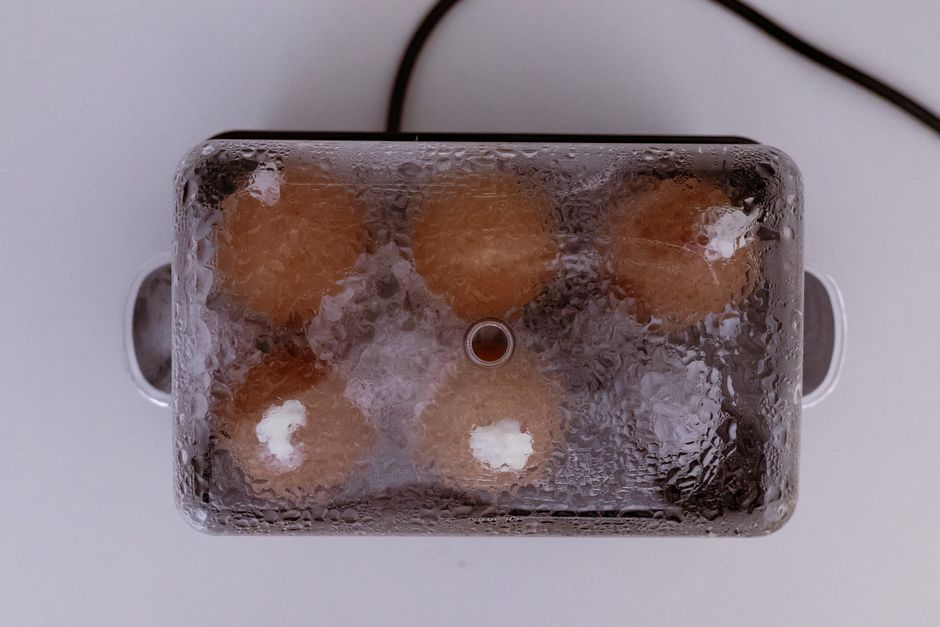
Hard cooked eggs keep safely in the refrigerator for about one week, whether you leave the shells on or peel them. The single most important rule is temperature: they must stay at 40°F (4°C) or below. Eggs left at room temperature for more than two hours should be thrown away.
That short answer covers most situations. The rest of this guide explains why the rules differ from raw eggs, how long peeled eggs really last, whether you can freeze them, and the mistakes that cause most people to get sick.
Why Do Hard Cooked Eggs Need Different Handling Than Raw Eggs?
Cooking an egg destroys the natural defenses that keep bacteria out.
A raw egg in its shell has a thin protective coating called the bloom, plus inner membranes that help block microbes. The shell itself is porous, but those layers slow contamination down. When you boil or steam an egg, you strip away that protection. The shell becomes more permeable, and the egg white and yolk lose the antimicrobial compounds that were present in raw form.
This is why the storage clock runs differently. Raw eggs in the shell can last three to five weeks in the refrigerator. Hard cooked eggs last about one week. The cooked egg is simply more vulnerable.
There is a second issue most people do not think about. The cooking process itself can push bacteria through the shell if the egg is not handled cleanly. Salmonella can live on the outside of an eggshell. If you cool a hot egg in the same water or bowl where contamination exists, or if you handle eggs with dirty hands, bacteria can move inside. Proper cooling and refrigeration matter more for cooked eggs than many people realize.
How Long Do Hard Cooked Eggs Last in the Refrigerator?
One week is the standard recommendation for hard cooked eggs stored in the refrigerator, according to food safety guidance from the U.S. Department of Agriculture. This applies to eggs stored in their shells.
Peeled eggs are a different story. Once the shell is removed, the protective barrier is gone entirely. Peeled hard cooked eggs should be eaten within about two to three days. Some sources say up to a week if they are kept in a sealed container, but the safer and more widely accepted window is shorter.
Here is a simple reference:
- Unpeeled, refrigerated: up to 1 week
- Peeled, refrigerated in a sealed container: 2 to 3 days
- Left at room temperature: discard after 2 hours
- In a hot car or warm room above 90°F: discard after 1 hour
The two-hour rule is not flexible. It applies to the total time the egg sits out, not just one stretch. If you set eggs out for lunch, put them back, then leave them out again at dinner, that time adds up.
One detail worth knowing: the “float test” that people use for raw eggs does not work for hard cooked eggs. A cooked egg can float for reasons unrelated to spoilage. Do not rely on it. Use the date you cooked them and your nose.
What Is the Best Way To Store Hard Cooked Eggs?
Keep them cold, keep them covered, and keep them away from strong odors.
The best method depends on whether the shells are still on.
Unpeeled eggs: Place them in a covered container in the main compartment of the refrigerator, not in the door. The door is the warmest part and the temperature fluctuates every time it opens. Leave the shells on until you are ready to eat them. Do not wrap them tightly in plastic while they are still warm, because trapped moisture encourages bacterial growth.
Peeled eggs: Store them in a sealed container. You can keep them dry or cover them with cold water. If you use water, change it daily and keep the container sealed. Some people add a small amount of vinegar to the water, though there is no strong evidence this extends shelf life meaningfully. The cold temperature and the seal are what matter.
Do not store hard cooked eggs near onions, garlic, or other strong-smelling foods. Eggshells are porous, and cooked eggs absorb odors easily. This does not make them unsafe, but it makes them unpleasant to eat.
A useful habit: write the cooking date on the container. After a few days, most people cannot remember when they made them.





Can You Freeze Hard Cooked Eggs?
You can freeze hard cooked egg yolks, but the whites do not freeze well.
When egg whites freeze and thaw, they become rubbery and release water. The texture turns unappealing, and no amount of reheating fixes it. This is a texture problem, not a safety problem, but it makes frozen whole hard cooked eggs a poor choice.
Yolks hold up better. You can freeze cooked yolks for up to a few months. Crumble them first, or mash them with a little moisture to prevent them from becoming dry and grainy. Use them later in egg salad, deviled egg filling, or as a topping for salads.
If you want to freeze eggs for later use, raw eggs freeze far better. You can freeze raw eggs out of the shell, beaten or separated, and use them in cooking after thawing. This is a common practice and works well.
How Can You Tell If a Hard Cooked Egg Has Gone Bad?
Your senses are the most reliable tool, and they are usually enough.
Signs that a hard cooked egg should be discarded:
- A sulfur or rotten smell, which is stronger and more unpleasant than the mild sulfur note fresh cooked eggs sometimes have
- A slimy or sticky texture on the surface
- Discoloration beyond the normal pale gray-green ring that sometimes forms around the yolk
- Visible mold, which appears as fuzzy patches
- An off taste that is sour, bitter, or clearly wrong
The gray-green ring around the yolk is normal. It forms when eggs are cooked too long or cooled too slowly, and it is harmless. It does not mean the egg is spoiled. Many people throw away perfectly good eggs because of this ring.
If you are unsure and the egg has been in the refrigerator longer than a week, throw it out. The cost of one egg is not worth a foodborne illness.
What Mistakes Cause Most Storage Problems?
Most problems come from a handful of common errors.
Leaving eggs out too long. This is the biggest one. The two-hour rule exists because bacteria multiply quickly at room temperature. A hard cooked egg left on the counter overnight is not safe, no matter how it looks or smells.
Cooling eggs slowly. After cooking, cool eggs quickly under cold running water or in an ice bath. Slow cooling keeps them in the temperature range where bacteria grow best.
Storing them in the refrigerator door. The door is convenient but warm. Use a shelf in the main body of the fridge.
Forgetting the date. Without a label, you lose track. A week passes faster than you think.
Peeling them too early. If you are not eating them right away, leave the shells on. Peel just before serving.
Reusing water from cooling. If the water or bowl was contaminated, the eggs can pick up bacteria. Use clean water and clean containers.
Frequently Asked Questions
How long can you keep hard boiled eggs in the fridge?
Unpeeled hard cooked eggs keep for about one week in the refrigerator at 40°F or below. Peeled eggs should be eaten within two to three days.
Can you eat hard boiled eggs after 5 days?
Yes, if they have been refrigerated the whole time and show no signs of spoilage. Five days is within the one-week window for unpeeled eggs.
Is it safe to leave hard boiled eggs out overnight?
No. Any perishable food left at room temperature for more than two hours should be discarded. Overnight is well past that limit.
Do hard boiled eggs need to be refrigerated?
Yes. Once cooked, eggs must be refrigerated within two hours to prevent bacterial growth. They cannot be stored safely at room temperature.
