
Donating bone marrow sounds like a big deal, and it is. But the process is less dramatic than most people imagine. For the majority of donors today, giving bone marrow or blood stem cells looks a lot like a long blood donation.
The step-by-step path runs through a donor registry, a tissue-matching test, a medical screening, and then one of two collection methods. One method uses a needle to draw marrow from the back of the hip bone under anesthesia. The other filters stem cells out of your blood over several hours. Which one you get depends on what the patient’s doctor requests.
Here is what each stage actually involves, who can donate, and what recovery tends to look like.
What Does Donating Bone Marrow Actually Mean?
Bone marrow is the soft tissue inside your bones where blood cells are made. It contains hematopoietic stem cells, the parent cells that build red blood cells, white blood cells, and platelets.
When someone has a blood cancer like leukemia, or a bone marrow failure disorder, their own stem cells may stop working properly. A transplant replaces them with healthy ones from a donor. The donor’s cells then rebuild a working blood and immune system in the patient.
There are two ways to collect those cells from a donor. The first is a direct marrow harvest, where a doctor draws liquid marrow from the pelvic bone with a syringe. The second is a peripheral blood stem cell collection, where medication moves stem cells out of the marrow and into the bloodstream, and a machine separates them out.
Most donations today use the second method. That surprises people. The phrase “bone marrow donation” is still used for both, even when no marrow is directly extracted.
Who Can Donate Bone Marrow?
Registries generally accept donors between roughly 18 and 40 years old, though some programs allow people up to about 60. Younger donors are preferred because transplant outcomes tend to be better with younger cells.
Basic requirements usually include:
- Good general health with no active serious illness
- Weight within a range the collection center can safely manage
- No active infection at the time of donation
- Willingness to complete screening and follow-up
Certain conditions rule people out. These include some cancers, serious heart or lung disease, uncontrolled infections, and certain autoimmune conditions. Pregnancy is also a disqualifier. So is a history of HIV infection.
Age and health rules exist for two reasons. Donor safety matters, and so does the patient’s chance of a good outcome. A registry is not judging your worth. It is matching a specific patient with the safest, most compatible cells available.
One practical point people miss: joining a registry is a commitment, not a maybe. If you sign up, you may be called years later. Backing out at the last stage can leave a patient with no backup plan.
How Do You Donate Bone Marrow? Step by Step
The full process usually unfolds over weeks to months. Here is the sequence.
Step 1: Join a registry. You sign up online or at a drive and provide a cheek swab or blood sample. That sample is typed for human leukocyte antigens, or HLA markers. These are proteins on your cells that the immune system uses to tell self from non-self.
Step 2: Get matched. Your HLA type goes into a database. If a patient’s doctor searches and you come up as a potential match, the registry contacts you. You are not obligated until you complete further testing and consent.
Step 3: Confirm the match. You give a blood sample for more detailed typing. This confirms whether you are truly compatible. Many initial matches do not hold up at this stage.
Step 4: Complete a health screening. A doctor reviews your history, runs blood tests, and checks for infectious diseases. You discuss risks, consent, and what the donation will involve.
Step 5: Prepare for collection. What happens here depends on the method.
For a marrow harvest, you may need a physical exam and possibly a blood donation for the patient ahead of time. The harvest itself happens under general or regional anesthesia.
For a peripheral blood stem cell collection, you receive injections of a medication called filgrastim for several days. This drug pushes stem cells out of the marrow and into the bloodstream. It can cause bone pain, headache, and fatigue. These effects usually fade after collection stops.
Step 6: Collect the cells. This is the part most people want to understand.





What Happens During the Two Collection Methods?
The two methods feel very different. Neither is painful during the actual collection.
In a marrow harvest, you are under anesthesia, so you feel nothing. The doctor inserts a needle through the skin into the back of your pelvic bone and draws out liquid marrow. Several small punctures are made to get enough cells. The procedure takes about one to two hours. You then recover from anesthesia and typically go home the same day.
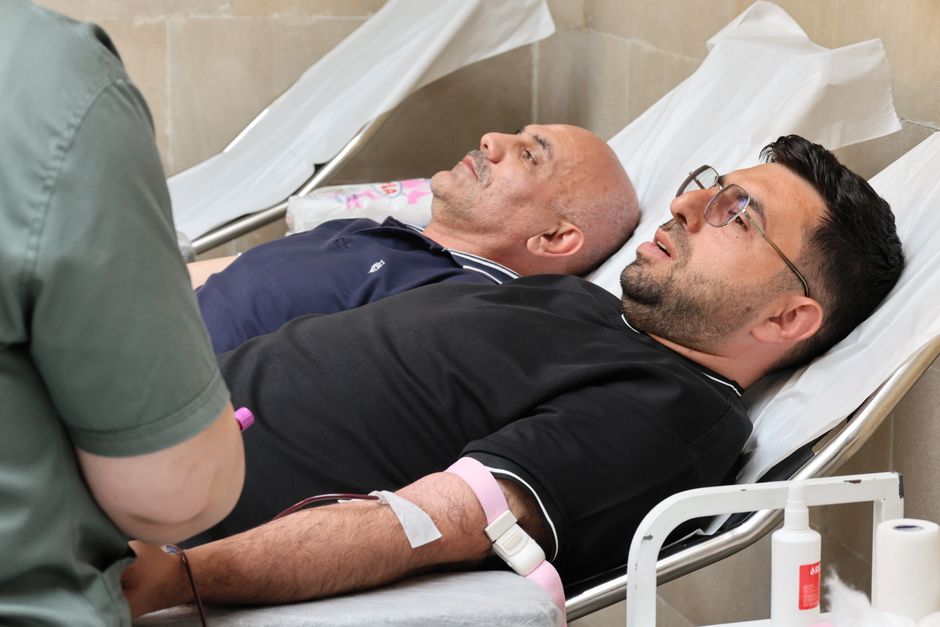
In a peripheral blood stem cell collection, you are awake. Blood is drawn from a vein in one arm, run through a machine that separates out the stem cells, and returned to you through the other arm. This is called apheresis. It usually takes several hours, and you may need more than one session to collect enough cells.
Here is a side-by-side look:
| Feature | Marrow Harvest | Peripheral Blood Stem Cell |
|---|---|---|
| Anesthesia | General or regional | None |
| Pre-donation medication | Usually none | Filgrastim for several days |
| Time in collection | About 1-2 hours | Several hours, possibly repeated |
| Common side effects | Sore hip, bruising, fatigue | Bone pain, headache, fatigue |
| Typical recovery | Days to a couple of weeks | Often faster |
Which method you get is not your choice. The patient’s transplant doctor decides based on the disease, the patient’s condition, and the protocol being used.
Does Donating Bone Marrow Hurt?
You will not feel pain during either collection. Anesthesia handles the harvest. Apheresis involves needle sticks and hours of sitting, but not ongoing pain.
Afterward, discomfort is common and usually manageable. Marrow donors often describe a dull ache or soreness in the lower back and hips for a few days, along with bruising at the puncture sites. Over-the-counter pain relief and rest typically cover it.
Peripheral blood stem cell donors more often report bone aches and flu-like feelings during the filgrastim injections. These are expected effects of the medication, not signs something is wrong. They ease once injections stop.
Serious complications are rare but not zero. Anesthesia carries its own small risks. Bleeding or infection at the harvest site is uncommon. Filgrastim can, in rare cases, cause a ruptured spleen, which is a medical emergency. Donation centers monitor for this, and donors are told what warning signs to watch for.
Honest framing: this is a real medical procedure with real but low risks. It is not a spa day. It is also not the harrowing ordeal many people picture.
How Long Does Recovery Take?
Most donors are back to normal activities within a few days to a few weeks. Marrow donors may feel tired and sore for about one to two weeks. Peripheral blood stem cell donors often bounce back faster, sometimes within a few days.
Your body replaces the donated cells on its own. Marrow regenerates, and the stem cell supply in your blood returns to normal. This is why a healthy donor can give cells and remain healthy.
Registries usually follow up with donors after the procedure to check on recovery. Some ask for check-ins months later. If you are considering donation, ask the coordinator exactly what follow-up looks like.
One clarification worth knowing: donating does not weaken your immune system long term. Your body rebuilds what was taken. The temporary dip is short-lived and monitored.
Is Donating Bone Marrow Safe?
For healthy donors who pass screening, donation is generally considered low-risk. That does not mean risk-free. It means the risks are known, uncommon, and weighed against the fact that the patient on the other end often has no other option.
The most common issues are temporary: pain, fatigue, and bruising. The most serious, like anesthesia complications or a ruptured spleen from filgrastim, are rare.
What is not well studied is long-term risk for donors. Most data suggest no lasting harm, but large, decades-long studies are limited. If a registry or clinic claims donation is completely risk-free, that overstates what is known. If it claims donation is dangerous, that also overstates it.
The honest position sits in the middle. Donation is a meaningful, generally safe act with small, mostly short-term risks.
Frequently Asked Questions
How painful is donating bone marrow?
You feel no pain during the collection itself because it happens under anesthesia. Afterward, most donors report a dull ache in the hips and back for a few days that over-the-counter pain relief usually manages.
How long does it take to donate bone marrow?
The collection procedure itself takes about one to two hours for a marrow harvest, or several hours per session for a peripheral blood stem cell collection. The full process from matching to donation usually spans weeks to months.
Can you walk after donating bone marrow?
Most donors can walk and go home the same day, though soreness and fatigue are common for several days. Strenuous activity is usually discouraged until you feel recovered.
Does donating bone marrow shorten your life?
No evidence indicates that donating shortens a healthy donor’s life. Your body replaces the donated cells, and long-term harm has not been established, though large decades-long studies remain limited.
