
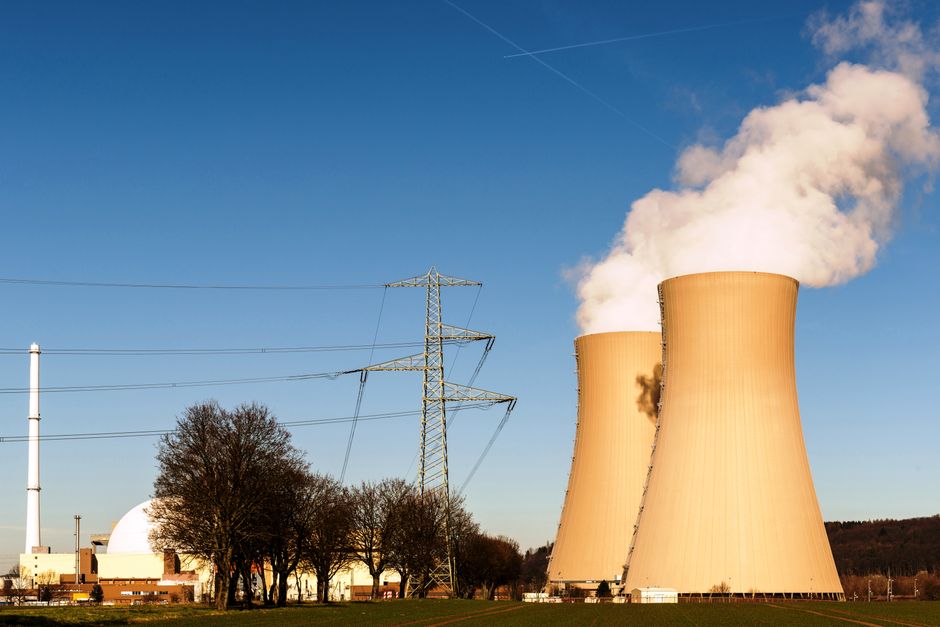
Nuclear waste is a problem we have created and must manage for thousands of years. The process moves from highly protected temporary storage to deep geological burial. Most nations currently store waste safely above ground while they work toward permanent underground repositories.
What Is Nuclear Waste and Why Is It Dangerous?
Nuclear waste is the leftover material from nuclear reactors, medical treatments, and research facilities. It remains radioactive, meaning it gives off energy that can damage living cells. The danger depends on the type of radiation and how long the material stays active.
Some waste stays dangerous for a few decades. Other types remain hazardous for hundreds of thousands of years. This is why the storage and burial process is so carefully planned. We are designing systems that must outlast entire civilizations.
There are three main categories of nuclear waste. Low-level waste includes contaminated clothing, tools, and filters. Intermediate-level waste includes resins and chemical sludge from reactors. High-level waste is the used fuel itself, and it is the most dangerous by far.
Where Does Nuclear Waste Currently Sit?
Right now, most high-level nuclear waste is stored where it was produced. In the United States, used fuel assemblies sit in steel-lined concrete pools filled with water. The water cools the fuel and blocks radiation. Many pools were designed as temporary storage, but they have been in use for decades.
After a few years in the pool, the fuel can be moved to dry cask storage. This involves placing the used fuel in sealed steel cylinders. Each cylinder is surrounded by concrete or steel shielding. The casks sit on concrete pads outdoors at reactor sites. They are monitored constantly for temperature and radiation leakage.
Dry casks are safe. They are designed to withstand earthquakes, tornadoes, and even aircraft impacts. But they are still an interim solution. They were never meant to be the final resting place for nuclear waste.
How Do We Deal With Nuclear Waste From Storage To Burial?
The transition from storage to burial is the hardest part of the nuclear waste problem. The plan is to move waste from surface storage into deep geological repositories. These are underground facilities built in stable rock formations, typically between 300 and 1,000 meters below the surface.
The science behind deep burial is straightforward. Put radioactive material far underground in stable geology, and it will decay in place without harming people or the environment. The rock acts as a natural barrier. The depth protects against surface events like floods, fires, or human interference.
Finland is the first country to build an operating deep geological repository. The Onkalo facility is carved into granite bedrock. It uses a multi-barrier system. The used fuel goes into copper canisters, which sit inside bentonite clay, surrounded by bedrock. The design is meant to contain the waste for at least 100,000 years.
Sweden and France have similar projects in advanced stages. Canada is working on a site selection process. The United States has the Yucca Mountain project, which has been studied extensively but remains politically stalled. No U.S. repository is currently under construction.





What Is the Multi-Barrier Approach?
Deep geological repositories do not rely on a single barrier. They use several independent layers of protection. This is called the multi-barrier approach, and it is the international standard for nuclear waste disposal.
The first barrier is the waste form itself. Used fuel is a ceramic material that does not dissolve easily in water. The second barrier is the canister. Copper or steel containers are designed to resist corrosion for tens of thousands of years. The third barrier is the buffer material, usually bentonite clay. When wet, bentonite swells and seals any gaps. It also slows water movement dramatically.
The fourth barrier is the host rock. Granite, clay, and salt formations are preferred because they are stable and have low water flow. The fifth barrier is the backfill material that seals tunnels and shafts after waste is placed. The final barrier is the natural geology of the region itself.
Each barrier alone might not be perfect. Together, they create a defense in depth that makes it extremely unlikely for radioactive material to reach the surface in dangerous amounts.
How Do We Choose a Burial Site?
Site selection is a scientific process that takes decades. Geologists look for rock formations that have been stable for millions of years. They study groundwater movement, earthquake history, and mineral composition. The site must have very low water flow because water is the main way radioactivity could travel.
Voluntary siting is the modern approach. Communities volunteer to host a repository, often in exchange for economic benefits and jobs. Finland and Sweden both used this model successfully. Local acceptance is critical because no repository can be built without it.
The process is transparent and slow by design. In Finland, the site selection process took about 20 years. The community of Eurajoki voted to accept the Onkalo repository. In Sweden, the municipality of Östhammar did the same. These votes happened only after years of public consultation and scientific review.
This approach contrasts with the U.S. experience at Yucca Mountain. The site was selected by the federal government without community consent. Political opposition followed, and the project never opened. The lesson is clear: technical safety alone is not enough. Public trust is a requirement.
Why Hasn’t the United States Buried Its Waste Yet?
The United States has over 80,000 metric tons of used nuclear fuel in temporary storage. This amount grows by about 2,000 tons each year. The waste sits at 75 different sites across the country, mostly at commercial nuclear power plants.
The U.S. government committed to building a repository at Yucca Mountain in Nevada. The site was studied for over 30 years at a cost of billions of dollars. In 2010, the project was defunded for political reasons. No alternative site has been selected since then.
The result is a stalemate. The waste remains in dry casks at reactor sites. These casks are safe for decades, but they are not a permanent solution. Every year, the problem grows larger and the political challenge becomes harder.
Meanwhile, the U.S. Department of Energy has explored the concept of consolidated interim storage. This would move waste from multiple reactor sites to one or two central locations. The waste would still be above ground, but in fewer, more secure facilities. This is a step forward, but it is still not burial.
What Are the Risks of Waiting?
Leaving nuclear waste in surface storage is not an immediate danger. Dry casks are robust and well monitored. But the longer the waste stays above ground, the greater the risk of accidents, natural disasters, or human error.
There is also a security concern. Surface storage requires constant surveillance and protection against theft or sabotage. A deep geological repository, once sealed, requires no human intervention. The waste is effectively removed from human reach forever.
Another risk is institutional memory. The waste will remain dangerous for longer than any existing government or institution has existed. We cannot assume that future societies will know what the waste is or how to manage it. Deep burial removes this burden permanently.
What Happens After a Repository Is Sealed?
Once a repository is filled, the tunnels are backfilled with clay and concrete. The shafts are sealed. The surface facility is decommissioned and removed. The site becomes a permanent marker of what lies below.
Scientists have studied how to communicate with future generations about the danger. This field is called nuclear semiotics. Ideas include massive stone markers, warning messages in multiple languages, and architectural designs that convey danger without words. No perfect solution exists, but the effort shows how seriously we take this responsibility.
After sealing, the repository enters a monitoring phase. Instruments measure temperature, water flow, and radiation levels. This monitoring continues for as long as it is useful. Eventually, the site is left alone to let natural processes take over.
Is Recycling Nuclear Waste an Option?
Some countries recycle used nuclear fuel through a process called reprocessing. France, Japan, and Russia do this. The process extracts plutonium and uranium from used fuel and makes new fuel from it. This reduces the volume and toxicity of the remaining waste.
Reprocessing does not eliminate the need for burial. It still produces high-level waste that must go into a geological repository. But it reduces the amount of waste and shortens the time it remains dangerous.
The United States does not reprocess commercial fuel. The policy was stopped in the 1970s due to proliferation concerns. Extracted plutonium could potentially be used to build nuclear weapons. This is a legitimate concern, but it means the U.S. must bury a larger volume of waste.
Frequently Asked Questions
How long does nuclear waste remain dangerous?
High-level waste remains hazardous for about 10,000 to 100,000 years depending on the isotope. The multi-barrier systems in deep repositories are designed to contain waste for at least that period.
Can nuclear waste be safely stored above ground indefinitely?
Dry cask storage is safe for decades, but it requires active monitoring and maintenance. No surface system can be guaranteed safe for the thousands of years that high-level waste remains dangerous.
Why is deep geological burial considered the best option?
Deep burial removes waste from the human environment and relies on natural geological barriers that have been stable for millions of years. It is the only disposal method that requires no ongoing human maintenance.
When will the first nuclear waste repository open?
Finland’s Onkalo repository is expected to begin operations in the mid-2020s. It will be the world’s first operating deep geological repository for spent nuclear fuel.
