
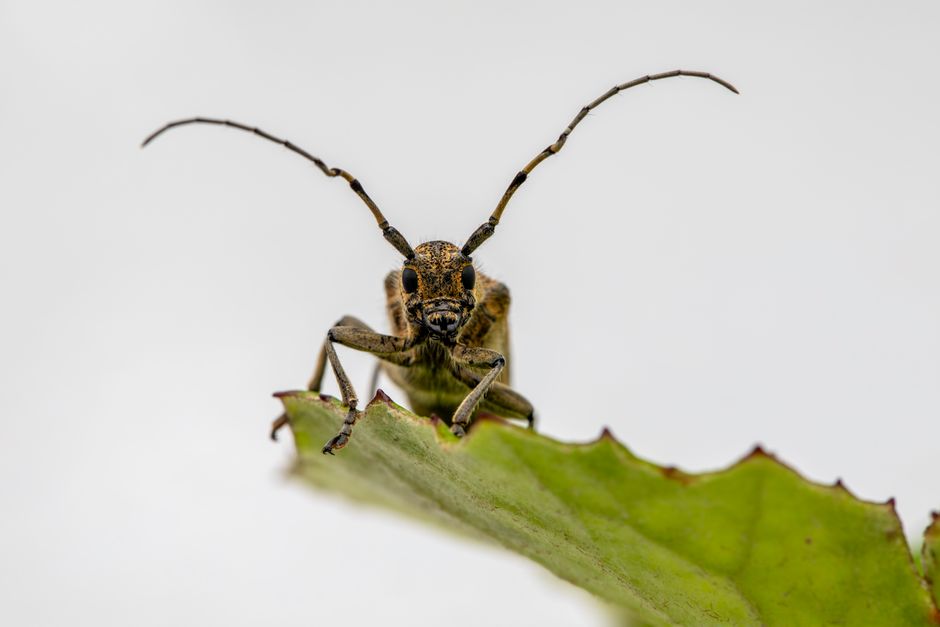
The black locust borer is a longhorned beetle that attacks black locust trees, and stopping it requires a combination of prevention, tree care, and sometimes chemical treatment. The adult beetle lays eggs in tree bark cracks, and the larvae tunnel into the wood, weakening the tree over time. You can stop it by keeping trees healthy, removing infested branches, and applying insecticides when the damage is severe.
What Does the Black Locust Borer Look Like?
The adult black locust borer is about half an inch to three-quarters of an inch long. It has a dark brown or black body with two pale yellow stripes running down its back. The antennae are long, often longer than the body itself.
The larvae are the real problem. They are cream-colored, legless grubs that can reach up to an inch long. They live inside the tree and are rarely seen unless you cut into the wood. The U.S. Forest Service describes them as the most serious insect pest of black locust trees in the eastern United States.
What Trees Does the Black Locust Borer Attack?
This beetle targets black locust trees almost exclusively. It does not typically attack other common trees like oak, maple, or pine. If you have a black locust on your property, that tree is at risk.
The beetle prefers trees that are already stressed, injured, or older. Healthy, young trees are less likely to be infested. But no black locust is completely safe once adult beetles are active in the area. The USDA Forest Service notes that infestations are more common in trees growing in poor soil, drought conditions, or with existing bark damage.
How Do You Know If Your Tree Is Infested?
Look for small holes in the bark, about the size of a pencil tip. These are exit holes where adult beetles have chewed their way out. You might also see sawdust-like frass near the base of the tree or in bark crevices.
Other signs include wilting leaves, dead branches in the upper canopy, and bark that peels away easily. In severe cases, you can see the tunnels, called galleries, under the bark. The tree may also ooze sap from the entry points. Research from the University of Kentucky Extension shows that infested trees often break in strong winds because the larvae have hollowed out the wood inside.





What Is the Life Cycle of the Black Locust Borer?
Adult beetles emerge in late summer, usually August through September. They mate, and the female lays eggs in bark cracks. The eggs hatch within a week or two.
The larvae then burrow into the tree and feed on the inner bark and wood. They spend the winter inside the tree as larvae. In spring, they pupate and transform into adults. The new adults emerge the following summer to start the cycle again. The entire process takes one year. Knowing this timing matters because treatment is most effective when applied just before or during adult emergence.
How Do You Stop the Black Locust Borer?
Stopping the black locust borer starts with keeping your tree healthy. Water the tree during dry periods. Mulch around the base to protect the roots. Avoid wounding the bark with lawn equipment. A healthy tree can resist infestation better than a stressed one.
If you find infested branches, prune them off and dispose of them immediately. Do not leave cut wood near the tree. The beetles can still emerge from firewood or logs. The most effective chemical treatment is a systemic insecticide containing imidacloprid or dinotefuran. These are applied to the soil around the tree roots and absorbed into the tree. The timing matters — apply in early spring before the beetles emerge. Contact insecticides sprayed on the bark are less effective because the larvae are already inside the wood.
The table below compares the main control methods:
| Method | How It Works | Best Time to Apply | Effectiveness |
|---|---|---|---|
| Tree care (watering, mulching) | Reduces tree stress | Year-round | Moderate prevention |
| Pruning infested branches | Removes larvae | Late fall or winter | Good for small infestations |
| Systemic insecticide | Chemical absorbed by tree | Early spring | High for established infestations |
| Contact insecticide spray | Kills adults on bark | Late summer | Low to moderate |
What Should You Avoid When Treating the Black Locust Borer?
Do not use broad-spectrum insecticides indiscriminately. They can kill beneficial insects, including pollinators that visit black locust flowers. The tree blooms in late spring, and bees rely on those flowers.
Do not apply insecticide to the bark after the larvae have already entered the wood. By that point, the chemical cannot reach them. You are just wasting product and harming the environment. Also, do not ignore the problem hoping it goes away. The black locust borer does not stop on its own. Infested trees can become structurally unsafe and may fall during storms.
Some people report that neem oil or other natural repellents work. Strong evidence for this is limited. The University of Georgia Extension notes that no organic treatment has been proven effective against this specific pest. If you prefer non-chemical methods, focus on tree health and pruning.
Common Misconceptions About the Black Locust Borer
One common myth is that the black locust borer kills trees quickly. It does not. The damage builds over several years. A tree can be infested for three to five years before it dies or breaks. That gives you time to act, but not forever.
Another myth is that all black locust trees will eventually be infested. That is not true. Trees in good health, with strong growth and intact bark, often avoid serious damage. The beetle is an opportunist, not an inevitable death sentence.
Some people also believe that cutting down an infested tree solves the problem. It does not if you leave the wood on your property. The larvae can still complete their development inside logs and firewood. The beetles will emerge the next summer and find a new tree nearby. Always dispose of infested wood by chipping, burning, or hauling it away.
If you have a black locust tree, inspect it each year in late summer. Look for exit holes and sawdust. Catch the problem early, and you have a good chance of saving the tree.
Frequently Asked Questions
Can the black locust borer kill a tree?
Yes, it can kill a tree over several years by tunneling through the wood and weakening the structure.
What time of year do black locust borers emerge?
Adult beetles emerge in late summer, usually from August through September.
Is there a natural way to stop the black locust borer?
No natural treatment has strong evidence behind it, but keeping the tree healthy and pruning infested branches helps reduce damage.
Should I cut down an infested black locust tree?
Only if the tree is more than 50 percent damaged or structurally unsafe, but remove the wood from your property afterward.
