
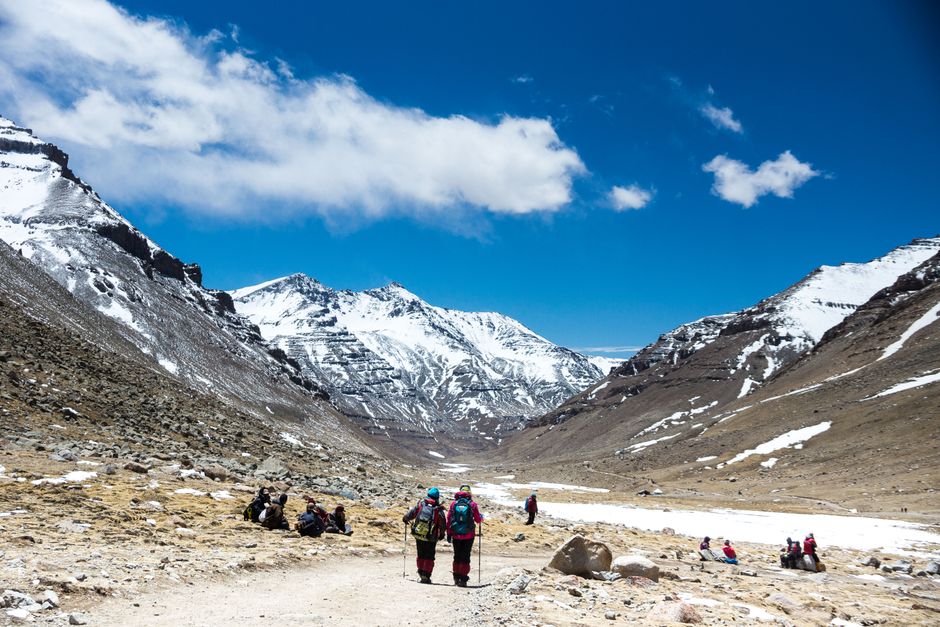
Tibetans live at altitudes where most people would struggle to catch their breath, yet they have thrived there for thousands of years. Their survival comes down to a combination of genetic adaptations passed down over generations, not just physical conditioning or willpower. These biological changes affect how their bodies use oxygen, transport blood, and even how their cells produce energy.
What Makes Tibetan High Altitude Survival Different From Other People?
When someone from a low-altitude area travels to a high mountain region, their body works hard to adjust. Breathing rate increases. Heart rate goes up. The body produces more red blood cells to carry oxygen. This process is called acclimatization, and it takes days or weeks.
Tibetans do not rely on this emergency response. Their bodies work differently at a fundamental level. Studies have found that Tibetans have lower hemoglobin levels than lowlanders at the same altitude. Hemoglobin is the protein in red blood cells that carries oxygen. For most people, lower hemoglobin at high altitude would be a problem. For Tibetans, it is an advantage.
Thick blood from too many red blood cells can cause health problems at high altitude. It makes the heart work harder to pump blood through the body. It can lead to blood clots or stroke. Tibetans avoid this by keeping their blood thinner and letting it flow more easily.
How Do Tibetans Survive At High Altitudes Answered — The Genetic Story
The answer to how Tibetans survive at high altitudes lies in their DNA. Researchers have identified specific gene variants that are common in Tibetan populations but rare in most other groups. The most studied genes are EPAS1 and EGLN1.
These genes help regulate how the body responds to low oxygen levels. In most people, low oxygen triggers a protein called HIF (hypoxia-inducible factor). This protein signals the body to make more red blood cells. In Tibetans, the EPAS1 gene variant keeps this response in check. Their bodies do not overproduce red blood cells even when oxygen is scarce.
This genetic variation is not random. It is the result of natural selection. Tibetans have lived at altitudes above 3,500 meters for thousands of years. People with these gene variants were more likely to survive and have children. Over time, these adaptations became common in the population.
Research suggests these genetic changes appeared in the ancestors of modern Tibetans thousands of years ago. Some studies indicate the key variants may have come from interbreeding with an ancient human group called the Denisovans. This makes the Tibetan story one of the clearest examples of recent human evolution.
How Does The Tibetan Body Use Oxygen More Efficiently?
Oxygen is carried from the lungs to the rest of the body through the bloodstream. At high altitude, there is simply less oxygen in the air. The body needs to make the most of what it gets.
Tibetans have several adaptations that improve oxygen efficiency. Their lungs take in oxygen effectively, and their blood delivers it to tissues without wasting energy. Some research indicates that Tibetans have higher blood flow in certain tissues compared to acclimatized lowlanders. This means oxygen reaches their muscles and organs more efficiently.
There is also evidence that Tibetan cells use oxygen differently. The body produces energy in structures called mitochondria. Some studies suggest that Tibetan mitochondria are adapted to work with lower oxygen levels while still producing adequate energy. This is an area of active research, and the full picture is not yet clear.
Another key difference involves nitric oxide. This molecule helps blood vessels widen and improves blood flow. Research has found that Tibetans have higher levels of nitric oxide in their blood than lowlanders at high altitude. This helps their blood vessels stay relaxed and open, improving delivery of oxygen to tissues.





Do Tibetan Babies And Children Adapt Differently?
The genetic advantages of Tibetans appear from birth. Babies born at high altitude in Tibetan populations have higher birth weights than babies from other groups born at the same altitude. Low birth weight is a common problem for infants born at high altitude because oxygen is limited during development.
Tibetan infants also have better oxygen saturation in their blood during the first few months of life. Oxygen saturation is a measure of how much oxygen the blood is carrying compared to its maximum capacity. This early advantage suggests the genetic adaptations are active even before the body fully develops.
Children in Tibetan populations also show differences in lung function compared to children from lowland families who move to high altitude. These differences appear early and continue into adulthood.
What Health Problems Do Tibetans Avoid At High Altitude?
People who move to high altitude face real health risks. The most serious is chronic mountain sickness, also known as Monge’s disease. It develops when the body produces too many red blood cells in response to low oxygen. The blood becomes thick and sluggish. Symptoms include headache, fatigue, confusion, and problems sleeping. Over time, it can damage the heart and blood vessels.
This condition is common in some high-altitude populations, but it is rare in Tibetans. Their genetic adaptation prevents the excessive red blood cell production that causes the disease.
Tibetans also have lower rates of high-altitude pulmonary edema. This is a dangerous condition where fluid builds up in the lungs. It can be fatal without treatment. The protective effects come from their efficient blood flow and lung function.
Can Lowlanders Ever Adapt To High Altitude Like Tibetans?
Short answer: not fully. Lowlanders can acclimatize to high altitude, and many do so successfully for work, sport, or travel. Their bodies increase breathing rate, produce more red blood cells, and adjust their heart function. These changes help them function at altitude, but they are not the same as the Tibetan adaptations.
Acclimatization takes time and has limits. Above roughly 5,500 meters, even acclimatized people begin to decline. The body cannot maintain its adjustments indefinitely at extreme altitude. This is why climbers on the world’s highest peaks spend only short periods at the summit and use supplemental oxygen.
Tibetans also face limits at extreme altitude, but their baseline is different. They start with more efficient oxygen use, so they have a wider range of function before those limits are reached.
There is no known way to acquire Tibetan-style genetic adaptations through training or lifestyle changes. Some people respond to altitude better than others, and some are naturally more resistant to altitude sickness. But the deep genetic changes seen in Tibetans are the product of thousands of years of natural selection, not personal effort.
Does Living At High Altitude Have Drawbacks For Tibetans?
Yes. The adaptations that help Tibetans survive high altitude do not make them immune to all altitude-related problems.
Tibetan women have higher rates of pregnancy complications at high altitude compared to Tibetan women living at lower elevations. The risk of preeclampsia, a dangerous condition involving high blood pressure during pregnancy, is higher at altitude. Even with genetic protection, the stress of low oxygen affects pregnancy outcomes.
There is also evidence that Tibetans have slightly lower oxygen saturation in their blood than lowlanders at sea level. This is not a problem at high altitude, but it means their bodies are tuned for a low-oxygen environment, not a normal one.
Some research suggests that Tibetans may have lower exercise capacity at sea level compared to lowlanders. Their bodies are efficient in low-oxygen conditions, but this efficiency may come at a cost in oxygen-rich environments. The evidence is not fully consistent, and more research is needed.
What Can People Learn From Tibetan Adaptations?
Researchers study Tibetan populations to understand how the human body responds to low oxygen. This research has implications beyond high-altitude medicine.
Many medical conditions involve low oxygen in tissues. Heart failure, chronic lung disease, and severe anemia all reduce oxygen delivery. Understanding how Tibetans manage low oxygen could lead to new treatments for these conditions.
The EPAS1 gene and the HIF pathway are also involved in cancer. Some cancers grow when HIF is overactive. Learning how Tibetans regulate this pathway naturally may help researchers develop drugs that target it more effectively.
This research is ongoing. The Tibetan example shows that the human body can adapt to extreme environments in ways that are still not fully understood. For people living at low altitude, the practical takeaway is simpler: the body’s response to altitude is complex, and individual responses vary widely.
Frequently Asked Questions
Why do Tibetans not get altitude sickness?
Tibetans carry gene variants that prevent their bodies from overproducing red blood cells at high altitude. This keeps their blood from becoming too thick and avoids the stress that causes altitude sickness in other people.
Can a normal person adapt to high altitude like a Tibetan?
No. Lowlanders can acclimatize and function at high altitude, but they cannot match the genetic adaptations Tibetans have developed over thousands of years.
What is the EPAS1 gene in Tibetans?
EPAS1 is a gene that helps regulate the body’s response to low oxygen. The Tibetan variant keeps red blood cell production at safe levels, which protects against chronic mountain sickness.
Do Tibetans have more red blood cells than lowlanders?
No. At high altitude, Tibetans have lower hemoglobin levels than lowlanders who have acclimatized. This is a protective adaptation that keeps their blood from becoming too thick.
