
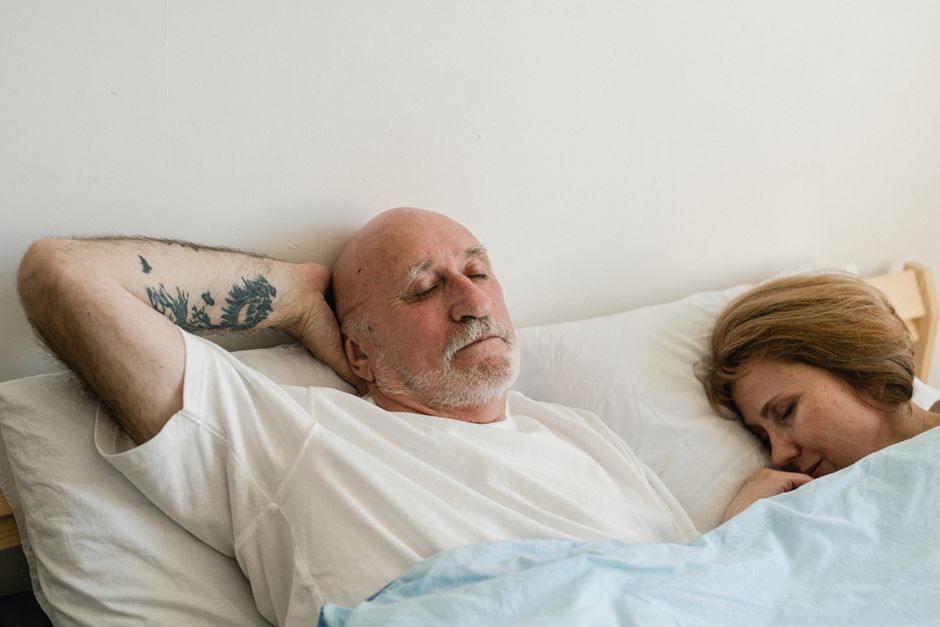
Sleep apnea testing comes in two main forms: an in-lab sleep study called polysomnography, and at-home sleep apnea testing. In a lab, you sleep overnight at a clinic while equipment monitors your brain waves, breathing, heart rate, and oxygen levels. At home, you use a portable device that tracks your breathing, oxygen levels, and heart rate while you sleep in your own bed. Both tests are designed to measure how often your breathing stops or becomes shallow during sleep, which is the defining feature of sleep apnea.
What Happens During an In-Lab Sleep Study?
An in-lab sleep study is the most complete test for sleep apnea. You arrive at a sleep center in the evening and stay overnight. A sleep technician prepares you for the test by placing sensors on your scalp, face, chest, legs, and fingers. These sensors record many things at once: brain activity, eye movements, heart rhythm, airflow through your nose and mouth, chest and belly movement, and blood oxygen levels.
This test is called polysomnography. It is the gold standard for diagnosing sleep apnea. The reason it is so thorough is that it gives doctors a complete picture of your sleep. It shows not just whether you stop breathing, but also what stage of sleep you are in when it happens, how your heart responds, and whether leg movements are disrupting your sleep.
Because you are being watched all night, the lab test can also detect other sleep problems that home tests miss. These include conditions like periodic limb movement disorder or narcolepsy. The downside is that sleeping in a lab is not the same as sleeping at home. Some people sleep worse in an unfamiliar environment, and the sensors can feel uncomfortable. Still, the data collected is reliable enough to make a diagnosis.
What Does an At-Home Sleep Apnea Test Measure?
At-home sleep apnea testing is simpler and less invasive. You pick up a device from a clinic or have one mailed to you. Most home devices are worn on the wrist and have a small finger sensor that measures oxygen levels and heart rate. Some also include a nasal cannula to measure airflow and a belt to measure breathing effort.
The home test tracks three main things: oxygen levels, heart rate, and breathing patterns. From this data, the device calculates how many times per hour your breathing pauses or becomes shallow. This number is called the apnea-hypopnea index, or AHI. It is the key number used to diagnose sleep apnea and rate its severity.
Home tests do not measure brain waves. That means they cannot tell if you are actually asleep when a breathing event occurs. They also cannot detect other sleep disorders. For these reasons, home tests are considered less comprehensive than lab tests. But they are accurate enough for many people, especially those with clear symptoms and no other major health conditions.
How Do They Test You For Sleep Apnea Lab Vs Home: Which One Is Right for You?
Your doctor decides which test to order based on your symptoms, health history, and risk factors. If you have loud snoring, daytime sleepiness, and a partner who has witnessed you stop breathing, a home test is often the first step. These symptoms strongly suggest sleep apnea, and a home test can usually confirm it.
Home testing is also a good option for people who cannot easily get to a sleep center. It is less expensive, and you can sleep in your own bed. Many people prefer it for those reasons alone.
An in-lab study is usually recommended when a home test is inconclusive, when your doctor suspects another sleep disorder, or when you have significant heart, lung, or neurological conditions. It is also standard for people with certain jobs, such as commercial drivers, where diagnostic certainty matters. Some insurance plans require a lab study before approving certain treatments, so cost and coverage can also play a role in the decision.
Understanding Your Sleep Apnea Test Results
Both lab and home tests produce an AHI score. This score tells you how many apnea or hypopnea events you experience per hour of sleep. An apnea event is when breathing stops completely for at least 10 seconds. A hypopnea is when breathing becomes shallow enough to cause a drop in oxygen levels.
An AHI under 5 is considered normal. An AHI of 5 to 14 is mild sleep apnea. An AHI of 15 to 29 is moderate. An AHI of 30 or higher is severe. These thresholds are the same whether you are tested at home or in a lab.
The lab test provides additional data beyond the AHI. It shows how much time you spend in each sleep stage, how often you wake up, and how your heart rhythm changes during breathing events. This extra detail can help your doctor understand the full impact of your sleep apnea and tailor your treatment.
One important thing to know: a negative home test does not completely rule out sleep apnea. If your symptoms continue after a normal home test, your doctor may still recommend an in-lab study. This is because home tests can underestimate the severity of sleep apnea, especially in people who do not sleep well with the device on.
Accuracy: Is a Home Test as Good as a Lab Test?
Home tests are very good at detecting moderate to severe sleep apnea. For these cases, research consistently shows that home testing results closely match lab testing results. If you have a high AHI on a home test, it is very likely you have sleep apnea.
The accuracy gap appears at the mild end of the spectrum. Home tests can miss mild sleep apnea or underestimate its severity. This happens because home tests do not measure total sleep time. They measure the time the device is on, which may include periods when you are awake. If you are awake for part of the recording, the number of events per hour can appear lower than it really is.
Home tests also cannot detect central sleep apnea, a less common form where the brain fails to send the right signals to the muscles that control breathing. The standard home test measures airflow and oxygen but does not measure brain activity or breathing effort in a way that reliably separates central from obstructive events. If your doctor suspects central sleep apnea, a lab study is needed.
What to Expect During the Tests
For a home test, you will receive instructions on how to put on the device. Most people find it easy to use. You wear it while you sleep for one night, then return it to the clinic the next day. The results are usually available within a few days to a week.
For a lab test, you check in at the sleep center in the evening. The technician applies the sensors, which takes about 30 to 45 minutes. You sleep in a private room that looks like a hotel room, with a video camera and an intercom so the technician can monitor you. The technician can see your sleep data in real time from another room and can come in if a sensor falls off or if there is a problem.
In the morning, the sensors are removed and you can go home. You cannot drive yourself home if you took sleep medication during the study, so plan for a ride. The full results are typically reviewed by a sleep specialist and sent to your doctor within one to two weeks.
Which Test Should You Ask For?
This is a conversation to have with your doctor. If you have classic symptoms of obstructive sleep apnea and no major health conditions, a home test is a reasonable and often recommended first step. If you have complex medical issues, or if your doctor suspects something other than simple obstructive sleep apnea, a lab study is the safer choice.
Cost is also a factor. Home tests are generally much cheaper than lab studies. Many insurance plans cover both, but prior authorization may be required. Your doctor’s office can check your coverage and help you understand what your plan will pay for.
Whatever test you take, the goal is the same: to find out whether your breathing is interrupted during sleep and how often. With that information, your doctor can recommend effective treatment. Untreated sleep apnea carries real health risks, including high blood pressure, heart disease, and daytime fatigue that increases the risk of accidents. Getting tested is the first step toward managing those risks.
Frequently Asked Questions
Can I do a sleep apnea test at home?
Yes, at-home sleep apnea testing is a common option. Your doctor can order a portable device that you wear for one night to measure your breathing, oxygen levels, and heart rate while you sleep.
Is an at-home sleep apnea test as accurate as an in-lab test?
Home tests are highly accurate for detecting moderate to severe obstructive sleep apnea. They are less reliable for mild cases and cannot detect certain other sleep disorders.
How long does a sleep apnea test take?
An at-home test takes one night. An in-lab sleep study also takes one night, but you will spend the night at a sleep center with sensors attached by a technician.
What is a normal AHI score?
An AHI under 5 is considered normal. Scores of 5 to 14 indicate mild sleep apnea, 15 to 29 moderate, and 30 or higher severe.
