
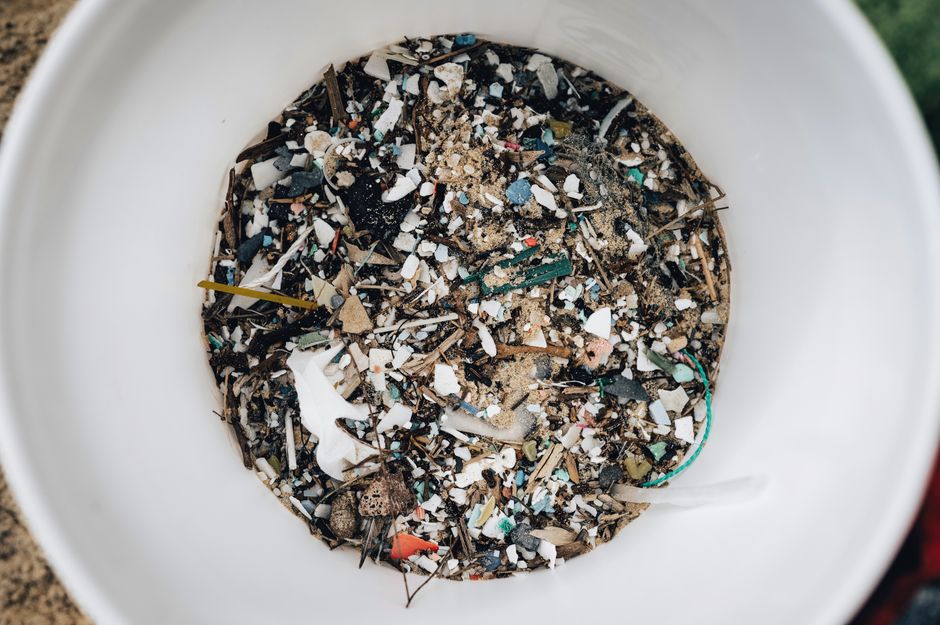
Microplastics are now found in every ocean on Earth, from Arctic ice to the deepest trenches, and marine animals at every level of the food web are ingesting them. The effects range from physical damage in the gut to chemical exposure and, in some cases, disruption of feeding, growth, and reproduction. The full scale of harm is still being studied, but the presence of these particles in marine life is not in question.
What Are Microplastics and Where Do They Come From?
Microplastics are plastic fragments smaller than 5 millimeters — about the size of a sesame seed or smaller. Some are manufactured at that size. Others are the result of larger plastic items breaking apart over years of sun, wave action, and physical wear.
Scientists generally sort them into two groups:
- Primary microplastics — made small on purpose. These include the microbeads once common in face scrubs and toothpaste, and the plastic pellets (called nurdles) that serve as raw material for plastic manufacturing.
- Secondary microplastics — broken down from larger items. A plastic bottle, fishing net, or synthetic T-shirt shed fibers and fragments over time. Tires and synthetic clothing are significant sources of microplastic fibers entering waterways through wastewater and storm runoff.
The distinction matters because primary microplastics enter the environment already at a size marine organisms can swallow. Secondary microplastics accumulate continuously as existing plastic waste degrades. That means the problem grows even if plastic production stopped tomorrow.
How Do Marine Animals Take In Microplastics?
Ingestion is the main route, and it happens at every level of the food web. Filter feeders like mussels, oysters, and barnacles pull microplastics out of the water along with their food. Small fish mistake plastic fragments for plankton. Larger fish eat those smaller fish. Whales, seabirds, and sea turtles consume plastic directly or through their prey.
Research published in the journal Environmental Pollution and similar sources has documented microplastics in the digestive tracts of hundreds of marine species. The particles have been found in commercially important fish, deep-sea creatures, and even plankton at the base of the food chain.
There is also evidence that microplastics can be absorbed through gills in some species, though ingestion is the better-documented pathway.
What Happens Inside a Marine Animal That Swallows Plastic?
The physical effects are the most clearly established. Once inside the digestive tract, plastic particles can cause abrasion, blockages, and a false sense of fullness. An animal that feels full but has consumed little actual nutrition may eat less, leading to reduced energy intake and, over time, poor body condition.
In filter feeders like mussels, microplastics can accumulate in the gut and trigger an inflammatory response. Some studies suggest reduced feeding efficiency and lower energy reserves in exposed shellfish, though results vary by species, particle type, and concentration.
Smaller particles — those under roughly 10 micrometers — may cross the gut lining and enter the bloodstream or tissues. This has been shown in laboratory studies with shellfish and some fish. Whether this happens at environmentally relevant concentrations in wild populations, and what it means for animal health, is still an open question.
The evidence for direct mortality from microplastics alone is limited outside of very high laboratory exposures. In the wild, the effects are more likely to be sublethal — reduced growth, impaired reproduction, or increased vulnerability to disease — rather than immediate death.




Do Microplastics Carry Chemicals Into Marine Life?
Plastic particles can carry harmful chemicals in two ways. They can leach additives that were mixed into the plastic during manufacturing — things like plasticizers, flame retardants, and stabilizers. They can also absorb pollutants from the surrounding water, including PCBs, pesticides, and heavy metals, and then release those chemicals once ingested.
This has raised concern that microplastics act as a delivery system for toxic compounds into marine organisms. The concern is reasonable, but the evidence for how much this actually matters at real-world exposure levels is mixed. Some studies show that microplastics can transfer absorbed pollutants to marine animals. Others suggest that the contribution is small compared to what animals already take in through their normal food and water.
The honest position: this is an active area of research, and no one has shown that microplastics are a dominant source of chemical exposure for most marine species. That does not mean the concern is unfounded. It means the science has not yet settled the question.
How Do Microplastics Move Through the Food Web?
Microplastics move up the food chain when predators eat prey that has already ingested them. This process is called trophic transfer. It has been documented in laboratory food chains and observed in wild-caught fish and marine mammals.
Whether the concentration of microplastics increases at each level — a process called biomagnification — is less clear. For some persistent chemical pollutants like mercury and PCBs, biomagnification is well established. For microplastic particles themselves, the evidence does not consistently show that larger predators accumulate higher concentrations than their prey. Some studies find evidence of it. Others do not.
What is well established is that microplastics are present in marine species that humans eat. This includes mussels, clams, oysters, and many types of fish. The implications for human health are a separate question and one that researchers are actively investigating.
Which Marine Animals Are Most Affected?
The animals most vulnerable are those that filter large volumes of water or that cannot easily distinguish plastic from food.
- Filter feeders — mussels, oysters, clams, and barnacles process water continuously and take in whatever particles are suspended in it. They cannot selectively reject microplastics.
- Zooplankton and small fish — at the base of the food web, these organisms mistake plastic fragments for food. Their contamination affects everything that eats them.
- Sea turtles — floating plastic bags and fragments resemble jellyfish, a primary food source for some species. Ingestion can cause blockages and malnutrition.
- Seabirds — many species feed at the ocean surface, where buoyant plastics accumulate. Chicks fed plastic by parents can suffer stunted growth and starvation.
- Whales and dolphins — these animals consume large quantities of prey and can accumulate microplastics indirectly. Stranded animals have been found with significant plastic in their stomachs.
Coral reefs are also affected. Microplastics can settle on coral surfaces, potentially interfering with feeding and increasing the risk of disease. Research on this is ongoing.
Is There Any Evidence of Population-Level Harm?
This is where the science gets genuinely uncertain. Individual animals clearly ingest microplastics and show signs of physical and cellular stress in laboratory settings. What is much harder to demonstrate is whether those individual effects translate into population declines in the wild.
Population-level harm is difficult to measure because marine populations face many simultaneous pressures — overfishing, habitat loss, warming water, acidification, and pollution of all kinds. Isolating the specific contribution of microplastics is methodologically challenging.
Some studies have found reduced reproductive output in shellfish exposed to high concentrations of microplastics in controlled settings. Whether similar effects occur in wild populations at current environmental levels is not established.
The conservative conclusion: microplastics are a real stressor for marine life, and the evidence for individual-level harm is strong. The evidence for population-level harm is suggestive in some cases but not definitive. This is not a reason to dismiss the problem. It is a reason to keep studying it.
What Can Be Done About Microplastics in the Ocean?
Reducing plastic entering the ocean is the most direct approach. That means less single-use plastic, better waste management, and improved filtration at wastewater treatment plants, which are a major pathway for microfibers from synthetic clothing.
Some jurisdictions have banned microbeads in personal care products. These bans have reduced one source of primary microplastics, though microbeads were never the largest contributor.
Cleaning up existing microplastics is far harder than preventing new ones. Once particles are in the ocean and dispersed, removing them at scale is not currently feasible with existing technology. Some researchers are exploring filtration and collection methods, but none have been demonstrated to work at the scale needed.
The most effective action remains reducing the amount of plastic that enters waterways in the first place.
Frequently Asked Questions
Do microplastics actually harm marine animals?
Yes, at the individual level. Ingested particles can cause physical damage, inflammation, and reduced feeding. The evidence for harm at the population level is less certain.
Can microplastics enter the human food supply through seafood?
Yes, microplastics have been found in mussels, oysters, and many fish species that people eat. The health implications for humans are still being researched.
Are microplastics in the ocean getting worse?
Yes. Plastic production continues to rise, and existing plastic waste keeps breaking into smaller particles. Even with immediate reductions, microplastic levels would likely keep increasing for years.
What is the biggest source of microplastics in the ocean?
Tire wear, synthetic textiles, and the breakdown of larger plastic items are among the largest sources. There is no single dominant source.
