
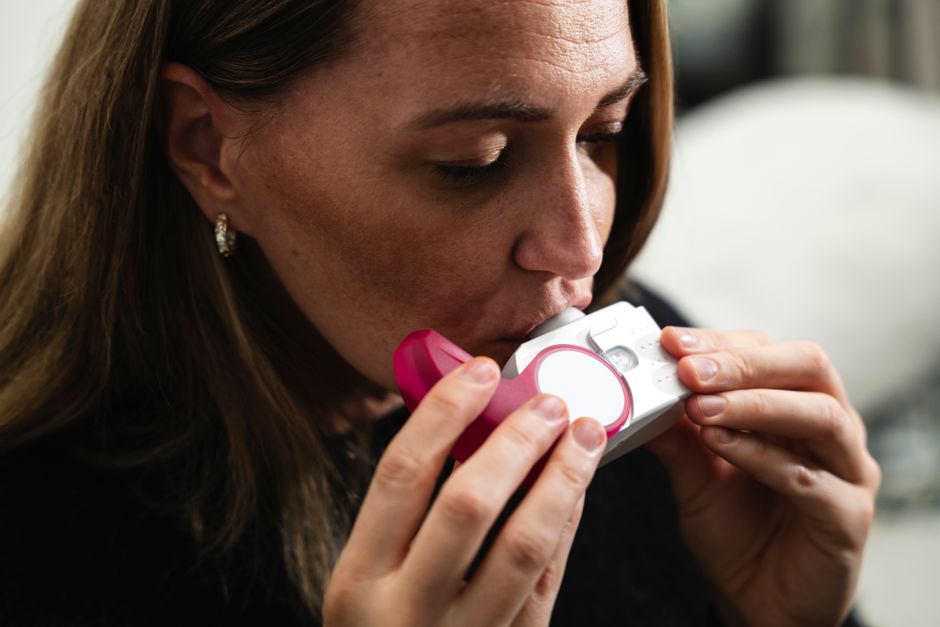
If you have COPD, your doctor may have prescribed an inhaler that combines two medicines: a LABA and a LAMA. These dual-action inhalers work by relaxing the muscles around your airways in two different ways at once. The result is wider, easier breathing that lasts longer than either medicine could achieve alone.
COPD, or chronic obstructive pulmonary disease, makes it hard to push air out of your lungs. The airways narrow, and the muscles wrapping around them tend to tighten. LABA and LAMA inhalers target that tightening from two angles. Understanding how they work helps you use them correctly and know what to expect.
What Does LABA and LAMA Stand For?
LABA stands for long-acting beta-agonist. LAMA stands for long-acting muscarinic antagonist. Both are bronchodilators, which means they open up the airways.
These names sound technical, but the idea is simple. Your airways are tubes surrounded by smooth muscle. When that muscle tightens, the tubes get narrower and breathing becomes harder. Both LABA and LAMA medicines tell that muscle to relax. They just do it through different chemical pathways.
The “long-acting” part matters. A short-acting inhaler like albuterol works for about four to six hours. LABA and LAMA medicines are designed to keep airways open for roughly 12 to 24 hours, depending on the specific drug. That is why they are used as daily maintenance therapy rather than rescue medicine.
Combination inhalers put both medicines in one device. This is convenient, but it also means you are getting two drugs with two separate mechanisms working at the same time.
How Do LABA and LAMA Inhalers Work for COPD?
Your body controls how open your airways are through the autonomic nervous system. This system has branches that either tighten or relax the smooth muscle in your airways. LABA and LAMA medicines interfere with the signals that cause tightening.
LABA medicines mimic a natural chemical called epinephrine (adrenaline). They attach to beta-2 receptors on the airway muscle. When they attach, the muscle receives a signal to relax. This opens the airway wider. The effect builds up over time and lasts many hours.
LAMA medicines block a different signal. Your body releases a chemical called acetylcholine that can cause airway muscles to tighten. LAMA medicines block the receptors that acetylcholine would normally attach to. With those receptors blocked, the tightening signal cannot get through. The muscle stays relaxed.
When you combine both, you are relaxing the airway muscle through two separate mechanisms. This is not just doubling the dose of one type of medicine. It is targeting two distinct pathways that both contribute to airway narrowing in COPD.
Some research indicates that using both together produces greater bronchodilation than using either alone. This is why combination inhalers are recommended for many people with COPD, especially those who have ongoing symptoms or frequent flare-ups.
Why Are Two Medicines Better Than One for COPD?
COPD is not just one problem. It involves airway narrowing from muscle tightening, inflammation, mucus buildup, and destruction of lung tissue. No single medicine addresses all of these.
Using a LABA alone helps relax the muscle. But other signals can still cause tightening. Adding a LAMA blocks one of those signals more completely. The two medicines together produce broader airway opening.
Clinical guidelines generally recommend combination LABA/LAMA therapy for people with COPD who have persistent symptoms or who experience exacerbations (flare-ups). Some evidence suggests that combination therapy may reduce flare-ups compared to using a single bronchodilator, though results across studies vary.
It is worth being clear about what these inhalers do and do not do. They open airways. They do not reverse the underlying lung damage from COPD. They do not cure the disease. What they can do is improve symptoms, make breathing easier, and in some cases reduce the frequency of flare-ups. That is meaningful, but it is not the same as stopping or reversing COPD.




How Are These Inhalers Different From Rescue Inhalers?
Rescue inhalers, usually containing albuterol or levalbuterol, are short-acting. They work within minutes but wear off in a few hours. They are meant for quick relief when you feel sudden shortness of breath or wheezing.
LABA/LAMA combination inhalers are maintenance medicines. You use them on a schedule, typically once or twice a day, whether you feel short of breath or not. They keep your airways open around the clock. They are not designed to stop a sudden attack.
This distinction matters for safety. If you are having an acute breathing crisis, a LABA/LAMA inhaler will not work fast enough to help you in that moment. You need a rescue inhaler for that. Keep both on hand and know which is which.
Some people with COPD are prescribed a triple therapy inhaler that includes a LABA, a LAMA, and an inhaled corticosteroid. That is a separate category and is typically reserved for people with certain characteristics, such as a history of frequent exacerbations or elevated eosinophil counts. Your doctor can explain whether triple therapy is appropriate for your situation.
What Should You Expect When Starting a LABA/LAMA Inhaler?
Most people notice some improvement in breathing within the first few days to weeks. The full effect may take longer to become apparent. This is not a medicine that works instantly like a rescue inhaler.
You may notice you can walk farther or do daily activities with less breathlessness. Some people find they use their rescue inhaler less often. These are signs the maintenance therapy is helping.
Side effects are possible. Common ones include dry mouth, headache, and throat irritation. Some people experience muscle aches or palpitations. LAMA medicines can cause dry mouth because they reduce secretions. LABA medicines can sometimes cause a rapid heartbeat or tremor.
Serious side effects are uncommon but possible. These include urinary retention (difficulty urinating), especially in men with prostate enlargement, and eye problems like acute angle-closure glaucoma. If you notice sudden eye pain, blurred vision, or difficulty urinating, contact your doctor promptly.
Proper inhaler technique matters more than many people realize. If you are not using the device correctly, the medicine may not reach your lungs. Ask your doctor or pharmacist to watch you use it and correct any mistakes. This is one of the most practical things you can do to get the most from your treatment.
Do LABA/LAMA Inhalers Reduce COPD Flare-Ups?
Flare-ups, also called exacerbations, are episodes where symptoms suddenly worsen. They can be triggered by infections, air pollution, or other factors. Reducing flare-ups is a major goal of COPD treatment because they can lead to hospitalization and faster decline in lung function.
Some studies suggest that LABA/LAMA combination therapy reduces exacerbations compared to LABA alone. The evidence is not uniform across all trials, and the size of the benefit varies. For people with frequent flare-ups, the reduction may be clinically meaningful. For those with milder disease, the difference may be smaller.
What is clearer is that maintaining open airways on a daily basis supports overall lung function and may help prevent the downward spiral that occurs when breathing becomes progressively harder. This is why consistency matters. Skipping doses because you feel fine can undermine the benefit.
What Are the Limits of LABA/LAMA Therapy?
These inhalers do not work for everyone equally. Some people with COPD have predominantly emphysema (destruction of air sacs) rather than chronic bronchitis (airway inflammation and mucus). For those individuals, bronchodilators may provide less benefit because the problem is not primarily muscle tightening.
COPD is also a progressive disease. Over time, lung function tends to decline even with treatment. LABA/LAMA inhalers can slow symptom progression and improve quality of life, but they cannot stop the disease from advancing.
Lifestyle factors still matter. Smoking cessation is the single most important step anyone with COPD can take. No inhaler can fully counteract the ongoing damage from continued smoking. Pulmonary rehabilitation, vaccination against respiratory infections, and avoiding air pollutants also play important roles.
If you feel your inhaler is not helping enough, do not stop using it without talking to your doctor. There may be other options, including triple therapy, different device types, or additional treatments. But abruptly stopping maintenance therapy can lead to worsening symptoms.
Frequently Asked Questions
How long does a LABA/LAMA inhaler take to work?
Most people notice improvement within a few days to a few weeks of starting daily use. The full effect may take longer, and it is not intended for immediate relief of sudden breathing problems.
Can I use a LABA/LAMA inhaler during a COPD flare-up?
No, these are maintenance inhalers and work too slowly to help during an acute flare-up. You need a short-acting rescue inhaler for sudden symptoms.
What is the difference between LABA/LAMA and triple therapy?
Triple therapy adds an inhaled corticosteroid to the LABA and LAMA combination. It is typically reserved for people with frequent flare-ups or specific inflammatory markers.
Do LABA/LAMA inhalers cure COPD?
No, they do not cure or reverse COPD. They help open airways, improve symptoms, and may reduce flare-ups, but the underlying lung damage remains.
