
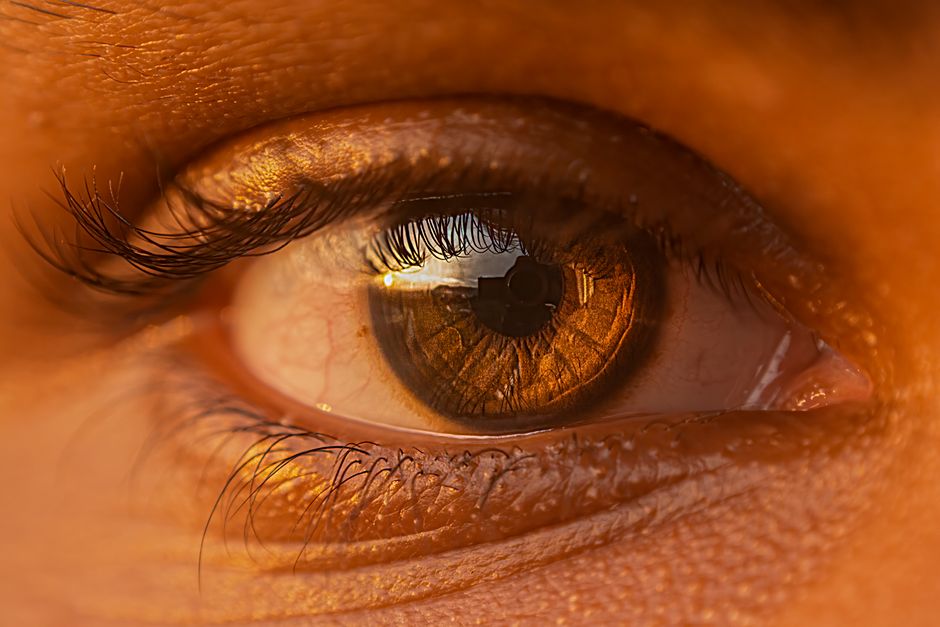
Your eyes rely on two main types of light-sensing cells to see: rods and cones. Cones are the photoreceptor cells in your retina that handle color vision and fine detail. They work best in bright light, which is why you see colors clearly during the day but struggle to distinguish them in a dark room. When light hits a cone, it triggers a chemical reaction that sends an electrical signal to your brain, which then interprets that signal as a specific color.
What Are Cones In The Retina And How Do They Work?
Cones are specialized nerve cells located in the retina, the thin layer of tissue at the back of your eye. Each cone contains light-sensitive pigments made of proteins and vitamin A derivatives. When light enters the eye and strikes these pigments, the pigment molecules change shape. This change sets off a cascade of chemical reactions that ultimately closes ion channels in the cell membrane, creating an electrical signal.
That signal travels from the cone through the optic nerve to the visual cortex at the back of your brain. The brain does not simply receive a picture. It processes millions of these individual signals and reconstructs them into the sharp, colorful image you see. The entire process from light hitting the eye to conscious perception takes a fraction of a second.
There are roughly 6 million cones in the average human retina. They are most densely packed in a tiny central area called the fovea. This is why your sharpest vision and best color perception occur when you look directly at an object. Peripheral vision relies more on rods, which is why colors appear washed out or harder to identify in the corner of your eye.
How Many Types of Cones Do Humans Have?
Most humans have three types of cones, each sensitive to a different range of light wavelengths. They are commonly called short, medium, and long cones, but you may know them as blue, green, and red cones. These names are slightly misleading because each type responds to a broad range of wavelengths, not just one color.
Short-wavelength cones peak in sensitivity around the blue-violet part of the spectrum. Medium cones peak in the green range. Long cones peak in the yellow-green range but are most often associated with red because they are the only cones that respond strongly to long wavelengths. The brain compares the activity levels of all three cone types to create every color you perceive.
Some people have only two working cone types, a condition called color blindness. Others, mostly women, can have four cone types. This condition, known as tetrachromacy, may allow for finer discrimination between similar colors, though research on its practical effects is still limited.
What Is the Difference Between Rods and Cones?
Rods and cones are both photoreceptors, but they serve different purposes. Rods are far more numerous, with about 120 million in each eye, and they are extremely sensitive to light. A single photon can activate a rod. This makes rods essential for night vision and for detecting motion in low light.
Cones require much brighter light to activate. They respond slowly compared to rods, but they provide three critical advantages: color discrimination, high visual acuity, and the ability to see fine spatial detail. Rods cannot distinguish colors at all. They only provide shades of gray.
The distribution of these cells explains everyday visual experiences. In dim lighting, you rely on rods, which is why colors look muted or disappear entirely. In bright light, cones take over, and your color perception and sharpness improve dramatically. This shift is why a dark room feels so different from a sunny afternoon.
Why Is the Fovea Important for Cone Vision?
The fovea is a small depression in the center of the macula, the central area of the retina. It contains the highest concentration of cones anywhere in the eye. In fact, the very center of the fovea contains only cones, no rods at all.
This arrangement exists for a reason. When you look directly at an object, light falls precisely on the fovea. The dense packing of cones there gives you the sharpest possible image. Reading, driving, recognizing faces, and any task requiring fine detail depend on foveal cone function.
Because the fovea has no rods, your central vision is poor in very dim light. You may notice this when looking directly at a faint star at night. The star seems to disappear, but if you look slightly to the side, it becomes visible because the light now falls on rod-rich areas outside the fovea.
What Happens When Cones Stop Working Properly?
When cones are damaged or die, vision problems follow. The specific symptoms depend on which cones are affected and how severely. Common cone-related conditions include age-related macular degeneration, cone dystrophy, and color vision deficiencies.
Age-related macular degeneration is the leading cause of vision loss in older adults. It damages the macula, including the cone-rich fovea. Early signs include blurred central vision, difficulty reading, and colors appearing less vibrant. Peripheral vision often remains intact because rods in the outer retina are less affected.
Cone dystrophy is a group of inherited disorders where cones progressively stop functioning. Symptoms usually begin in childhood or early adulthood. People with this condition experience reduced central vision, sensitivity to bright light, and difficulty seeing colors. Some forms also affect rods over time.
Color blindness is the most common cone disorder. It affects roughly 1 in 12 men and 1 in 200 women. Most forms are inherited and result from missing or altered cone pigments. Red-green color blindness is the most common type, while blue-yellow and complete color blindness are much rarer.
Can You Protect or Improve Your Cone Function?
You cannot grow new cones. The human retina does not regenerate these cells. However, you can take steps to protect the cones you have.
Protecting your eyes from bright sunlight is one of the most effective measures. Ultraviolet light and intense blue light can cause cumulative damage to retinal cells over decades. Wearing sunglasses that block 99 to 100 percent of UVA and UVB radiation reduces this exposure.
Diet appears to play a role in retinal health. Lutein and zeaxanthin, two carotenoids found in leafy green vegetables like spinach and kale, concentrate in the macula. Some research suggests they may help filter harmful light and protect cone cells, although large clinical trials confirming a protective effect are still lacking.
Omega-3 fatty acids, particularly DHA, are also found in high concentrations in retinal cell membranes. Observational studies link higher dietary intake with a lower risk of macular degeneration, but this does not prove cause and effect. No supplement has been proven to restore cones that are already damaged.
Regular eye exams matter, especially after age 50. An eye care professional can detect early signs of cone-related disease before you notice symptoms. Early detection does not cure these conditions, but it allows for earlier intervention and better planning.
Can Cones Be Repaired or Replaced?
Research into repairing or replacing cones is active but still experimental. Stem cell therapy is one area of investigation. Scientists are studying whether transplanted retinal cells can integrate into the retina and restore function. Early human trials have shown some promise for certain retinal diseases, but cone restoration specifically remains far from routine clinical use.
Gene therapy has produced more concrete results. In 2017, the FDA approved a gene therapy called voretigene neparvovec for a specific inherited retinal disease caused by a mutation in the RPE65 gene. This treatment targets retinal cells broadly, not cones specifically. It has restored some vision in treated patients, but it does not apply to most cone disorders.
Electronic retinal implants represent another approach. These devices use electrodes to stimulate remaining retinal cells, bypassing damaged photoreceptors. They provide rudimentary vision, usually in black and white, and are used only in severe cases. Current implants do not restore color vision.
No clinical guidelines currently exist for cone replacement therapy. The evidence is limited to early-phase trials and laboratory studies. Anyone considering experimental treatments should discuss risks and expectations with a retinal specialist.
Frequently Asked Questions
Do cones work in dim light?
No. Cones require relatively bright light to activate. In dim conditions, rods take over, which is why you lose color perception and fine detail in low light.
How many cones are in the human eye?
The average human retina contains about 6 million cones. They are most densely packed in the fovea, the central part of the retina responsible for sharp vision.
Can you see color with only one type of cone?
No. You need at least two working cone types to perceive a normal range of colors. People with one working cone type have a rare condition called monochromacy and see mostly in shades of gray.
Do cones regenerate if they are damaged?
No. Human cones do not regenerate. Damage to these cells is permanent, which is why protecting your eyes from UV light and monitoring retinal health through regular exams is important.
