
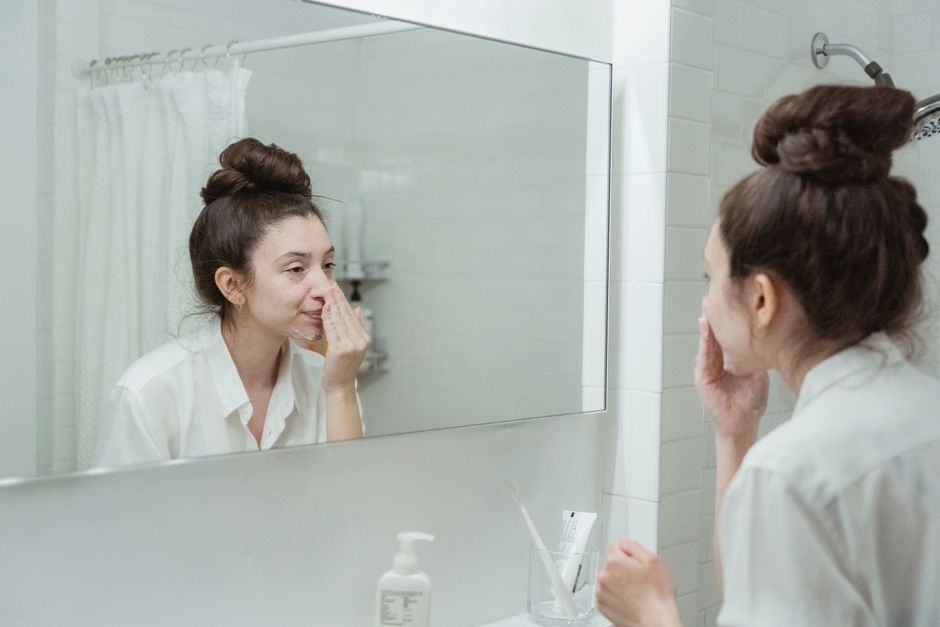
Starting your own skin care line is less about finding a secret formula and more about following a clear, regulated business process. You need to identify a specific problem for a specific customer, develop a product with a contract manufacturer, handle insurance and FDA labeling requirements, and build a brand that people actually trust. There is no shortcut, but the path is straightforward if you take it step by step.
What Do I Need to Know Before Starting a Skin Care Line?
Most people assume they need a unique ingredient or a magic cream. That is not how the industry works. The skin care market is crowded, and what sells is trust and consistency, not novelty.
You need to understand that you are entering a regulated space. The FDA oversees cosmetics in the United States. They do not approve products before they hit the market, but they do enforce rules about safety, labeling, and claims. You cannot say your product “treats eczema” or “reduces wrinkles” without clinical data to back it up. Those are drug claims, not cosmetic claims.
You also need to know your margins. A typical skin care product costs between 20 and 40 percent of its retail price to manufacture and package. The rest goes to marketing, shipping, and retail margins. If you sell a moisturizer for 30 dollars, you might keep 6 to 9 dollars after all costs. That is your profit. Plan your budget around that reality.
How Do I Find a Manufacturer for My Skin Care Line?
You do not mix lotions in your kitchen and sell them legally at scale. You need a contract manufacturer. These are factories that specialize in producing cosmetics for other brands. They handle formulation, testing, and filling.
Search for manufacturers that specialize in your product type. Some focus on serums, others on creams or cleansers. Ask for a minimum order quantity. Many manufacturers require 500 to 1,000 units per product. That is an upfront cost of several thousand dollars per SKU.
Request a Certificate of Analysis for any formula they offer. This document proves the product is stable and free of harmful bacteria. Do not skip this step. As of 2026, the FDA has increased scrutiny on cosmetic manufacturing, and a clean COA is your first line of defense against a recall.
You can also work with a cosmetic chemist to create a custom formula. This costs more but gives you a unique product. Expect to pay 2,000 to 5,000 dollars for a custom formulation, plus stability testing fees.
What Are the Legal and Labeling Requirements for Skin Care?
Your label must include an ingredient list in descending order of concentration. That is federal law. You also need a net weight, a company name and address, and a proper product name. If your product contains common allergens like nuts or gluten, you should disclose that voluntarily, though it is not always required.
Do not make medical claims. You cannot say a product “heals skin” or “cures acne” unless you have FDA approval as a drug. Use phrases like “helps improve the appearance of” or “supports skin hydration.” These are cosmetic claims and are safer.
You also need product liability insurance. This covers you if a customer has an allergic reaction or a product goes bad. The cost is typically 500 to 1,500 dollars per year for a small brand. Do not launch without it.
Register your business with the FDA’s Voluntary Cosmetic Registration Program. It is not required, but it shows you are serious and makes it easier for regulators to contact you if needed.



How Do I Build a Brand That Stands Out?
Brand is not your logo. Brand is what people say about your product when you are not in the room. The most successful indie skin care brands win on a clear promise and a specific audience.
Do not try to sell to everyone. Pick one group. Maybe it is men over 40 who want a simple routine. Maybe it is women with sensitive skin who react to fragrance. Maybe it is people who want sustainable packaging and no plastic. The narrower you go, the easier it is to market.
Your packaging matters more than you think. People judge a product by its bottle in under three seconds. Cheap plastic with a peeling label signals a cheap product. Glass bottles with a pump and a clean label signal quality. Invest in packaging that matches your price point.
Here are the key elements of a skin care brand that people trust:
- A clear problem statement on the front of the box
- Honest ingredient transparency
- Customer reviews and before-and-after photos
- A return policy that does not punish the buyer
- Consistent social media presence with education, not just sales
How Much Does It Cost to Start a Skin Care Line?
This is the question everyone wants a simple number for. There is no single answer, but there is a realistic range. A bare-bones launch with one product and minimal packaging costs around 5,000 to 10,000 dollars. That covers formulation, a small batch, packaging, a basic website, and insurance.
A professional launch with three products, custom packaging, a website, and marketing assets costs 20,000 to 50,000 dollars. A full brand launch with inventory for six months of sales can run 100,000 dollars or more.
Most new brands underestimate shipping and warehousing costs. Storing products in a climate-controlled space adds up. Shipping fragile glass bottles costs more than shipping plastic. Factor in breakage and returns. A 5 percent return rate is normal for skin care.
Below is a rough breakdown of where your money goes in a typical launch:
| Expense Category | Estimated Cost (Low End) | Estimated Cost (Mid Range) |
|---|---|---|
| Formulation and testing | 2,000 | 5,000 |
| First production run (500 units) | 3,000 | 8,000 |
| Packaging and labels | 1,500 | 4,000 |
| Website and photography | 1,000 | 3,000 |
| Insurance and legal fees | 1,000 | 2,500 |
| Marketing and samples | 1,500 | 5,000 |
| Shipping and warehousing | 1,000 | 3,000 |
How Do I Market My Skin Care Line Without a Big Budget?
You do not need a huge ad spend to get started. You need a product that solves a real problem and a way to get it in front of people who have that problem.
Send samples to micro-influencers. These are people with 5,000 to 20,000 followers who have high engagement. They often accept free product instead of payment. A single honest review on Instagram or TikTok can bring in hundreds of orders.
Build an email list before you launch. Offer a discount code or a free sample guide in exchange for an email address. When you launch, email that list first. Repeat customers are more profitable than new ones, and email is the cheapest way to reach them.
Sell on your own website first. Do not go to Amazon or retail stores until you have proof of demand. Your own site gives you full margins and customer data. Once you have consistent sales, consider wholesale to boutique stores or a curated marketplace like Credo or Follain.
Do not use paid ads until you have at least 50 customer reviews. Ads work best when they point to a product with social proof. Without reviews, your conversion rate will be low and your ad cost will be high.
Frequently Asked Questions
Do I need a license to sell skin care products?
You do not need a federal license to sell cosmetics, but you need a business license from your city or state. You also need to follow FDA labeling rules.
Can I make skin care products at home and sell them?
You can make products at home for personal use, but selling them requires a commercial kitchen or facility that meets local health department standards. Home kitchens are not legal for commercial production in most states.
How long does it take to launch a skin care line?
From concept to first sale, expect 6 to 12 months. Formulation, testing, packaging design, and label approval each take several weeks.
What is the most profitable skin care product to sell?
Serums and moisturizers have the highest margins because they use less expensive raw materials and sell at higher price points. Cleansers and toners have lower margins because they cost more to ship and sell for less.
