
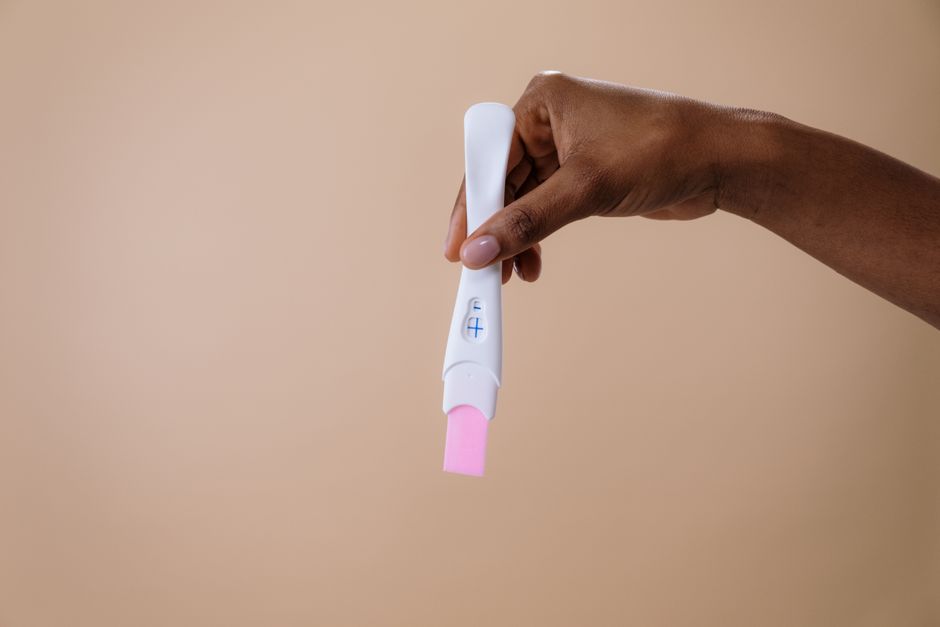
A positive pregnancy test result is usually cause for celebration, but sometimes it happens when you are not actually pregnant. False positives are rare, but they do occur. They happen when a test detects human chorionic gonadotropin (hCG) in your urine or blood when a pregnancy is not present, or when the test misreads the chemical signals. Understanding exactly how this happens requires a close look at how these tests work and what can interfere with them.
How Do False Positive Pregnancy Tests Happen?
Home pregnancy tests detect the hormone human chorionic gonadotropin (hCG). Your body only produces this hormone in significant amounts during pregnancy. A false positive occurs when the test detects hCG that is not from a current pregnancy, or when the test reacts to something other than hCG.
The most common cause is a chemical pregnancy. This is an early miscarriage that happens before a pregnancy is visible on an ultrasound. The egg fertilizes and implants, hCG levels rise enough to trigger a positive test, but the pregnancy stops developing shortly after. The result is a positive test followed by a period days or weeks later.
Other causes include recent pregnancy loss, certain medications, and medical conditions that produce hCG. Understanding each cause helps you interpret what a positive result actually means.
What Is a Chemical Pregnancy?
A chemical pregnancy is a very early miscarriage. The term “chemical” refers to the fact that pregnancy was only detected by a chemical test, not by ultrasound or fetal heartbeat. Fertilization occurs, the embryo implants in the uterus, and hCG production begins. Then, for reasons often unknown, the embryo stops developing.
This is more common than most people realize. Many women who experience a chemical pregnancy never know they were pregnant. They may simply have a slightly late, heavier period. When a home test is taken early, however, it can catch the brief rise in hCG and show a positive result.
If you get a positive test and then your period arrives within a week or two, a chemical pregnancy is the likely explanation. The positive result was real — hCG was present — but the pregnancy did not continue. This is not a false positive in the technical sense, because the test correctly detected hCG. But for someone trying to conceive, the outcome feels like a false start.
Can Medications Cause a False Positive?
Some medications contain hCG. The most common are fertility treatments. If you are undergoing fertility treatment, you may receive an hCG injection to trigger ovulation. This medication is essentially the same hormone a pregnancy produces.
An hCG trigger shot can cause a positive pregnancy test for up to two weeks after the injection. The exact duration depends on the dose and how your body clears the hormone. If you test too soon after a trigger shot, you may get a positive result that has nothing to do with a pregnancy.
Other medications rarely cause false positives. Most over-the-counter pain relievers, antibiotics, and birth control pills do not interfere with pregnancy tests. If you are unsure whether a medication you take contains hCG, check with your pharmacist or doctor.



What Medical Conditions Interfere With Pregnancy Tests?
Certain medical conditions can produce hCG or substances that mimic it. These are uncommon, but they are important to know about.
Ovarian tumors and some other rare cancers can produce hCG. This is called ectopic hCG production. In these cases, a pregnancy test can be positive even though no pregnancy exists. This is genuinely rare, but it is a known cause of false positives.
Some conditions cause the test to react to proteins that are not hCG. Pituitary hCG is one example. The pituitary gland, located at the base of the brain, can produce small amounts of hCG, particularly in women approaching menopause. Some sensitive tests may detect this low level of hCG and show a faint positive line.
Urinary tract infections, kidney disease, and ovarian cysts have been mentioned as potential causes of false positives. The evidence for these is limited and inconsistent. Some research suggests that blood or protein in the urine can interfere with certain test brands, but this is not well established. If you have a positive test and any of these conditions, a blood test at a doctor’s office will provide a clearer answer.
How Do Home Pregnancy Tests Actually Work?
Home pregnancy tests use antibodies to detect hCG. The test strip contains antibodies that bind specifically to hCG molecules. When urine travels up the strip, hCG binds to these antibodies, creating a visible line or a digital readout.
Most home tests detect hCG at levels of 20 to 25 mIU/mL. This is a measure of how much hormone is in your urine. Blood tests done at a doctor’s office are more sensitive and can detect hCG at lower levels.
Urine concentration matters. If you test with very dilute urine — after drinking large amounts of water — the hCG concentration may fall below the test’s detection threshold. This causes false negatives, not false positives. Testing with concentrated morning urine is generally recommended because hCG levels are highest at that time.
Evaporation lines are another source of confusion. If you read a test after the recommended time window, usually 3 to 5 minutes, the urine may dry and leave a faint line. This line is not a positive result. It is simply dried urine residue. Reading tests outside the recommended window is a common reason for what appears to be a false positive.
What Should You Do After a Positive Test?
If you get a positive home pregnancy test, the first step is to confirm it. Wait a few days and test again. A viable pregnancy will produce rising hCG levels, so the second test should also be positive, and the line should be darker.
If you are taking fertility medications that contain hCG, wait at least 14 days after your trigger shot before testing. Your doctor can advise you on the right timing for your specific treatment plan.
A blood test at a doctor’s office is the most reliable way to confirm a pregnancy. Two blood tests taken 48 hours apart can show whether hCG levels are rising appropriately. In a healthy early pregnancy, hCG levels typically double every 48 to 72 hours.
If you get a positive result but then start bleeding, contact your doctor. This could indicate a chemical pregnancy, an ectopic pregnancy, or a miscarriage. An ectopic pregnancy occurs when the embryo implants outside the uterus, usually in a fallopian tube. This is a medical emergency and requires prompt treatment.
How Common Are False Positives?
False positives are rare when tests are used correctly. Most estimates suggest that home pregnancy tests are over 99% accurate when used as directed. The vast majority of positive results are true positives.
However, the accuracy depends on following instructions. Testing too early, reading results too late, and using expired tests can all affect accuracy. Expired tests may have degraded antibodies that no longer function correctly.
Digital tests are less prone to evaporation line confusion because they display a clear “Pregnant” or “Not Pregnant” message. They work the same way as line tests but remove the interpretation step.
If you are uncertain about a positive result, the most direct path is a blood test. Blood tests measure hCG with higher precision and are not subject to the same visual interpretation issues as home tests.
Can a Faint Line Mean a False Positive?
A faint line does not mean the result is false. A faint line usually means hCG is present but at a low level. This is common in early pregnancy, when hCG is just beginning to rise. It can also occur with a chemical pregnancy, where hCG peaks at a low level before falling.
The color of the line matters. Most tests use a pink or blue dye. A faint pink line, even very light, is generally a positive result. A gray or colorless line may be an evaporation line, especially if the test was read after the time limit.
If you get a faint positive, test again in 48 hours. In a progressing pregnancy, the line should become darker as hCG levels rise. If the line stays faint or disappears, the pregnancy may not be progressing.
Frequently Asked Questions
Can birth control cause a false positive pregnancy test?
No. Birth control pills, patches, rings, and intrauterine devices do not contain hCG and do not cause false positives. If you get a positive test while on birth control, a pregnancy is possible and should be confirmed by a doctor.
How long after a miscarriage will a pregnancy test be positive?
hCG levels gradually fall after a miscarriage, and tests can remain positive for several weeks. The exact duration depends on how far along the pregnancy was and how high the hCG level peaked. Repeat blood tests can track the decline.
Can alcohol or drugs cause a false positive?
No. Alcohol, recreational drugs, and common medications like pain relievers do not interfere with pregnancy test results. Only medications that contain hCG, primarily fertility treatments, can cause a false positive.
