
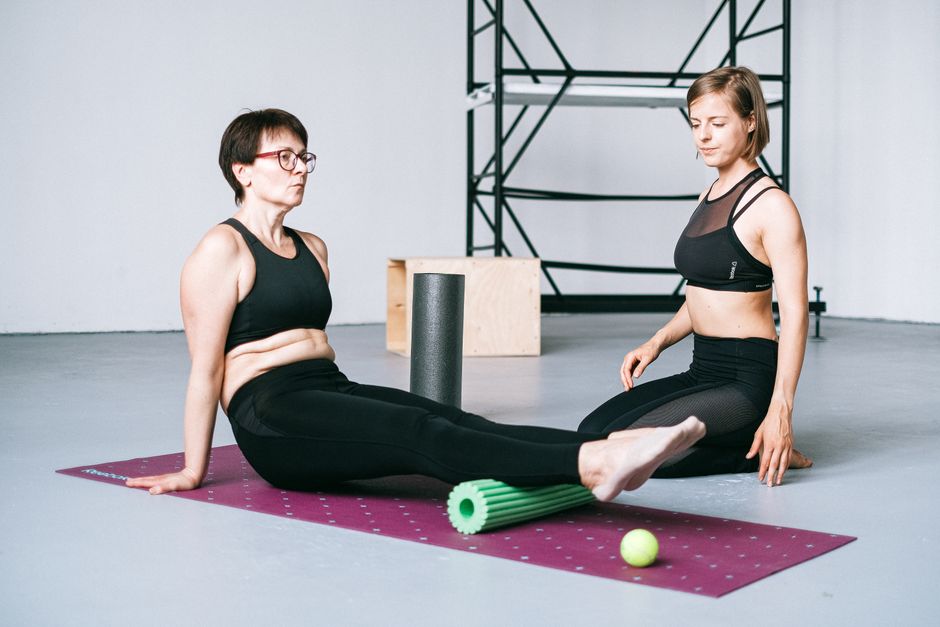
Foam rolling during pregnancy is generally safe for most women, but the safety and comfort level change by trimester and depend heavily on where you roll and how much pressure you use. The first trimester is the least restrictive, while the second and third trimesters require you to avoid your belly, be cautious with your lower back, and modify how you position your body to protect your changing center of gravity and the hormone relaxin.
Is Foam Rolling Safe During Pregnancy By Trimester?
Yes, foam rolling is safe during pregnancy for most women, but it is not a one-size-fits-all activity. In the first trimester, you can generally follow your normal routine with minor adjustments. In the second trimester, you must stop rolling directly on your abdomen and avoid lying flat on your back for extended periods. In the third trimester, the same rules apply, but you also need to be more careful with balance and avoid any position that feels unstable.
The main safety concerns are not about the foam roller itself harming the baby. The concerns are about maternal blood flow, joint stability, and the risk of falling. The baby is well protected inside the amniotic sac and uterus. The risks are about how the rolling positions affect your body.
What Does the Pregnancy Hormone Relaxin Do to Your Joints?
During pregnancy, your body produces a hormone called relaxin. This hormone loosens the ligaments in your pelvis to prepare for birth. The effect is not limited to the pelvis. Relaxin affects all the ligaments in your body, including those in your spine, hips, knees, and ankles.
This increased laxity means your joints are less stable than they were before pregnancy. Foam rolling applies direct pressure to muscles and fascia, but it also moves the joints through ranges of motion. When ligaments are loose, that range of motion can exceed what is safe. You may feel like you are stretching further than normal, and you are. This is why you must reduce the intensity of your rolling and avoid pushing into deep pressure.
You are not trying to break up tight tissue as aggressively as you might have before pregnancy. The goal shifts to gentle maintenance and blood flow, not deep myofascial release.
First Trimester: What Is Safe and What to Avoid
In the first trimester, your uterus is still low in the pelvis and protected by the pubic bone. Your center of gravity has not shifted dramatically. Most standard foam rolling exercises are acceptable during this time.
You can roll your calves, thighs, glutes, upper back, and lats with moderate pressure. You should still avoid rolling directly on your lower back or spine. The bones of the spine are not meant to take direct pressure from a hard roller. This rule applies to everyone, pregnant or not.
You should also begin to reduce the time you spend lying flat on your back. While it is not dangerous in the first trimester, it is a good habit to break early. As the uterus grows, lying flat can compress the vena cava, a major blood vessel that returns blood to your heart. This can cause dizziness, nausea, and reduced blood flow to the placenta. Starting to use side-lying or seated positions now makes the transition easier later.
The most important first-trimester rule is to listen to your body. If a position feels wrong, stop. If you feel any pulling, sharp pain, or discomfort in your abdomen, stop immediately.





Second Trimester: The Belly Rule and Positioning Changes
The second trimester is when your belly becomes visible and the rules change significantly. You must never lie face down on a foam roller. This position puts direct pressure on the uterus and the baby. There is no safe way to modify this. Skip any exercise that requires you to be prone.
You should also avoid lying flat on your back for more than a few minutes. By the second trimester, the weight of the uterus can compress the vena cava when you are supine. This is called supine hypotensive syndrome. Symptoms include dizziness, lightheadedness, shortness of breath, and nausea. If you feel any of these, roll onto your left side immediately.
This does not mean you cannot foam roll. It means you must change your positions. You can roll your glutes and lower back while seated on the floor with the roller behind you. You can roll your legs while lying on your side. You can roll your upper back while seated in a chair with the roller against the wall.
Your center of gravity is now shifting forward. This increases your risk of losing balance. Always keep one hand on the floor or a stable surface for support. Never use a roller that is elevated on a box or step.
Third Trimester: Balance, Pressure, and the Final Weeks
In the third trimester, the same rules from the second trimester apply, but your body feels very different. Your belly is large, your balance is compromised, and your joints are at their loosest. The risk of falling is the biggest concern now.
Avoid any rolling exercise that requires you to balance on one leg or move dynamically. Keep all movements slow and controlled. Use a wall for support whenever possible. Wall-mounted foam rolling for the upper back and lats is an excellent option in the third trimester because it eliminates balance concerns entirely.
You should also reduce the pressure you apply. What felt like a good deep pressure in the first trimester may now feel like too much. The increased relaxin levels mean your tissues are more pliable. You do not need as much force to achieve the same effect. Back off the intensity.
Some women experience significant pelvic pain in the third trimester. This is often related to the pubic symphysis or sacroiliac joints. Do not roll directly over these areas. The pressure can aggravate an already inflamed joint. If you have pelvic girdle pain, skip the roller and talk to a physical therapist who specializes in pregnancy.
Which Muscles Are Safe to Roll and Which Are Not?
Safe areas to roll throughout pregnancy include the calves, shins, quadriceps, hamstrings, glutes, upper back, lats, and forearms. These large muscle groups tolerate pressure well and are not near the uterus.
Areas to avoid include the abdomen, directly over the spine, the pubic bone, and the groin. The abdomen is off-limits for the entire pregnancy. The groin contains lymph nodes and major blood vessels, and the area is already under strain from relaxin. Direct pressure here is not helpful and can be uncomfortable.
Your lower back requires special attention. You can roll the muscles on either side of the spine, but not the spine itself. Use a low-density roller and keep the pressure light. If you have any history of lower back issues, ask your doctor before rolling this area.
The inner thighs are another area to approach with caution. The adductor muscles attach near the pelvis. With relaxin loosening the pelvic ligaments, aggressive inner-thigh rolling can overstretch the area. If you roll here, use very light pressure and stop if you feel any pulling sensation in the pelvis.
Signs You Should Stop Foam Rolling Immediately
Foam rolling should never cause sharp pain. If you feel a sudden, sharp, or shooting sensation, stop. This is different from the discomfort of pressing into a tight muscle.
Stop if you feel any of the following: dizziness, lightheadedness, nausea, shortness of breath, vaginal bleeding, fluid leakage, or contractions. These symptoms require immediate medical attention. Do not wait to see if they pass.
You should also stop if a position feels unstable. In the third trimester, your balance is not what it was. A fall is the most dangerous outcome of foam rolling during pregnancy. If you feel like you cannot hold a position safely, stop and choose a different exercise.
Safe Alternatives to Foam Rolling During Pregnancy
If foam rolling does not feel right, there are other ways to get similar benefits. A massage ball can target specific areas with less body weight involved. You can place the ball between your back and a wall and control the pressure with your legs.
Stretching is always a safe option. Gentle static stretching, especially for the hips and lower back, can relieve tension without the compression of a roller. Prenatal yoga is another excellent option. Many poses are specifically designed for the changing pregnant body.
Some clinicians recommend using a rolling pin or a firm massage tool in place of a foam roller. These tools allow you to control pressure more precisely without putting your full body weight on the roller. If you are unsure, start with the least intense option and build up only if it feels comfortable.
When to Ask Your Doctor Before Foam Rolling
Most women can foam roll during pregnancy without any issues. But some conditions require clearance from a doctor first. If you have placenta previa, preeclampsia, gestational diabetes with complications, or a history of preterm labor, talk to your doctor before starting any new physical activity.
If you have diastasis recti, the separation of the abdominal muscles, you should avoid any rolling that involves twisting or direct pressure on the abdomen. A physical therapist can guide you on safe alternatives.
If you are new to foam rolling and have never done it before pregnancy, pregnancy is not the time to start an intense program. If you are experienced, you can continue with the modifications described here. If you are a beginner, start with a very soft roller and use it only on your legs and upper back.
Frequently Asked Questions
Can I foam roll my belly during pregnancy?
No, you should never foam roll directly on your belly during pregnancy. Direct pressure on the uterus is unsafe and offers no benefit.
Is it safe to lie on my back while foam rolling during pregnancy?
Avoid lying flat on your back after the first trimester. The weight of the uterus can compress a major blood vessel and reduce blood flow to you and your baby.
Can foam rolling cause a miscarriage?
No evidence links foam rolling to miscarriage. The baby is well protected inside the uterus, but you should still avoid positions that put pressure on your abdomen or cause you to fall.
What is the safest foam rolling position in the third trimester?
Seated rolling for your glutes and hamstrings, or standing wall rolling for your upper back, are the safest options. These positions keep your balance stable and avoid pressure on your abdomen.
