
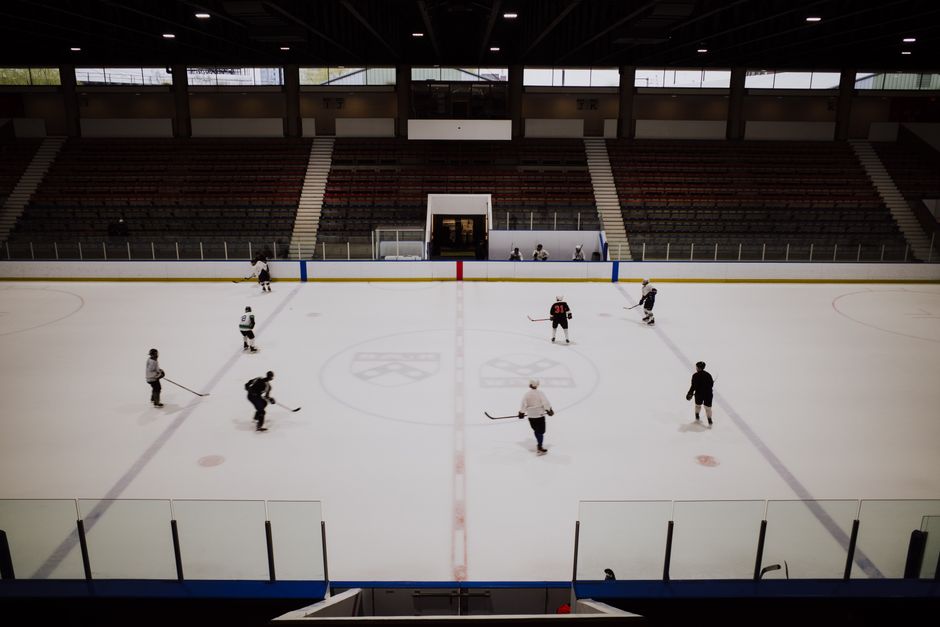
Hockey is one of the fastest team sports on earth, and a puck can cross the goal line in a blur too quick for the human eye to track. Broadcasters solve this with a mix of high-speed cameras, computer vision, and a tracking system that predicts where the puck is even when players block the view. The technology behind how cameras follow hockey pucks has changed a lot since the early 1990s, and the modern approach is less about adding a glowing dot and more about letting software reconstruct the puck’s path in real time.
What Is the Puck Tracking System Used in Hockey Broadcasts?
Most NHL broadcasts rely on a system that combines cameras mounted around the arena with software that identifies and follows the puck frame by frame. The system feeds data to the broadcast truck, where producers can use it for replays, on-screen graphics, and augmented reality overlays.
The best-known attempt at this was FoxTrax, introduced by Fox Sports in 1996. It placed infrared emitters inside the puck and sensors around the rink, then added a blue glow on screen so viewers could follow the action. The system worked, but many fans found the glow distracting, and it was discontinued after a few seasons.
Modern tracking takes a different approach. Rather than modifying the puck with visible effects, the system uses computer vision to detect the puck’s position and movement, then renders graphics only when the broadcast team chooses to show them. The puck itself looks normal on screen most of the time.
How Do Cameras Follow Hockey Pucks Using Computer Vision?
Computer vision lets software identify the puck in a video feed by analyzing shape, color, and motion. A hockey puck is small, dark, and fast, which makes it a difficult target. The system has to separate the puck from skates, sticks, shadows, and the dark boards behind the net.
Cameras positioned at multiple angles give the software more data to work with. When one camera loses sight of the puck, another may still have a clear view. The software combines these views to estimate the puck’s location in three-dimensional space.
Machine learning models are trained on thousands of hours of game footage. Over time, they learn what a puck looks like in different lighting, at different speeds, and from different angles. This training is why modern systems handle the puck far better than early attempts did.
Why the Puck Is Hard to Track
A puck can travel at well over 100 miles per hour on a slap shot. At that speed, it can move several feet between frames in a standard broadcast camera. That gap is where tracking gets difficult.
- The puck is small and dark, similar in color to skates and shadows.
- Players constantly block the camera’s view.
- Ice reflections and arena lighting change how the puck appears.
- Fast motion causes blur that makes shape detection harder.
To manage these problems, tracking systems use prediction. If the software knows where the puck was a fraction of a second ago and how fast it was moving, it can estimate where it should be now, even if the current frame is unclear.
How Do Cameras Follow Hockey Pucks When Players Block the View?
Occlusion, when a player or official blocks the camera’s view, is the single biggest challenge in puck tracking. A defender’s leg or a goalie’s pad can hide the puck completely for a moment.
To handle this, the system relies on motion prediction. It builds a short-term model of the puck’s trajectory and uses that model to fill in the gaps when the puck disappears from view. When the puck reappears, the software checks whether its position matches the prediction and adjusts if needed.
Multiple camera angles help here too. A puck hidden from one camera may be visible from another. The software weighs the available views and picks the most reliable estimate.
This is why tracking works better in some arenas than others. Camera placement, lighting, and the number of available angles all affect how well the system performs.





What Technology Powers Modern Puck Tracking?
Modern systems combine several technologies working together. The exact setup varies by broadcaster and league, but the general components are similar.
| Component | What It Does |
|---|---|
| High-speed cameras | Capture frames fast enough to reduce motion blur |
| Computer vision software | Identifies the puck in each frame |
| Motion prediction | Estimates puck position when the view is blocked |
| Sensor chips (in some systems) | Send position data directly from inside the puck |
| Broadcast rendering | Adds graphics, trails, or highlights for viewers |
Some newer systems place a small chip inside the puck that transmits position data. This gives the software a direct signal rather than relying only on what cameras see. The chip is lightweight and does not change how the puck behaves in play.
The data from these systems is also used for analytics. Coaches and analysts can study puck movement, shot speed, and zone time in ways that were not possible before tracking existed.
Why Did Early Puck Tracking Fail on Television?
FoxTrax was a genuine engineering achievement, but it did not last. The glowing blue trail that made the puck easy to see also made the game look different from what fans expected. Many viewers found it distracting rather than helpful.
The lesson was that tracking technology works best when it stays out of the way. Modern systems show graphics only when they add value, such as during a replay or a slow-motion breakdown. The rest of the time, the puck looks like a puck.
Another issue was cost and complexity. Early systems required significant hardware in every arena. As camera and computing technology improved, tracking became cheaper and more practical.
How Accurate Is Puck Tracking Today?
Accuracy varies depending on the system, the arena, and the situation. In clear conditions with good camera coverage, modern tracking can follow the puck closely. In crowded plays near the net, accuracy drops.
No system is perfect. The puck moves too fast and gets hidden too often for any current technology to track it flawlessly at all times. The goal is not perfection but usefulness. A system that gets it right most of the time is valuable for broadcasts and analytics.
It is worth noting that tracking data used for officiating is held to a higher standard than tracking used for graphics. When a system helps determine whether a goal counts, the margin for error matters more. Leagues have been cautious about expanding tracking into officiating decisions for this reason.
What Does Puck Tracking Mean for Fans?
For most viewers, puck tracking shows up as better replays, clearer explanations of close plays, and graphics that help explain what happened. It does not change the game itself.
Some fans want more tracking features, like live puck trails or real-time speed displays. Others prefer a clean broadcast with no overlays. Broadcasters balance these preferences, which is why tracking features tend to appear selectively rather than constantly.
The technology continues to improve. As cameras get faster and software gets smarter, the gap between what the system sees and what the human eye can follow will keep shrinking.
Frequently Asked Questions
How do cameras track a hockey puck so fast?
They use high-speed cameras plus computer vision software that identifies the puck and predicts its path between frames. Multiple camera angles help the system keep track even when one view is blocked.
Does the NHL use a chip inside the puck?
Some tracking systems use a small sensor inside the puck to send position data directly, and leagues have tested this approach. The exact technology varies by broadcaster and season.
Why did the glowing puck on TV go away?
FoxTrax was discontinued because many fans found the blue glow distracting and it made the game look unfamiliar. Modern systems show graphics only when they add value.
Is puck tracking accurate enough to call goals?
Tracking accuracy is good in clear conditions but drops when the puck is hidden by players. Leagues have been cautious about using it for officiating because the margin for error matters more in those decisions.
