
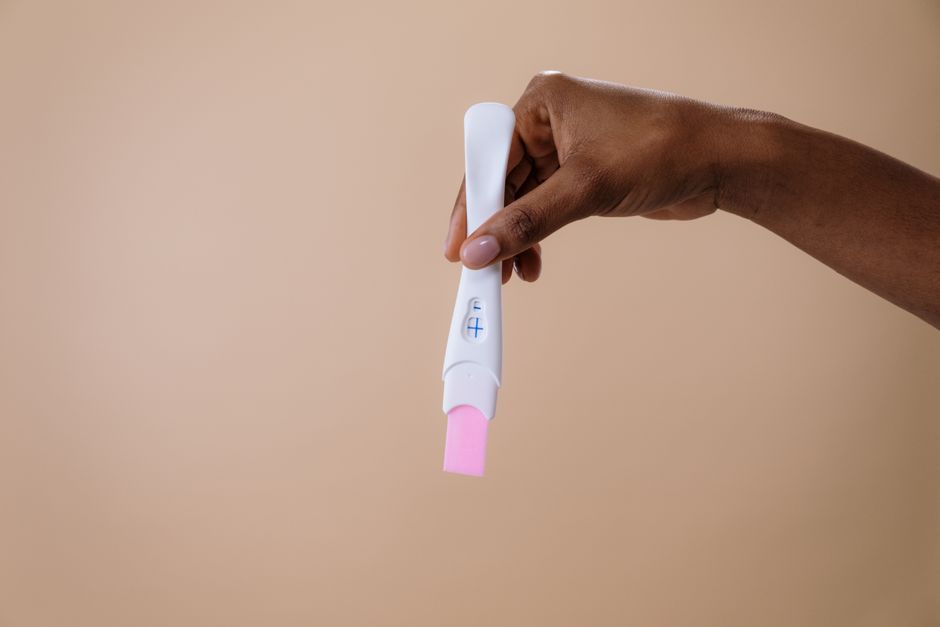
Home fertility tests can measure a few hormones in your urine, saliva, or blood. What they cannot do is tell you whether you can get pregnant. That gap between what these tests measure and what people assume they measure is the single most important thing to understand before you spend money on one.
Some at-home tests offer real information about ovulation timing. Others claim to assess your “fertility age” or egg supply. The evidence behind those broader claims is much weaker than the marketing suggests.
Do At Home Fertility Tests Actually Work?
It depends entirely on what you expect the test to do. For predicting ovulation, some at-home tests work reasonably well. For diagnosing infertility, none of them work.
Infertility is a medical diagnosis. It generally means a couple has not conceived after 12 months of regular unprotected sex, or after 6 months if the woman is 35 or older. No home test can make or rule out that diagnosis.
The tests fall into a few categories, and each one measures something different:
- Ovulation predictor kits (OPKs) detect a surge in luteinizing hormone (LH) in urine. This surge normally happens 24 to 36 hours before ovulation.
- Basal body temperature (BBT) tracking looks for a slight rise in waking temperature after ovulation has already occurred.
- At-home hormone panels typically measure follicle-stimulating hormone (FSH), sometimes estradiol or anti-Müllerian hormone (AMH), usually from a finger-prick blood sample or saliva.
- Sperm analysis kits attempt to measure sperm concentration and sometimes motility at home.
Each of these has a real physiological basis. The problem is what people conclude from the results.
What Can At-Home Ovulation Tests Actually Tell You?
Ovulation predictor kits detect the LH surge, and for many women they identify the fertile window with reasonable accuracy. That is their genuine strength.
But there are limits worth knowing. OPKs confirm that an LH surge happened. They do not confirm that an egg was actually released. A small percentage of cycles produce an LH surge without ovulation, a condition sometimes called luteinized unruptured follicle syndrome.
OPKs also perform poorly in certain situations. Women with polycystic ovary syndrome (PCOS) often have chronically elevated LH levels, which can produce false-positive results. Anyone taking fertility medications that contain LH or hCG may also get misleading readings, because these hormones can cross-react with the test.
Basal body temperature tracking has a different limitation. The temperature rise happens after ovulation, so by the time you see it, the fertile window for that cycle has largely passed. BBT is better at confirming that ovulation occurred over a series of cycles than at telling you when to try during the current one.
Neither method diagnoses a fertility problem. They describe the timing of a normal cycle. If cycles are irregular, absent, or the tests never show a surge, that is a reason to see a clinician, not a reason to keep testing.
What About At-Home Hormone and Egg Count Tests?
This is where the marketing outruns the evidence most dramatically. Several companies sell finger-prick blood tests that measure FSH and AMH and present the results as a picture of your “ovarian reserve” or “fertility age.”
AMH is a genuine marker of ovarian reserve. It reflects the number of small follicles in the ovaries. Research consistently shows that AMH declines with age and correlates with the number of eggs remaining.
Here is the critical point that gets lost: ovarian reserve is not the same as fertility. A low AMH does not mean you cannot get pregnant naturally. A high AMH does not mean you will. AMH predicts how a woman might respond to ovarian stimulation for IVF, which is genuinely useful in a fertility clinic. It is a poor predictor of natural conception.
FSH is measured on a specific day of the menstrual cycle, usually day 2 or 3, and its interpretation depends on concurrent estradiol levels and the woman’s age. A single at-home FSH value, read without that context, can be misleading in either direction.
There is also a practical problem with finger-prick hormone testing. Sample quality and handling affect results, and the accuracy of these kits compared with laboratory venous blood draws varies. Some studies suggest reasonable correlation for certain hormones; others raise concerns about reliability. The evidence is mixed, and it is not strong enough to treat a home result as equivalent to a clinical lab result.
No major medical guideline recommends at-home hormone panels for assessing fertility in the general population. That is worth sitting with before you buy one.




Can At-Home Sperm Tests Replace a Lab Analysis?
At-home sperm tests can give a rough estimate of sperm concentration. They are not equivalent to a laboratory semen analysis, which remains the standard test.
A clinical semen analysis measures several things at once: volume, concentration, total count, motility (how well sperm move), and morphology (shape). The World Health Organization publishes reference values for these parameters, and a diagnosis of male factor infertility depends on interpreting them together.
Most at-home kits measure concentration, and some attempt motility. They generally do not assess morphology reliably, and they cannot evaluate sperm DNA fragmentation or other advanced markers. A normal at-home result does not rule out male factor infertility. An abnormal result does not diagnose it either, because concentration can vary widely between samples and is affected by recent illness, fever, and how long since the last ejaculation.
If a home test shows something abnormal, the next step is a proper lab analysis, not a repeat home test.
When Should You See a Doctor Instead of Testing at Home?
Home testing is not a substitute for medical evaluation when there are known warning signs. Seeking care earlier is appropriate in several situations.
- No pregnancy after 12 months of regular unprotected sex, or after 6 months if the woman is 35 or older.
- Menstrual cycles that are consistently irregular, very long, or absent.
- Known conditions that affect fertility, such as PCOS, endometriosis, or a history of pelvic infection.
- Prior cancer treatment, surgery, or conditions affecting the reproductive organs.
- A partner with a known or suspected fertility issue.
Age matters because the timeline for evaluation differs. Fertility declines with age in women, and the decline accelerates in the mid-to-late 30s. That is why guidelines recommend earlier evaluation for women 35 and older. This is one of the few areas where the age threshold is well established in clinical practice.
A clinician can order the tests that actually answer the question: hormone panels interpreted in context, imaging when needed, and a full semen analysis. These carry information that no consumer kit currently provides.
Are These Tests Worth the Money?
For tracking ovulation, an OPK can be a reasonable and relatively inexpensive tool. For anything beyond that, the value is questionable.
The hormone panels and “fertility age” tests are the ones to treat with the most skepticism. They measure real biomarkers, but they answer a question most users are not actually asking. People buy them to find out whether they can have a baby. The tests cannot tell them that.
There is a subtler risk too. A reassuring result from a home test can delay a proper evaluation when something is genuinely wrong. A worrying result can cause significant anxiety over a number that does not predict what the buyer thinks it predicts. Neither outcome helps.
If you want to understand your fertility, the honest path is a conversation with a clinician who can order the right tests and interpret them together. Home tests can support that process. They cannot replace it.
Frequently Asked Questions
Can a home fertility test tell me if I’m infertile?
No. Infertility is a clinical diagnosis based on how long a couple has been trying to conceive, and no at-home test can make or rule out that diagnosis.
Do ovulation predictor kits really work?
They detect the LH surge that normally precedes ovulation, so they can help identify the fertile window in many women. They do not confirm that an egg was released, and they can give false positives in conditions like PCOS.
Does low AMH mean I can’t get pregnant?
No. AMH reflects ovarian reserve, which is not the same as fertility, and a low AMH does not mean natural pregnancy is impossible. AMH is most useful for predicting response to IVF stimulation, not natural conception.
Should I use a home sperm test instead of going to a clinic?
No. At-home sperm tests give a rough estimate of concentration but do not replace a laboratory semen analysis, which measures motility, morphology, and other parameters a clinician needs.
