
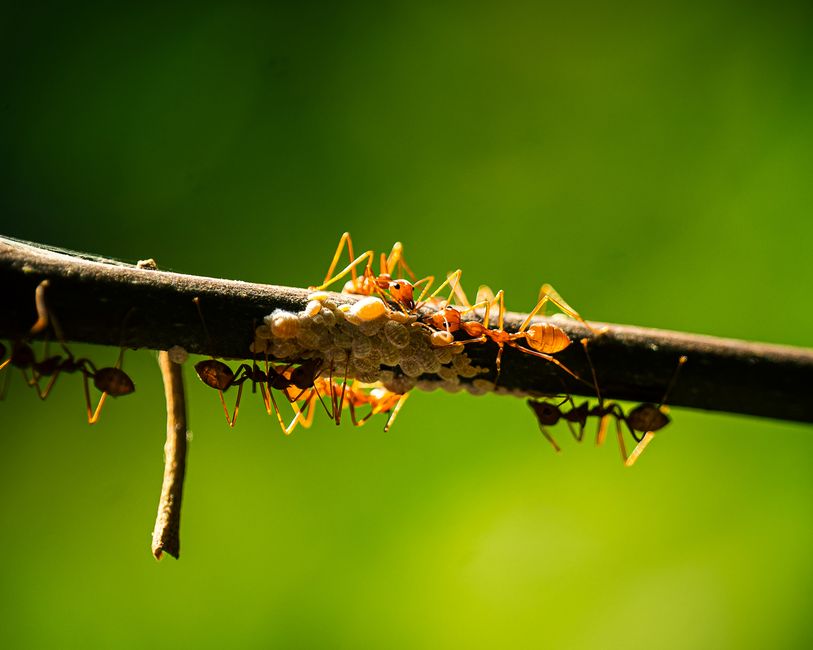
Yes, red ants bite, and they also sting. The pain you feel from a red ant comes from a sting, not the bite itself. They bite to grip your skin, then arch their bodies to inject venom through a stinger in their abdomen. This is why fire ant stings are so painful and leave those distinctive pus-filled bumps.
What Are Red Ants?
“Red ant” is a general term that covers several species. In the United States, the term usually means imported fire ants (Solenopsis invicta and Solenopsis richteri). These ants are reddish-brown and build large mounds in open, sunny areas.
There are also native red ants that look similar but behave differently. Some native species sting, while others do not. If you are dealing with ants that swarm and sting aggressively when their mound is disturbed, you are almost certainly dealing with fire ants.
Fire ants are not native to the U.S. They arrived from South America in the 1930s through the port of Mobile, Alabama. Since then, they have spread across the southeastern and south-central states.
Do Red Ants Bite or Sting?
Red ants do both, but the sting is what causes the pain. The ant bites with its mandibles to hold onto your skin. Then it curls its abdomen forward and drives a stinger into you. It can sting multiple times in a circular pattern around the initial bite.
Each sting injects a venom that contains a mixture of alkaloid compounds. These compounds are what cause the burning pain. The venom also triggers your immune system, which leads to swelling, redness, and itching.
The bite itself is mostly mechanical. It helps the ant anchor itself so it can deliver stings effectively. If you feel a sharp burning sensation that turns into itching, that is the sting working.
What Does a Red Ant Sting Look Like?
Within minutes, the sting site turns red and swells slightly. A small blister forms within a few hours. The blister fills with clear fluid, then becomes cloudy and pus-like over the next day or two.
This pus-filled blister is a hallmark of fire ant stings. It is not infected. It is a normal reaction to the venom. The blister usually breaks on its own within 48 hours. After it breaks, it crusts over and heals over the following week.
You may see a cluster of these blisters if the ant stung you multiple times. Fire ants often leave a distinctive circular pattern of stings because they pivot around their bite point while stinging.





Are Red Ant Stings Dangerous?
For most people, red ant stings are painful but not dangerous. The pain fades, the blisters heal, and no medical treatment is needed. The main risk is infection from scratching the blisters open.
For a small percentage of people, fire ant venom triggers a severe allergic reaction called anaphylaxis. This is a medical emergency. Symptoms include:
- Difficulty breathing
- Swelling of the face, lips, or throat
- Dizziness or fainting
- Rapid heartbeat
- Nausea or vomiting
- Widespread hives away from the sting site
If you or someone near you develops these symptoms after ant stings, call emergency services immediately. Anaphylaxis can progress quickly and requires epinephrine.
Estimates suggest that severe allergic reactions to fire ant stings occur in less than 1% of people stung. But the exact percentage is not firmly established. What is clear is that the risk is real and requires prompt treatment when it happens.
How to Treat Red Ant Stings at Home
If you are stung and have no signs of an allergic reaction, you can treat the sting at home. The goals are to reduce pain, control itching, and prevent infection.
Wash the area with soap and water. Apply a cold compress to reduce swelling and numb the pain. Over-the-counter hydrocortisone cream or oral antihistamines like diphenhydramine can help with itching.
Do not pop the blisters. The blister fluid is sterile. Popping it opens a wound that can become infected. If a blister breaks on its own, clean it gently with soap and water, apply an antibiotic ointment, and cover it with a bandage.
Pain from fire ant stings usually fades within a few hours. Itching can last for several days. If you notice increasing redness, warmth, pain, or pus that develops after the initial blister phase, see a doctor. That may indicate a bacterial infection.
For people with known sensitivity to insect stings, an allergist may recommend carrying an epinephrine auto-injector. Some allergists also offer fire ant venom immunotherapy, which is a series of allergy shots that can reduce the severity of future reactions. This treatment is proven effective but requires a referral and a specialist.
How to Prevent Red Ant Stings
Prevention starts with recognizing fire ant mounds. They appear as loose, irregular dirt mounds that can be several inches tall. The ants swarm rapidly when the mound is disturbed, so avoid mowing over mounds or stepping on them.
If you are working outdoors in areas where fire ants are common, wear closed-toe shoes, long pants, and tuck your pants into your socks. Tapping your boots and clothing before bringing them inside can help you avoid carrying ants indoors.
Fire ant stings are more common in warm months when the ants are active. They are most aggressive when the soil is warm and the colony is large.
Controlling fire ants around your home usually requires treating the mound directly. Boiling water poured into the mound kills the colony but can also kill nearby plants. Commercial mound treatments and baits are available, but their effectiveness varies by product and season. For large infestations, a licensed pest control professional may be the most reliable option.
Do All Red Ants Sting?
No. Some reddish ants do not sting at all. Carpenter ants, for example, are often dark red or reddish-black and can bite, but they do not have stingers. Their bites can be painful and may break the skin, but they do not inject venom the way fire ants do.
If you are unsure which type of ant you are dealing with, look at the behavior. Fire ants are aggressive, swarm quickly, and sting repeatedly. Carpenter ants are larger, usually nest in wood, and are not typically aggressive toward humans.
If you are stung repeatedly by ants that leave burning blisters, you are dealing with a stinging species. If you get a single painful bite with no blister, it is more likely a biting species like a carpenter ant.
Are Red Ant Stings Worse Than Bee Stings?
Pain is subjective, so a direct comparison is difficult. Fire ant stings burn intensely for a few minutes, then settle into an itch that can last days. A bee sting is sharp and immediate, and the pain usually fades within an hour.
One key difference is that a bee leaves its stinger in the skin and dies after stinging. A fire ant can sting repeatedly and live. A single fire ant may sting you several times, and a swarm can deliver dozens of stings in seconds.
For people who are allergic, both bee stings and fire ant stings can cause anaphylaxis. If you have had a severe reaction to one type of insect sting, you should be evaluated by an allergist. Cross-reactivity between bee venom and fire ant venom is not straightforward, and your risk profile may differ by species.
When to See a Doctor
Most red ant stings do not require medical attention. You should see a doctor if you develop signs of infection, such as spreading redness, warmth, or drainage that looks like pus after the blister phase. You should also see a doctor if a large area around the sting becomes severely swollen.
If you have been stung many times at once, especially a child or an older adult, medical evaluation is reasonable. Large numbers of stings can cause a more intense systemic reaction, including nausea, headache, or fever. These symptoms warrant a medical check.
Severe allergic reactions are emergencies. Do not wait to see if symptoms improve. Call emergency services and use an epinephrine auto-injector if one is available.
Frequently Asked Questions
How long do red ant stings last?
Pain usually fades within a few hours, but itching and blistering can last up to a week. The blister typically breaks within 48 hours and crusts over before healing.
Can red ant stings make you sick?
Most people only experience localized pain and itching, but multiple stings can cause nausea, headache, or fever. A severe allergic reaction can cause breathing difficulty and requires emergency care.
What should I put on a red ant sting?
Wash the area with soap and water, apply a cold compress, and use hydrocortisone cream or an oral antihistamine for itching. Do not pop the blister.
Are fire ants the same as red ants?
Fire ants are the most common stinging red ants in the U.S., but not all red ants are fire ants. Some red ants, like carpenter ants, bite but do not sting.
