
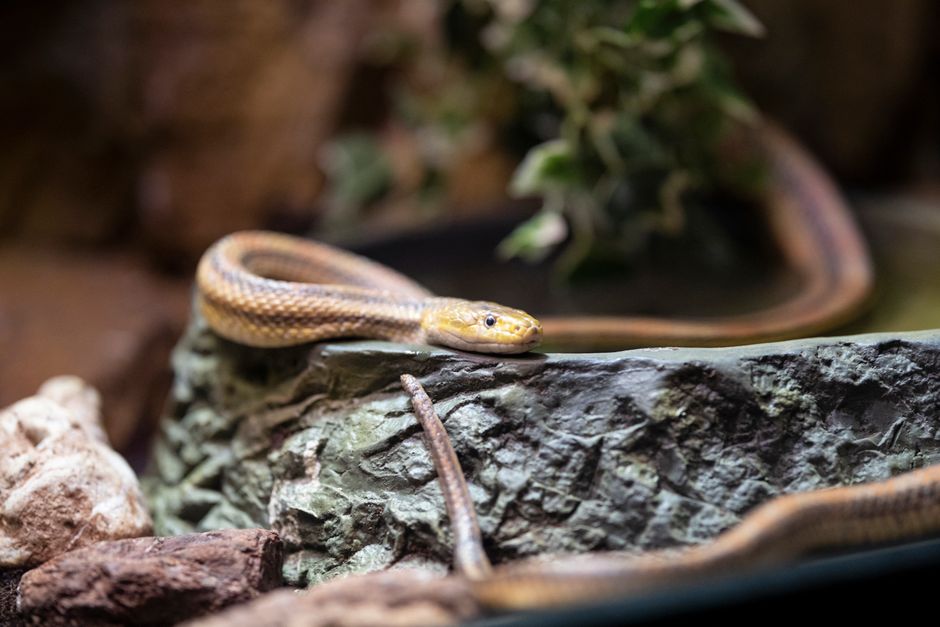
Cottonmouths are venomous pit vipers found across the southeastern United States. Their venom is medically significant, and a bite requires immediate hospital care, but deaths are rare. Most healthy adults survive a cottonmouth bite with proper treatment, though the venom can destroy tissue and cause serious complications.
How Dangerous Is a Cottonmouth Bite to a Human?
A cottonmouth bite is a medical emergency. The venom contains toxins that break down red blood cells, damage muscle tissue, and interfere with normal blood clotting. The severity of a bite depends on how much venom the snake injects, the size and health of the person bitten, and how quickly they receive medical care.
Not every bite delivers venom. Cottonmouths can deliver “dry bites” with no venom at all. Studies of pit viper bites in North America show that a meaningful percentage of bites are dry. But you cannot tell whether a bite is dry by how it feels. Any cottonmouth bite must be treated as venomous until a doctor says otherwise.
Deaths from cottonmouth bites are uncommon. The Centers for Disease Control and Prevention tracks venomous snakebite deaths in the United States, and they number in the single digits most years across all native venomous snakes combined. Untreated bites are far more dangerous. Without antivenom, a significant envenomation can cause kidney failure, severe tissue loss, or death.
What Does Cottonmouth Venom Actually Do to the Body?
Cottonmouth venom is a complex mixture of proteins and enzymes. The main components are phospholipases, metalloproteinases, and other toxins that attack cells and tissues. These compounds work together to disable prey quickly, and they affect the human body in several ways.
Tissue destruction is the most visible effect. The venom’s enzymes break down cell membranes, blood vessel walls, and connective tissue. This causes swelling, bruising, and blistering around the bite site. In severe cases, tissue can die and require surgical removal.
Blood clotting problems occur because some venom components interfere with coagulation. The venom can either prevent clots from forming or consume clotting factors faster than the body can replace them. This can lead to bleeding problems that are hard to control.
Red blood cell destruction happens when venom components damage circulating red blood cells. This can contribute to anemia and, in severe cases, put strain on the kidneys as they work to filter out damaged cells.
Pain from a cottonmouth bite is typically intense and immediate. Swelling usually begins within minutes and can progress over hours. Systemic symptoms like nausea, vomiting, weakness, and a metallic taste in the mouth can follow with significant envenomation.
How Does Cottonmouth Venom Compare to Other Snakes?
Cottonmouth venom is not considered the most potent in the United States. That distinction usually goes to the eastern diamondback rattlesnake, which delivers a larger amount of venom with similar toxicity. The coral snake’s venom is more neurotoxic but is delivered less efficiently.
Cottonmouth venom is classified as hemotoxic, meaning it primarily damages blood and tissue. This is different from neurotoxic venom, which attacks the nervous system and can cause paralysis. Some venomous snakes, like cobras and coral snakes, produce primarily neurotoxic venom.
Comparing venom toxicity across species is complicated. Scientists measure venom potency using a metric called LD50, which is the dose required to kill half of a test animal population. Lower LD50 values mean more potent venom. By this measure, cottonmouth venom is moderate in potency compared to other pit vipers, but the amount of venom delivered matters just as much.





What Should You Do If a Cottonmouth Bites You?
Call 911 or get to an emergency room immediately. Time matters. The sooner antivenom is given, the better the outcome. Do not wait for symptoms to develop before seeking care.
While waiting for help, follow these steps:
- Stay calm and keep the bitten limb at or slightly below heart level
- Remove rings, watches, and tight clothing near the bite area
- Keep the limb as still as possible
- Get to a hospital even if you feel fine
Do not do these things, no matter what you have heard:
- Do not cut the wound and try to suck out the venom
- Do not apply a tourniquet
- Do not apply ice or heat
- Do not drink alcohol or caffeine
- Do not try to catch or kill the snake for identification
These outdated first aid methods do not work and can cause more damage. The only effective treatment for venomous snakebite is antivenom administered in a hospital.
How Is a Cottonmouth Bite Treated in the Hospital?
Hospital treatment begins with assessment. Doctors evaluate the bite site, check blood work for clotting problems, and monitor vital signs. Not every bite requires antivenom. If a bite is dry or the venom dose was small, doctors may choose to observe the patient without giving antivenom.
When antivenom is needed, it is given intravenously. The current antivenom used in the United States for pit viper bites is Crotalidae Polyvalent Immune Fab, often called CroFab. A newer product called Anavip is also used. Both are effective when given promptly.
Antivenom works by binding to venom toxins and neutralizing them. It cannot reverse tissue damage that has already occurred, but it can stop the venom from causing more harm. This is why early treatment matters. Patients who receive antivenom quickly typically recover with less tissue loss and fewer complications.
Some patients need surgery. Dead tissue may need to be removed to prevent infection and promote healing. In rare cases, severe swelling can compress nerves and blood vessels in a limb, a condition called compartment syndrome that requires emergency surgery.
How Deadly Are Cottonmouths What The Venom Does to the Body Long Term
Most people who receive prompt treatment recover fully. However, recovery can take weeks or months, depending on the severity of the bite. Some patients are left with permanent tissue loss, scarring, or reduced function in the affected limb.
Long-term complications are more likely when treatment is delayed. The longer venom circulates in the body, the more damage it can do. Kidney damage from severe envenomation can be permanent. In rare cases, amputation of a finger, toe, or part of a limb is necessary.
Children and elderly people are at higher risk for severe outcomes. Their smaller body mass means the same amount of venom has a greater effect. People with underlying health conditions like heart disease or kidney problems may also have worse outcomes.
How Common Are Cottonmouth Bites?
Cottonmouths are responsible for a significant number of venomous snakebites in the United States, but exact numbers are hard to pin down. The American Association of Poison Control Centers tracks reported snakebites, but not all bites are reported to poison centers.
Most cottonmouth bites happen when people try to handle, catch, or kill the snake. The snake’s defensive behavior contributes to this. Cottonmouths often stand their ground when threatened, gaping their mouths to show the white lining that gives them their name. This behavior is a warning, not an attack, but it puts the snake within striking distance of people who get too close.
Simple precautions reduce bite risk. Watch where you step near water, logs, and rock piles. Do not reach into areas where you cannot see. Give any snake plenty of space. Cottonmouths are not aggressive toward humans, but they will defend themselves if cornered or stepped on.
Can You Survive a Cottonmouth Bite Without Treatment?
Some people do survive cottonmouth bites without medical care, but this is not something to count on. Survival depends on the amount of venom injected, the bite location, and the person’s overall health. A small dry bite may cause little more than pain and swelling. A full envenomation can be fatal.
Before antivenom was developed, snakebite deaths were much more common. Today, with prompt medical care, the fatality rate for cottonmouth bites is very low. The risk of serious injury or death increases dramatically when treatment is delayed or avoided.
There is no home remedy or folk treatment that works for a venomous snakebite. No herb, plant, or device can neutralize venom. The only proven treatment is antivenom, and it must be given in a medical setting.
Frequently Asked Questions
Can a cottonmouth bite kill you?
Yes, a cottonmouth bite can be fatal, but deaths are rare with prompt medical treatment. Without antivenom, a significant envenomation can cause kidney failure, severe tissue damage, or death.
How fast does cottonmouth venom work?
Swelling and pain begin within minutes of a bite. Systemic symptoms like nausea and weakness can develop within hours, and tissue damage continues until antivenom is given.
What is the survival rate for cottonmouth bites?
The survival rate is very high with prompt hospital care and antivenom treatment. Deaths are uncommon when patients reach a hospital quickly.
Are cottonmouth bites worse than rattlesnake bites?
Cottonmouth venom is similar in potency to many rattlesnake species, but rattlesnakes often deliver more venom per bite. Both require immediate medical attention, and neither should be considered more dangerous in a way that changes treatment.
