
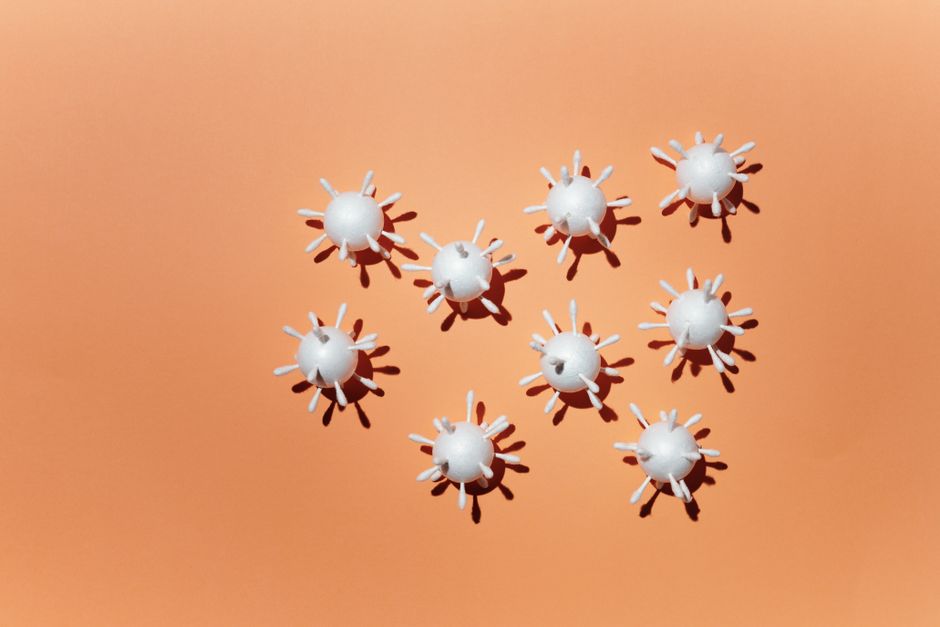
A virus is astonishingly small. Most viruses range from about 20 to 300 nanometers in diameter. To put that in perspective, a nanometer is one-billionth of a meter. If you lined up about 500 of the smallest viruses side by side, they would span the width of a single human hair. They are smaller than the smallest bacteria and exist on a scale that requires an electron microscope to see at all.
How Big Is A Virus Exploring The Scale And Structure Compared to Other Things?
Understanding virus size requires a sense of scale that the human eye cannot grasp. A typical human cell, like a red blood cell, measures about 7,000 to 8,000 nanometers across. That means you could fit hundreds of average-sized viruses inside a single red blood cell.
Bacteria are also much larger than viruses. A common bacterium like E. coli is roughly 1,000 to 2,000 nanometers long. The largest known viruses, such as the mimivirus, can reach about 750 nanometers. That is large enough to be seen with a standard light microscope, but it is still far smaller than a bacterium.
Here is a quick comparison of relative sizes:
- Human hair width: about 80,000 to 100,000 nanometers
- Red blood cell: about 7,000 to 8,000 nanometers
- Typical bacterium (E. coli): about 1,000 to 2,000 nanometers
- Large virus (mimivirus): about 750 nanometers
- Influenza virus: about 100 nanometers
- Smallest known viruses: about 20 nanometers
These numbers matter for real-world reasons. Virus size affects how they travel through the air, how they enter cells, and how your immune system recognizes them.
What Determines the Size of a Virus?
A virus is not a living cell. It is a piece of genetic material — either DNA or RNA — wrapped in a protective protein shell called a capsid. Some viruses have an additional outer layer called an envelope, which is made of lipids stolen from the host cell membrane.
The size of a virus is largely determined by how much genetic material it carries. Viruses with more genes need larger capsids to hold that genetic information. The smallest viruses carry just a few genes. The largest carry hundreds.
Structure also plays a role. The capsid is built from repeating protein units called capsomeres. These units assemble into symmetrical shapes, most commonly icosahedral (20-sided) or helical (rod-shaped). The geometry of these structures naturally limits how small or large the virus can be while remaining stable.
Enveloped viruses tend to be more variable in size because the lipid envelope is flexible. Non-enveloped viruses, which lack this outer layer, have more rigid and uniform sizes.
How Do Scientists Measure Virus Size?
Viruses are far too small for standard microscopes that use visible light. The wavelength of visible light is about 400 to 700 nanometers, which means objects smaller than that cannot be resolved clearly. Most viruses fall below this limit.
Scientists use electron microscopes to measure viruses. Transmission electron microscopes (TEM) can resolve objects down to about 0.5 nanometers. This allows researchers to see individual virus particles and measure their dimensions with high accuracy.
Another technique is dynamic light scattering, which measures how particles scatter laser light in solution. This gives an average size for a population of viruses rather than a single particle measurement. It is useful for checking the size of virus-like particles used in vaccines.
For viruses that are difficult to image, scientists can also use filtration. Membranes with precisely sized pores can separate viruses by size. This method is commonly used in research and in manufacturing processes that need to remove or concentrate viruses.





Why Does Virus Size Matter for Infection?
Size directly affects how a virus enters a cell. Viruses cannot reproduce on their own. They must hijack a host cell’s machinery to make copies of themselves. The first step is getting inside the cell, and size influences which entry routes are available.
Some viruses enter cells through receptor-mediated endocytosis. The cell membrane wraps around the virus and pulls it inside. This process works best for particles within a certain size range. Very large viruses may need alternative entry methods, such as fusing directly with the cell membrane if they are enveloped.
Size also affects how viruses spread between hosts. Respiratory viruses travel in droplets and aerosols. Smaller particles can stay airborne longer and travel farther. However, the virus particle itself is not the only factor — the size of the droplet carrying it matters more for airborne transmission.
Your immune system also responds differently based on virus size. Antibodies are about 10 nanometers across. They can bind to viruses of any size, but larger viruses present more surface area for antibody attachment. This can make them easier for the immune system to recognize and neutralize.
What Are the Largest and Smallest Known Viruses?
The smallest known viruses include the circoviruses, which measure about 17 to 22 nanometers. These cause disease in pigs and birds. They carry only two genes, making them among the simplest genetic entities known.
At the other end of the scale are the giant viruses. The mimivirus was discovered in 2003 inside an amoeba. It measures about 750 nanometers and carries more than 900 genes. That is more genes than some bacteria.
Even larger viruses have been found since. The pandoravirus, discovered in 2013, reaches about 1,000 nanometers. It carries roughly 2,500 genes. The largest known to date is the Pithovirus, discovered in 2014 in Siberian permafrost. It measures about 1,500 nanometers and is visible under a standard light microscope.
These giant viruses blur the line between viruses and cellular life. They carry genes for protein synthesis, something previously thought to be exclusive to cells. Researchers continue to debate whether these should be classified differently from typical viruses.
How Does Virus Size Compare to Other Disease-Causing Agents?
Viruses sit at the small end of the infectious agent spectrum. Prions, which are misfolded proteins that cause diseases like mad cow disease, are about 30 nanometers. They are not viruses — they contain no genetic material at all.
Bacteria are generally 1,000 to 5,000 nanometers. Fungi are larger still, with yeast cells around 3,000 to 4,000 nanometers. Parasites like malaria-causing Plasmodium are microscopic but far larger than any virus.
This size difference has practical implications for disinfection and filtration. Standard surgical masks filter particles down to about 3,000 nanometers. N95 masks filter about 300 nanometers. Neither can physically block a 100-nanometer virus particle, yet they still reduce transmission because the virus travels inside larger respiratory droplets.
Water filtration systems that remove bacteria may not remove viruses. This is why drinking water treatment requires chlorination or UV light in addition to physical filtration. Viruses are too small to be trapped by standard sediment filters.
Do All Viruses of the Same Type Have the Same Size?
No. Even within a single virus species, particle size can vary. Enveloped viruses are particularly variable because the lipid envelope is not rigidly structured. Influenza viruses, for example, can range from about 80 to 120 nanometers.
Non-enveloped viruses tend to be more uniform. The protein capsid has a fixed structure, so particle size stays consistent. Poliovirus, for instance, is reliably about 30 nanometers across.
This variability matters for vaccine development. Virus-like particles used in vaccines must be consistent in size to trigger a reliable immune response. Manufacturers measure particle size carefully during production to ensure quality control.
Size can also change during the virus life cycle. Some viruses form larger structures called virions only when they bud from the host cell. Inside the cell, the components are separate and smaller.
Frequently Asked Questions
Can viruses be seen with a regular microscope?
No. Most viruses are smaller than the wavelength of visible light, so they cannot be resolved with a standard light microscope. Electron microscopes are required to see individual virus particles.
What is the average size of a virus?
Most viruses range from about 20 to 300 nanometers in diameter. The exact average varies by virus type, but most common human viruses fall between 50 and 150 nanometers.
Are viruses smaller than bacteria?
Yes. Most viruses are 10 to 100 times smaller than typical bacteria. A common bacterium like E. coli is about 1,000 to 2,000 nanometers, while most viruses are under 300 nanometers.
How many viruses fit inside a human cell?
Hundreds to thousands, depending on the virus and cell type. A red blood cell is about 7,000 to 8,000 nanometers across, so hundreds of average-sized viruses could fit inside it.
