
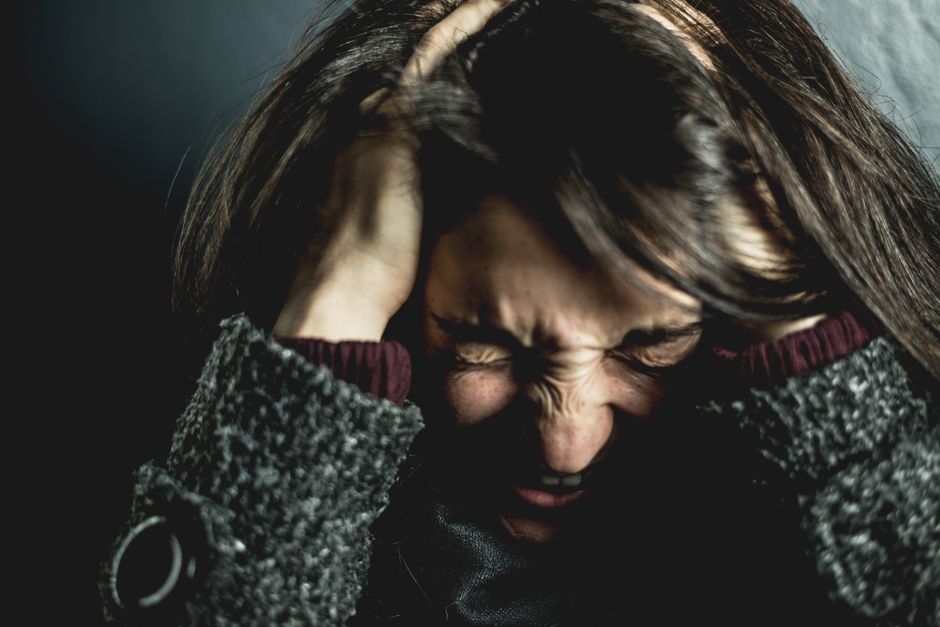
Anxiety often feels worse at night because the things that usually keep it in check during the day — distraction, activity, other people — are gone. What is left is quiet, a tired brain, and time to think. That combination is a well-known trigger for anxious thoughts, and it is not a sign that something is uniquely wrong with you.
Why Am I More Anxious At Night And What Actually Helps?
Nighttime anxiety is common, and the reasons are mostly physiological and environmental rather than a personal failing. Several things line up at once to make anxiety feel louder after dark.
The first is the absence of daytime distraction. During the day, work, conversations, and tasks occupy your attention. At night, those external demands drop away, and your mind has room to turn inward. Thoughts that were background noise during the day become the main event.
The second is fatigue. A tired brain does not regulate emotion as well as a rested one. Research on sleep and emotional processing indicates that sleep deprivation reduces activity in the prefrontal cortex — the region involved in reasoning and emotional control — while the amygdala, which helps generate fear and emotional reactions, becomes more reactive. In plain terms, being tired makes it harder to keep anxious thoughts in perspective.
The third is your body’s daily rhythm. Cortisol, a hormone involved in the stress response, follows a daily cycle. It typically drops in the evening as you prepare for sleep. For some people this drop is accompanied by a sense of unease rather than calm. Melatonin rises, body temperature falls, and the nervous system shifts toward rest — but if you are already on edge, that shift can feel unsettling rather than soothing.
The fourth is the bed itself. If you have spent many nights lying awake worrying, your brain can learn to associate the bed with anxiety. This is a well-documented pattern in insomnia research, sometimes described as conditioned arousal. The bedroom becomes a cue for alertness instead of sleep.
What helps is less about eliminating anxiety and more about changing the conditions that amplify it. That means addressing both the mental loop and the physical state.
Is It Normal To Feel Anxious At Night?
Yes. Feeling more anxious at night is a normal human experience, not a disorder on its own.
Anxiety is a normal emotion. It becomes a clinical concern when it is persistent, hard to control, and interferes with daily life or sleep over time. Many people who do not meet criteria for an anxiety disorder still notice that their worries feel bigger at night. That pattern alone does not mean you have a condition.
What matters is the pattern and the impact. Occasional nighttime worry after a stressful day is expected. Anxiety that shows up most nights, keeps you awake for long stretches, or leaves you dreading bedtime is worth discussing with a clinician. The distinction is not about whether you feel anxious — it is about how often, how intensely, and how much it disrupts your life.
Why Does Your Mind Race When You Try To Sleep?
The racing mind at bedtime is partly a paradox of trying to relax. When you stop moving and lie still, there is nothing left to compete with your thoughts.
There is also a well-established phenomenon called the quiet wakefulness state. When external stimulation drops, the brain does not simply go blank. It often fills the space with mental activity — planning, replaying conversations, rehearsing worries. For people prone to anxiety, that mental activity tends toward threat-based thinking.
Another factor is what psychologists call thought suppression. Trying hard not to think about something tends to make that thought more likely to return. Lying in the dark telling yourself to stop worrying can backfire. The effort of suppression keeps the worry active.
Fatigue compounds this. As noted earlier, a tired brain has weaker emotional regulation. Late at night, you are trying to manage worry with the least capable version of your mental resources.
One clarification worth making: nighttime anxiety is not the same as nocturnal panic attacks, which wake people from sleep with sudden intense fear and physical symptoms. Those are a distinct experience and are worth evaluating with a clinician if they occur.





What Actually Helps With Nighttime Anxiety?
The strategies with the most support fall into two groups: what you do in the hours before bed, and what you do once you are lying there.
Before bed
Keep a consistent sleep and wake time. Going to bed and waking at roughly the same time every day supports your body’s internal clock. Irregular sleep schedules are associated with worse sleep quality and more daytime anxiety.
Build a wind-down period. Give yourself time to shift gears before bed. Reading, light stretching, or a warm shower are common choices. The goal is to signal to your body that the day is ending.
Limit alcohol and caffeine. Caffeine is a stimulant and can remain in your system for hours. Alcohol may feel relaxing at first but is known to disrupt sleep later in the night and can increase anxiety as it wears off.
Write down what is on your mind. Putting worries on paper before bed can reduce the mental rehearsal that happens in the dark. Some research on expressive writing suggests it can help people process unresolved thoughts. The evidence is not overwhelming, but the practice is low-risk and many people find it useful.
Get out of bed if you are wide awake and anxious. If you have been lying awake for what feels like a long time, getting up and doing something calm in dim light can help break the association between bed and anxiety. Return when you feel sleepy. This approach is part of a well-established insomnia treatment called cognitive behavioral therapy for insomnia, or CBT-I.
Once you are in bed
Slow your breathing. Slow, steady breathing — for example, breathing in for a count of four and out for a count of six — activates the parasympathetic nervous system, which is involved in calming. This is a widely used technique. The evidence for breathing exercises reducing anxiety is generally supportive, though study quality varies.
Use a body scan or progressive muscle relaxation. These techniques involve systematically tensing and releasing muscle groups or moving attention through the body. They are commonly recommended and have reasonable evidence for reducing anxiety and improving sleep.
Accept the anxiety rather than fight it. This sounds counterintuitive, but trying to force anxiety away often increases it. Noticing the feeling without trying to solve it can reduce its grip. This is a core idea in acceptance-based approaches to anxiety.
Redirect attention. Rather than following a worry thread, gently move your attention to something neutral — the feeling of the sheets, the sound of your breathing. This is not about suppressing thoughts but about choosing where attention rests.
When Should You Talk To A Doctor About Nighttime Anxiety?
You should consider talking to a doctor or mental health professional if nighttime anxiety is persistent, interferes with your sleep most nights, or affects your ability to function during the day.
Specific situations that warrant a conversation include:
- Anxiety that keeps you awake for long periods on most nights
- Panic attacks that wake you from sleep
- Anxiety that has started to affect work, relationships, or daily functioning
- Symptoms of depression alongside anxiety, such as low mood or loss of interest
- Physical symptoms like a racing heart, chest tightness, or shortness of breath that you have not had checked
Some medical conditions can produce anxiety-like symptoms, including thyroid problems, heart rhythm issues, and low blood sugar. A clinician can help rule these out. This is not to suggest your anxiety is “just” physical — only that a proper evaluation looks at both.
Treatment for clinical anxiety often involves therapy, medication, or both. Cognitive behavioral therapy has strong evidence for anxiety disorders. Medication decisions are individual and should be made with a prescriber.
What Does Not Help (And Sometimes Makes It Worse)
Some common responses to nighttime anxiety backfire.
Doomscrolling. Looking at your phone in bed exposes you to blue light and stimulating content. Both can delay sleep and feed anxious thinking. The evidence on blue light alone is mixed, but the content effect is harder to argue with.
Alcohol as a sleep aid. A drink may help you fall asleep faster, but it disrupts sleep architecture and can increase anxiety as it metabolizes. Relying on it to manage nighttime anxiety tends to make things worse over time.
Trying harder to sleep. Effortful sleep is a known trap. The more you try to force sleep, the more alert you become. This is part of why CBT-I focuses on reducing sleep effort.
Reassurance seeking. Asking others repeatedly whether everything is fine can temporarily reduce anxiety but tends to strengthen it over time by reinforcing the idea that the worry needs answering.
None of this means you should never have a drink or look at your phone. It means noticing when these habits are feeding the problem rather than helping.
Does Anxiety At Night Mean Something Is Wrong With My Brain?
No. Nighttime anxiety does not mean your brain is broken. It means your brain is doing what brains do — responding to perceived threat, especially when tired and undistracted.
Anxiety is a normal protective system. It becomes a problem when it is overactive or misfires. That is a calibration issue, not a structural flaw. Many people experience it, and many improve with the right support.
If you are struggling, that is real and worth taking seriously. But it is not evidence that something is fundamentally wrong with you.
Frequently Asked Questions
Why is anxiety worse at night?
Anxiety often feels worse at night because daytime distractions disappear, fatigue weakens emotional regulation, and the quiet gives worries more room. Your body’s daily rhythm also shifts toward rest, which some people experience as unease rather than calm.
What is the best way to stop nighttime anxiety?
There is no single best method, but strategies with the most support include keeping a consistent sleep schedule, limiting caffeine and alcohol, and using slow breathing or relaxation techniques in bed. If anxiety is persistent, cognitive behavioral therapy has strong evidence for treating anxiety disorders.
Can anxiety wake you up at night?
Yes. Anxiety can cause nighttime awakenings, and in some cases, panic attacks can wake a person from sleep. If this happens often, it is worth discussing with a clinician.
Is it normal to feel anxious every night?
Occasional nighttime anxiety is normal, but feeling anxious most nights is not something you have to accept. Persistent nighttime anxiety that disrupts sleep or daily life is worth evaluating with a doctor or mental health professional.
