
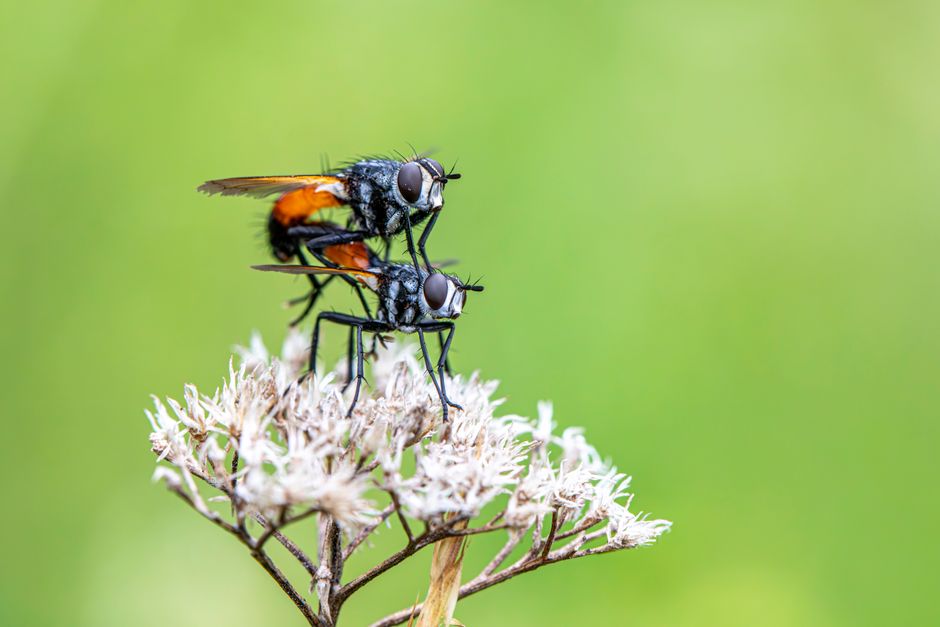
Flies rarely come through an open window. Most of the time, they are already inside — or they are slipping through gaps you have never noticed. House flies and fruit flies are the two most common indoor species, and each takes a different route in. Understanding those routes is the fastest way to stop them.
How Are Flies Getting Into Your House?
Flies enter homes through three main routes: gaps in the building envelope, items carried inside, and development indoors from eggs laid on waste. The most common entry points are doorways, window screens with tears, and small openings around utility lines.
A house fly can pass through a gap roughly the width of a pencil. That is why a door that looks closed can still let flies in. Fruit flies are smaller and often arrive as eggs or larvae on produce or in recycling, then emerge indoors.
The building envelope is rarely sealed
Most homes have dozens of small openings. Common ones include:
- Gaps under exterior doors, especially at the threshold and sides
- Torn or loose window screens
- Openings around dryer vents, plumbing, and cable or phone lines
- Chimney dampers left open
- Attic and crawlspace vents without mesh
Flies follow air currents. Warm air escaping from a house in winter, or cool air in summer, creates a pressure difference that pulls insects toward openings. This is why flies often appear near doors and windows even when nothing is visibly open.
Why Do Flies Appear Suddenly Indoors?
A sudden fly problem almost always means they are breeding inside, not just wandering in. House flies lay eggs in moist organic material. If you see many flies at once, there is likely a source nearby.
Common indoor breeding sites include:
- Garbage cans with food residue, especially if the lid does not seal
- Recycling bins with sugary drink containers
- Compost buckets kept indoors too long
- Pet food bowls left out
- Drains with organic buildup
- Overwatered houseplants with decaying matter in the soil
Fruit flies are different. They are drawn to fermenting sugar and yeast. A single overripe banana or a sticky beer bottle in the recycling can support a breeding cycle. By the time you notice the flies, the eggs have often already hatched.
How Do Fruit Flies Get In?
Fruit flies usually arrive as eggs or larvae on fruit you bring home. They can also come in through screens and small gaps, but the produce itself is the more common route. A single piece of fruit can carry dozens of eggs too small to see.
Once inside, fruit flies complete their life cycle quickly. Eggs hatch within about a day, and the full cycle from egg to adult can finish in roughly a week under warm conditions. That speed is why an infestation can seem to appear overnight.
Grocery stores and kitchens are common sources. Fruit that is slightly damaged or overripe is more likely to carry eggs. Washing produce helps, but it does not remove every egg, because some are laid in small crevices.



What Attracts Flies to Certain Rooms?
Flies are guided by smell. They detect decaying matter, sugar, and moisture from a distance. Rooms with food prep, waste, or standing water attract them most.
Kitchens are the obvious draw. So are bathrooms with damp drains and trash bins. Less obvious is the garage, where garbage, recycling, and pet waste often sit. Flies that enter a garage can move into the house through the connecting door.
Light also matters. Many flies are drawn to bright windows and light fixtures. This is why you often find them buzzing at a window rather than in a dark corner. They are trying to reach the light, not necessarily trying to leave.
Do Flies Come in Through Drains and Vents?
Some flies do. Drain flies and phorid flies breed in the organic film inside drains and can emerge into a home through sink and floor drains. These are not the same as house flies, and they look different — drain flies are small and moth-like, while phorid flies are tiny and humpbacked.
If you see small flies near a sink or shower, the drain is a likely source. Cleaning the drain and removing the organic buildup usually reduces them. This is different from a house fly problem, which is usually tied to entry points or waste.
How Can You Reduce Flies Getting In?
Reducing entry points and removing breeding material are the two most effective steps. Neither requires chemicals.
For entry points:
- Install door sweeps on exterior doors
- Repair or replace torn window screens
- Seal gaps around utility lines and vents with appropriate sealant
- Keep doors closed when possible, especially during warm months
For breeding sites:
- Take out kitchen trash frequently and use a can with a tight lid
- Rinse recyclables before placing them in bins
- Refrigerate or compost ripe produce promptly
- Clean drains and remove standing water
- Do not leave pet food out for long periods
Traps can help reduce adult numbers. Sticky traps and ultraviolet light traps are commonly used. Their effect on an active infestation is limited if the breeding source is not removed. Traps catch adults; they do not stop the next generation.
Do Flies Carry Disease?
House flies can carry bacteria on their bodies and in their digestive systems. They feed on waste and then land on food, which creates a potential route for contamination. This is a real concern, though the risk depends on the environment and the level of infestation.
Research has found that house flies can carry organisms associated with foodborne illness, including some Salmonella and E. coli strains. Whether this leads to human illness in a given home is harder to measure. The practical takeaway is simple: keep flies off food and clean surfaces where they land.
Fruit flies are not considered a major disease vector in the same way. They are mostly a nuisance and a sign of breeding material.
When Should You Call a Professional?
If flies keep returning after you have removed breeding sites and sealed entry points, a professional inspection may help. This is especially true if you cannot find the source. Some infestations come from hidden areas such as wall voids, crawlspaces, or broken pipes.
Persistent flies in a specific spot — like one wall or one drain — can point to a source you cannot see. A pest control professional can identify the species and the breeding site, which is often the missing piece.
Frequently Asked Questions
How are flies getting into my house if all my windows are closed?
They usually enter through gaps around doors, vents, and utility lines, or they are already breeding inside. A house fly can pass through a gap about the width of a pencil.
Why do I suddenly have a lot of flies in my house?
A sudden increase usually means flies are breeding indoors, not just wandering in. Look for moist organic material such as garbage, recycling, or drains.
Can fruit flies come from store-bought fruit?
Yes. Fruit flies often arrive as eggs or larvae on produce, and they can complete their life cycle indoors within about a week in warm conditions.
Do flies come up through drains?
Some species do, including drain flies and phorid flies, which breed in the organic film inside drains. These are different from house flies and usually require drain cleaning to control.
