
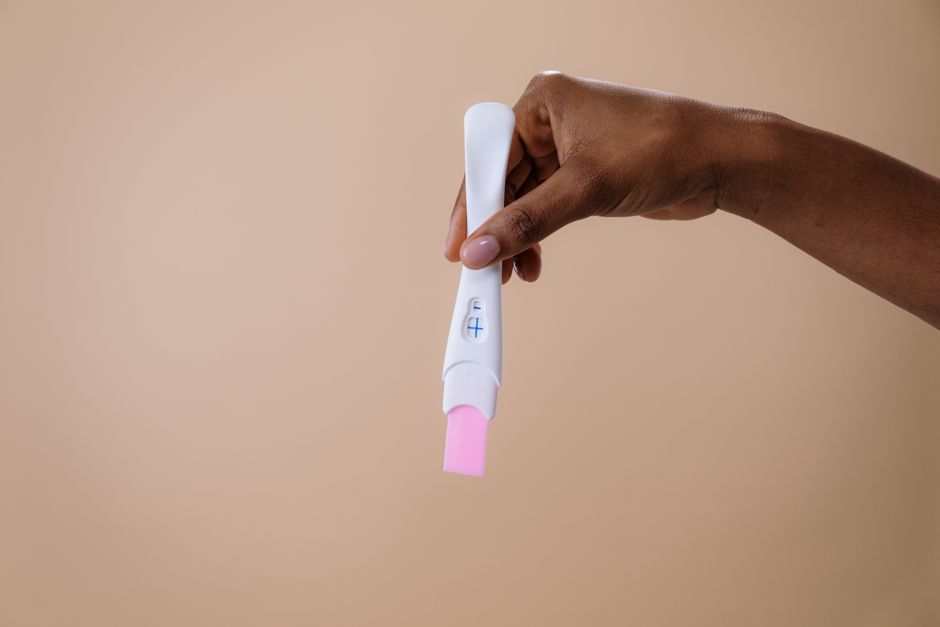
Early pregnancy tests are very accurate when used correctly, with most brands detecting pregnancy reliably from the day of a missed period. Many tests claim over 99% accuracy from that point, and research backs this up. The real challenge is timing and how carefully you follow instructions.
How Do Home Pregnancy Tests Detect Pregnancy?
Home pregnancy tests work by measuring human chorionic gonadotropin, or hCG. This is a hormone your body starts making after a fertilized egg attaches to the lining of your uterus. The placenta produces it, and it shows up in urine and blood.
Most home tests use a chemical strip that changes color when hCG is present. The test line appears if the hormone level is high enough. A control line always appears to show the test worked. Some digital tests show words like “Pregnant” or “Not Pregnant” instead of lines.
The amount of hCG in your body doubles roughly every 48 to 72 hours in early pregnancy. This is why timing matters. Test too early and the level may be too low to detect, even if you are pregnant.
How Accurate Are Early Pregnancy Tests Before a Missed Period?
Accuracy drops significantly when you test before your missed period. Research published in the journal Obstetrics & Gynecology found that only about 50% of tests detect pregnancy four to five days before a missed period. That means half of pregnant women would get a false negative at that point.
Some tests are labeled “early detection” and claim to work up to six days before a missed period. These tests are more sensitive. They can detect hCG levels as low as 6.3 mIU/mL instead of the standard 25 mIU/mL. But even with these, the chance of a false negative is higher the earlier you test.
The FDA reviews home pregnancy tests for accuracy. But manufacturers set their own claims based on lab testing, not real-world use. Real-world accuracy is lower because people test at different times and do not always follow steps exactly.
What Causes False Negative Results?
False negatives are far more common than false positives. A false negative means the test says you are not pregnant when you actually are. The main reason is testing too early, as discussed above.
Diluted urine is another cause. Testing after drinking a lot of fluid can lower hCG concentration below the test’s detection limit. First morning urine is best because it is most concentrated. If you test later in the day, try to hold your urine for a few hours first.
Not following instructions matters more than most people realize. Some tests require a specific number of drops of urine. Others need to be held in the stream for five seconds. Leaving the test too long or reading it too early can also cause a false negative.
Medical conditions like ectopic pregnancy or recent miscarriage can also lead to lower hCG levels. Some medications, including diuretics and antihistamines, may affect results by changing urine concentration.





What Causes False Positive Results?
False positives are rare but possible. A false positive means the test says you are pregnant when you are not. This happens in less than 1% of cases with most commercial tests, according to FDA data.
The most common cause is a chemical pregnancy. This is a very early miscarriage that happens before you even know you are pregnant. The test detects hCG, but the pregnancy stops developing soon after. You may get a positive test followed by a normal period a few days later.
Certain medications can cause false positives. Fertility drugs containing hCG, like Pregnyl or Novarel, can trigger a positive result for up to two weeks after the last injection. Some rare medical conditions, including ovarian tumors and pituitary gland issues, can produce hCG-like substances that fool the test.
Evaporation lines are a common source of confusion. If you read the test after the recommended time window, urine can dry and leave a faint line. This line is not a true positive. Always read the test within the time stated in the instructions, usually three to five minutes.
How Accurate Are Early Pregnancy Tests Compared to Blood Tests?
Blood tests done in a doctor’s office are more sensitive than urine tests. They can detect hCG as low as 1 mIU/mL, compared to 20 to 25 mIU/mL for most home tests. This means blood tests can confirm pregnancy a few days earlier.
But for most women, home urine tests are accurate enough. Once you miss your period, a home test is about as reliable as a blood test. The CDC states that home pregnancy tests are 99% accurate when used from the day of your missed period.
Blood tests have two types. Qualitative blood tests just say yes or no. Quantitative blood tests measure the exact level of hCG. Doctors use quantitative tests to track pregnancy progress or check for problems like ectopic pregnancy.
The trade-off is convenience versus speed. Home tests give you results in minutes. Blood tests require a visit to a lab and may take hours or a day for results. For most people, the home test is the practical choice.
Which Pregnancy Test Brands Are Most Accurate?
No single brand is consistently the most accurate across all studies. A 2020 review in Reproductive Biology and Endocrinology found that most major brands perform similarly when used correctly. The differences are small and usually not meaningful for the average user.
First Response Early Result is often cited as one of the most sensitive tests. It can detect hCG at 6.3 mIU/mL, which is lower than many competitors. This makes it a good choice if you want to test before your missed period.
Digital tests from Clearblue and First Response are slightly less sensitive than their non-digital versions. This is because digital readers need a stronger signal to display the word “Pregnant.” They are still very accurate after a missed period but may give more false negatives before it.
Store brand tests are generally just as accurate as name brands. The FDA regulates all home pregnancy tests as medical devices. Store brands are often made by the same manufacturers as the big names. The main difference is packaging and price.
| Test Type | Typical Sensitivity | Best Time to Test | Accuracy After Missed Period |
|---|---|---|---|
| Standard line test | 20-25 mIU/mL | Day of missed period or later | Over 99% |
| Early detection test | 6.3-10 mIU/mL | Up to 6 days before missed period | Over 99% |
| Digital test | 25-50 mIU/mL | Day of missed period or later | Over 99% |
| Blood test (lab) | 1 mIU/mL | Any time | Nearly 100% |
How to Get the Most Accurate Result
Timing is the single most important factor. Wait until the day of your missed period or later. If you cannot wait, use an early detection test and understand that a negative result may not be final.
Test with first morning urine. This is when hCG is most concentrated. If you test later, avoid drinking large amounts of fluid for two to three hours beforehand. Do not test after drinking a lot of water or other beverages.
- Read the instructions completely before starting. Every brand is slightly different.
- Set a timer. Do not guess how long to wait.
- Read the result within the time window stated. Do not check it hours later.
- If the result is negative but your period does not start, test again in two to three days.
- If the result is positive, contact your healthcare provider to confirm and start prenatal care.
One common mistake is testing too often. Testing every day does not give you better information. hCG levels take 48 to 72 hours to double. Testing every other day is more useful if you are tracking early changes.
Frequently Asked Questions
Can a pregnancy test be wrong if I take it at night?
Yes, it can be less accurate because urine is more diluted later in the day. First morning urine gives the most reliable result.
How long after implantation can I get a positive test?
Implantation usually happens 6 to 12 days after ovulation, and hCG becomes detectable in urine about 2 to 3 days later.
Can medications affect pregnancy test results?
Most common medications do not affect results, but fertility drugs containing hCG can cause false positives for up to two weeks.
What does a faint positive line mean?
A faint positive line usually means hCG is present but at a low level, which is common in very early pregnancy or if urine is diluted.
