
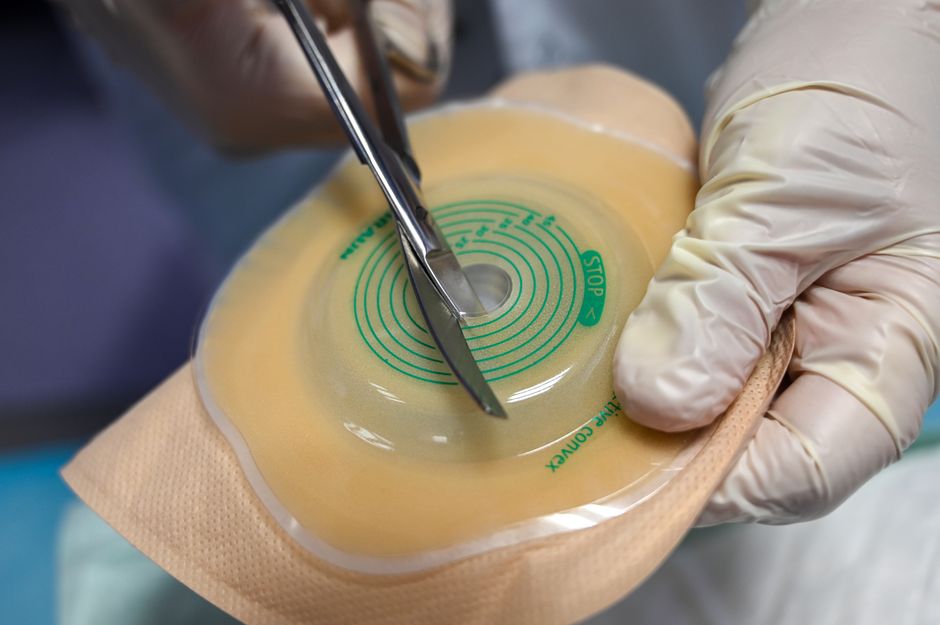
A colostomy bag works by collecting stool that leaves the body through a stoma, which is a surgically created opening in the belly. The pouch attaches to the skin around the stoma with a sticky wafer called a skin barrier. The barrier protects the skin from waste while the pouch holds it, and together they form a sealed system you empty or replace on a schedule.
What Is a Stoma and Why Does It Need a Bag?
A stoma is the end of the intestine brought through the abdominal wall and stitched to the skin. When part of the colon or rectum is removed or bypassed, stool needs a new exit route. That route is the stoma.
Colostomies are usually created for conditions such as colorectal cancer, diverticular disease, inflammatory bowel disease, or injury to the bowel. Some are temporary and reversed later. Others are permanent. The reasons vary widely, and the type of stoma affects how output behaves.
Most colostomies are made from the colon. The location along the colon matters. A stoma higher up in the colon produces looser, more frequent output. A stoma lower down produces firmer stool. This is because the colon’s main job is absorbing water, so the farther along the stool travels, the more water is removed.
A colostomy is different from an ileostomy, which uses the small intestine. Ileostomy output is generally liquid and contains digestive enzymes that are harder on skin. Colostomy output is usually thicker, which is one reason skin care tends to be somewhat easier. It is not risk-free, though. Stool still contains bacteria and digestive chemicals that can damage skin if it sits against it.
Because the stoma has no sphincter muscle, you cannot control when stool comes out. Gas and stool leave on their own. That is the whole reason an external pouch is needed. There is no way to “hold it” the way you would with a normal rectum.
How the Pouch and Skin Barrier Fit Together
The skin barrier is the part that touches your skin. It is a round or oval adhesive wafer with a hole cut to fit around the stoma. The pouch, or bag, attaches to this barrier and hangs outside the body to collect waste.
There are two main systems. A one-piece system has the barrier and pouch joined as a single unit. A two-piece system has a separate barrier and pouch that click or stick together, so you can change the pouch without removing the barrier every time.
The barrier does several jobs at once:
- It sticks the whole system to your belly.
- It creates a seal so stool and gas do not leak onto skin.
- It protects the skin from moisture and waste.
- It anchors the pouch so it does not pull loose.
The seal is the critical part. If the barrier lifts even a little, stool can get underneath and start irritating skin. That is why the hole must be cut to match the stoma size. Too small and it rubs the stoma. Too large and skin is exposed to waste.
Stomas shrink after surgery. A stoma that measured one size right after surgery may be smaller weeks later. This is why measuring the stoma and recutting the barrier matters, especially in the first few months. A wound ostomy continence nurse can help with sizing, and this is one of the most useful things a patient can do early on.
How a Skin Barrier Protects the Skin
The barrier protects skin by keeping waste off it. That sounds simple, but the details matter. Normal skin is meant to stay dry and slightly acidic. Stool is wet and contains enzymes and bacteria. If stool touches skin for long periods, it breaks down the outer layer and causes irritation, often called peristomal skin damage.
Modern barriers are made from materials that stick well but also absorb a small amount of moisture. Some contain ingredients that form a gel when they contact fluid, which helps keep the seal intact. Others are designed to be gentle on sensitive skin.
Skin problems around a stoma are common. Estimates vary, but studies suggest a large share of people with a stoma experience some skin irritation at some point. Most of it traces back to a poor seal, wrong size, or leaving a barrier on too long. The good news is that most of these problems improve once the fit is corrected.
Some people use additional products, such as skin barrier wipes, powders, or paste, to fill gaps or protect broken skin. These can help, but they are not a substitute for a proper fit. If skin is already damaged, a clinician should assess it. Some irritation can look like a rash but actually be a fungal infection or an allergic reaction to a product. Those need different treatment.





What Daily Life With a Colostomy Bag Involves
Living with a colostomy means managing output, changing the system, and watching the skin. It becomes routine for most people, but it takes practice.
Emptying the pouch is the most frequent task. Most people empty when the pouch is about one-third to one-half full. Waiting too long can cause the weight to pull the barrier loose. Many pouches have a drain at the bottom that you open over a toilet, empty, and wipe clean.
How often you change the whole system depends on the type of barrier and your output. Some barriers are designed to stay on for several days. Others need more frequent changes. There is no single correct schedule. The general rule is to change before the barrier starts to fail, not after. Leaks that reach skin are what cause problems.
Diet affects output. Some foods thicken stool, others loosen it. Gas-producing foods can make the pouch fill with air. This varies a lot from person to person, so trial and error is normal. A dietitian familiar with stomas can help if output is hard to manage.
Odor is a common worry. A well-sealed system usually contains odor well. Pouch deodorants and certain foods can help, but the seal matters most. If you can smell stool, that often means the seal is compromised and should be checked.
Common Problems and What Causes Them
Most problems with a colostomy bag trace back to the seal, the size, or the skin.
Leakage is the most common issue. It usually means the barrier hole is too big, the barrier is worn too long, or the skin is uneven. Leaks that reach skin cause irritation, and irritation makes the next barrier stick poorly, which can create a cycle. Breaking that cycle usually means getting a better fit.
Skin irritation can come from stool contact, an allergic reaction to adhesive, or a fungal infection. These look similar but need different fixes. A clinician can usually tell them apart.
Stoma bleeding is often minor. The stoma has a rich blood supply and can bleed a little when touched. Ongoing or heavy bleeding is not normal and should be evaluated.
Blockage is more common with ileostomies but can happen with colostomies. Signs include cramping, swelling, and little or no output. This can be serious and needs medical attention.
Parastomal hernia is a bulge near the stoma. It happens when part of the intestine pushes through the abdominal wall around the stoma. Some hernias are minor and managed with support belts. Others cause pain or blockage and may need surgery.
None of these problems are rare, and none of them mean you did something wrong. They are known complications, and most have established ways to manage them.
How A Colostomy Bag Works Stoma Pouch Skin Barrier: Putting It Together
The system works as a chain. The stoma delivers stool. The barrier seals it off from skin. The pouch collects it. If any link fails, the others are affected.
The barrier is the part that most determines comfort and skin health. A good seal means less irritation, fewer changes, and more confidence. A poor seal means leaks, skin damage, and frustration.
This is why so much of stoma care focuses on fit. Measuring the stoma, choosing the right barrier, and changing at the right time are the core skills. They are learnable, and most people get comfortable with them over time.
It also helps to know when to ask for help. Ostomy nurses specialize in exactly these problems. Seeing one early, especially in the first weeks after surgery, can prevent a lot of avoidable skin trouble.
Frequently Asked Questions
How often should a colostomy bag be changed?
There is no single schedule, but many people change the full system every one to three days depending on the barrier and their output. Change it sooner if you notice lifting, itching, or leakage.
Can a colostomy bag leak even if it is stuck on well?
Yes, leaks can happen even with a good seal if the barrier hole is the wrong size or the barrier has been on too long. Checking the fit and changing on time usually reduces leaks.
What causes skin irritation around a stoma?
Most irritation comes from stool touching the skin because of a poor seal or wrong-sized barrier. Allergic reactions and fungal infections can look similar and may need different treatment.
Is it normal for a stoma to bleed a little?
A small amount of bleeding when the stoma is touched is common because the tissue has a rich blood supply. Heavy or ongoing bleeding is not normal and should be checked by a clinician.
