
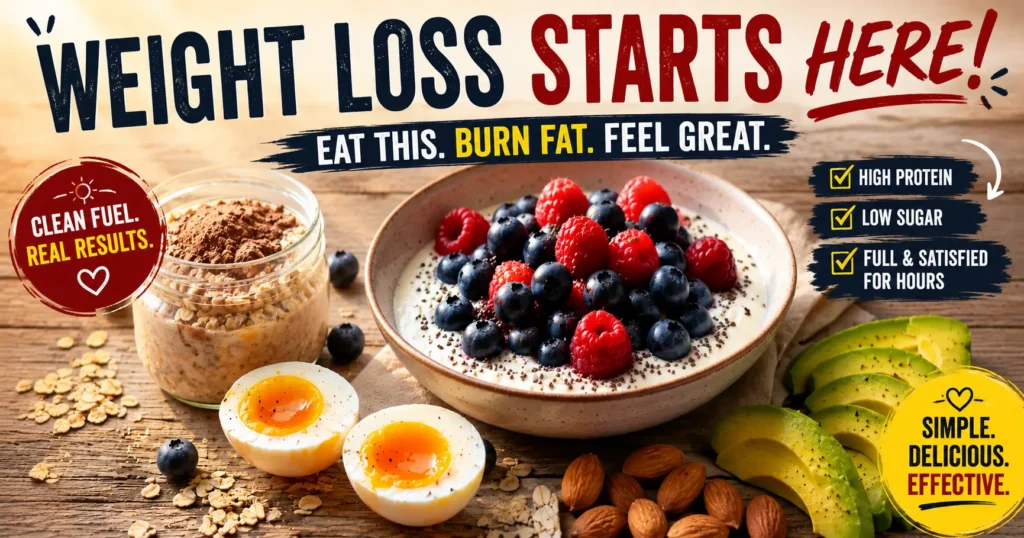
The best and healthy weight loss breakfasts are high in protein (25-35g) and fiber, and low in refined carbs. This combo keeps you full for hours and helps you eat less later. But breakfast itself is not magic. Some trials show people who skip it lose slightly more weight than people who eat it. What you eat matters more than whether you eat.
Does Eating Breakfast Actually Help You Lose Weight?
This might surprise you. The science is mixed.
A 2019 review in The BMJ looked at multiple randomized controlled trials on this exact question. The result: people assigned to eat breakfast actually had a higher total daily calorie intake than people assigned to skip it, by about 260 calories a day on average. The breakfast-skipping group lost slightly more weight.
A separate 2022 systematic review reached a similar conclusion. It found that eating versus skipping breakfast has no discernible effect on body weight when tested in controlled trials.
So why does “always eat breakfast” get repeated so often? Researchers point to a mix-up between correlation and causation. People who naturally eat breakfast often have other healthy habits already. A large meta-analysis found this pattern was partly explained by fiber and nutrient intake, not the act of eating breakfast itself.
What this means for you: you do not have to force yourself to eat breakfast if you’re not hungry. But if you do eat breakfast, what’s on the plate matters a lot.
What Makes a Breakfast Actually Help With Weight Loss
1. Protein Is the Biggest Lever
This is the most consistent finding in the research. A high-protein food as breakfast and throughout the day meals increases fullness and reduces hunger for hours afterward.
A randomized crossover study on young women with overweight or obesity found that a dairy-based, high-protein breakfast increased satiety compared to a high-carb breakfast or skipping breakfast entirely. Hunger scores were lower for hours afterward.
Another controlled trial compared a 30-gram animal-based protein breakfast, a 30-gram plant-based protein drink, and a low-protein, high-carb breakfast. Researchers measured actual satiety hormone responses, not just self-reported hunger, giving this finding real biological weight.
The honest caveat: a 12-week randomized trial called the NewStart study gave one group of women a 34-gram protein breakfast and another group a 6-gram protein breakfast. The high-protein group reported feeling fuller. But after 12 weeks, there was no measurable difference in body fat or waist size between the two groups.
This tells us something important: protein at breakfast helps you feel less hungry right now. It does not automatically guarantee fat loss weeks later. It only helps if that fullness stops you from overeating later in the day.
2. Fiber Keeps Blood Sugar Steady
Fiber slows digestion. That means a slower rise in blood sugar and a longer-lasting feeling of fullness.
A four-week randomized controlled trial gave overweight participants either oat porridge, sugary cornflakes, or nothing for breakfast. The oat porridge group reported higher fullness and lower hunger than both other groups across the full four weeks.
Interestingly, the same study found the no-breakfast group lost the most weight of all three, though they also had higher cholesterol by the end. This is a good example of why “weight loss” alone isn’t the whole picture. Fiber-rich breakfasts won by health markers even when they didn’t win on the scale.
3. Portion and Calorie Load Still Count
A “healthy” breakfast with too many calories is still too many calories. Nuts, granola, oils, and nut butters are healthy fats, but they’re also calorie-dense. A tablespoon here and there adds up fast.
4. Skip the Refined Carbs and Added Sugar
Pastries, sugary cereal, and white toast digest fast. That means a blood sugar spike, then a crash, then hunger again within an hour or two. This is the opposite of what you want if your goal is to eat less over the full day.
12 Healthy Breakfast Ideas for Weight Loss
Each idea below follows the same formula: real protein, real fiber, minimal added sugar. Protein and calorie figures are rounded estimates based on USDA FoodData Central values for standard, plain, unsweetened ingredients. Your exact numbers will shift with brand and portion size, so check your own label when it matters.
Greek Yogurt With Berries and Chia Seeds
Plain Greek yogurt has roughly double the protein of regular yogurt, gram for gram. Add berries for fiber and antioxidants, and a spoonful of chia seeds for extra fiber and staying power.
- Protein~18-20g
- Calories~220-260
- Prep time3 min
Tip: Choose plain, unsweetened yogurt. Flavored cups can carry 10-15g of added sugar per serving, which cancels out the benefit.
Vegetable Omelet With Whole Eggs
Two to three eggs with spinach, tomato, and onion. Eggs are a complete protein source, meaning they contain all nine essential amino acids your body can’t make on its own, and they pair well with any vegetables you have on hand.
- Protein~18-21g
- Calories~230-280
- Prep time8 min
Tip: Cook with a small amount of olive oil or a nonstick pan instead of butter to keep added fat calories in check.
Overnight Oats With Protein Powder
Rolled oats soaked overnight in milk or a milk alternative. Stir in a scoop of protein powder before bed. You wake up to a fiber-and-protein breakfast that needs zero morning cooking.
- Protein~25-30g
- Calories~300-350
- Prep time5 min (night before)
Tip: Use rolled or steel-cut oats, not instant. Instant oats are processed further and digest faster, which means less steady fullness.
Cottage Cheese With Sliced Fruit
Cottage cheese is one of the highest-protein dairy options available per calorie. Pair it with sliced peach, pineapple, or berries for natural sweetness without added sugar.
- Protein~24-28g
- Calories~200-240
- Prep time2 min
Tip: Cottage cheese digests slowly thanks to casein protein, which can help curb mid-morning hunger better than faster-digesting proteins.
Tofu Scramble With Vegetables
A plant-based option with a protein profile similar to eggs. Crumble firm tofu, season with turmeric and black pepper, and cook with bell peppers and onions.
- Protein~15-18g
- Calories~200-250
- Prep time10 min
Tip: Press excess water out of the tofu first. It scrambles better and absorbs the seasoning instead of diluting it.
Protein Smoothie With Spinach
Blend protein powder, a handful of spinach, frozen berries, and unsweetened milk. The spinach adds fiber and nutrients without changing the taste much.
- Protein~25-30g
- Calories~250-300
- Prep time4 min
Tip: Blend, don’t juice. Blending keeps the fiber intact, which is what slows digestion and helps you stay full.
Whole Grain Toast With Eggs and Avocado
One slice of whole grain toast, mashed avocado, and a fried or poached egg on top. This combines fiber from the bread and avocado with protein from the egg.
- Protein~12-15g
- Calories~280-320
- Prep time7 min
Tip: This one runs lower in protein than the others. Add a side of Greek yogurt or a second egg if you need more staying power.
Steel-Cut Oats With Nut Butter
Steel-cut oats digest slower than instant oats, meaning steadier blood sugar. A tablespoon of natural peanut or almond butter adds protein and healthy fat.
- Protein~12-15g
- Calories~280-330
- Prep time15 min
Tip: Measure the nut butter. One tablespoon is roughly 100 calories, and it’s easy to pour in two or three without noticing.
Egg Muffins Made Ahead
Whisked eggs baked in a muffin tin with chopped vegetables and a little cheese. Make a batch on Sunday and reheat all week.
- Protein~15-18g
- Calories~220-260
- Prep time25 min (batch)
Tip: Store in the fridge up to 4 days, or freeze individual muffins for up to 2 months.
Lentil or Chickpea Breakfast Bowl
Not traditional, but effective. Warm lentils or chickpeas with a fried egg on top deliver plant fiber and protein together in one bowl.
- Protein~20-24g
- Calories~280-320
- Prep time10 min (using pre-cooked lentils)
Tip: Cook a large batch of lentils or chickpeas earlier in the week so this one comes together in minutes.
Cottage Cheese Pancakes
Blend cottage cheese, eggs, and a small amount of oats into a batter. Cook like regular pancakes. You get a familiar breakfast food with a much higher protein count than traditional pancakes.
- Protein~28-32g
- Calories~300-340
- Prep time12 min
Tip: Blend the batter fully so no cottage cheese curds remain. It gives a smoother pancake texture.
Turkey or Chicken Sausage With Vegetables
Lean poultry sausage paired with sauteed peppers and onions. A savory, low-carb option that’s easy to meal prep in bulk.
- Protein~20-24g
- Calories~230-270
- Prep time10 min
Tip: Check the label. Some poultry sausages carry as much sodium as pork sausage, even though they’re lower in fat.



Common Breakfast Mistakes That Undo Your Progress
- Relying on juice. Fruit juice removes the fiber and concentrates the sugar. A whole piece of fruit is almost always the better choice.
- Trusting “healthy” labels blindly. Granola, protein bars, and flavored yogurt often carry as much added sugar as dessert. Check the label, not the packaging claims.
- Skipping protein entirely. A bowl of plain cereal or two pieces of toast alone won’t keep you full. The research consistently points to protein as the piece that changes hunger for hours, not just minutes.
- Oversized “healthy” portions. A large bowl of granola or an oversized smoothie with multiple fruit servings can carry more calories than a fast food breakfast.
Simple Meal Prep Tips
- Batch-cook eggs or egg muffins on the weekend for grab-and-go mornings.
- Pre-portion Greek yogurt and toppings into containers the night before.
- Make a big batch of overnight oats in individual jars for the week.
- Keep frozen fruit on hand so smoothies are always ready without fresh produce spoiling.
Frequently Asked Questions
Is it bad to skip breakfast if I’m trying to lose weight?
No. Multiple randomized controlled trials found no clear weight loss benefit to eating breakfast, and some found slightly better results in people who skipped it. What you eat during your other meals matters more than whether you eat breakfast at all.
How much protein should a weight-loss breakfast have?
Research studies showing improved fullness typically used breakfasts with 25 to 34 grams of protein, compared to 6 to 10 grams in the low-protein comparison meals.
Does a high-protein breakfast guarantee fat loss?
No. It reliably improves fullness and reduces hunger in the following hours. But a 12-week randomized trial found no measurable difference in body fat between high-protein and low-protein breakfast groups. Fullness only helps if it leads to eating less later in the day.
What’s the single biggest breakfast mistake for weight loss?
Choosing a breakfast that’s high in refined carbs and low in protein, like pastries, sugary cereal, or plain toast. These cause a fast blood sugar spike followed by hunger returning within an hour or two.
Are smoothies a good weight-loss breakfast?
They can be, if they include a real protein source like protein powder or Greek yogurt. A smoothie made only from fruit and juice is closer to liquid sugar than a filling meal.
This article is for informational purposes only and is not medical advice. Talk to your doctor or a registered dietitian before making major changes to your diet, especially if you have diabetes, a history of disordered eating, or another health condition.
