
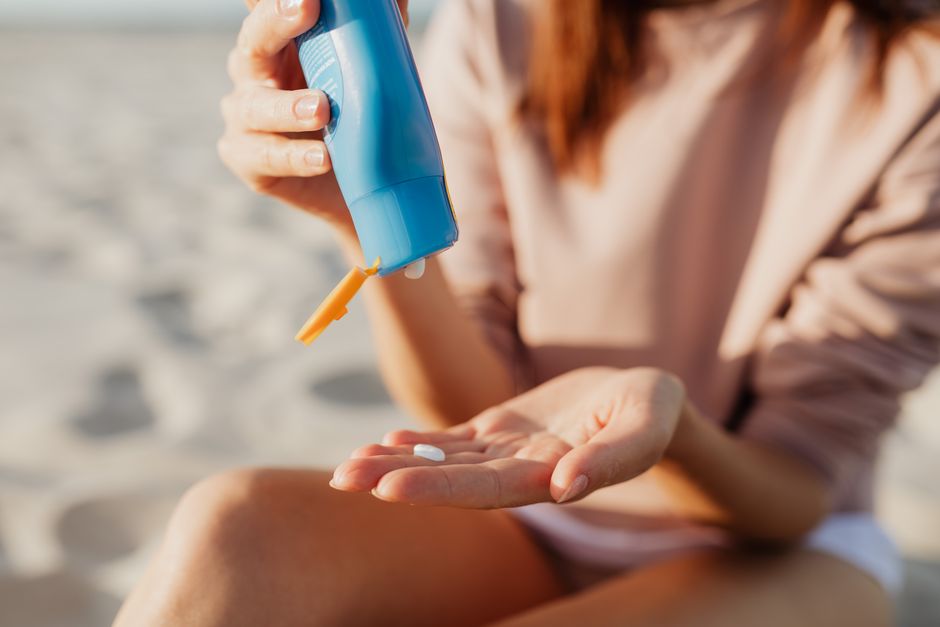
Yes, sunscreen goes bad. Every bottle and tube carries an expiration date, and most products are formulated to stay at full strength for about three years from the date of manufacture. Once sunscreen passes that point, its active ingredients can break down and the emulsion itself can separate, which means you may be applying far less protection than the label promises. The tricky part is that spoiled sunscreen usually looks and smells normal, so the date on the package is your most reliable guide.
Does Sunscreen Go Bad?
Yes. Sunscreen is a formulated product with a shelf life, not a stable chemical that lasts forever. The ingredients that do the work — whether mineral filters like zinc oxide and titanium dioxide or organic filters like avobenzone and oxybenzone — degrade over time. So do the lotions, creams, and sprays that carry them.
In the United States, sunscreen is regulated as an over-the-counter drug, which is why you see a drug facts panel on the back. That regulation requires an expiration date unless stability testing shows the product remains stable for at least three years. In practice, this is why many sunscreens carry a date roughly three years out, and why some carry no date at all — the manufacturer is asserting the three-year minimum.
Heat, light, and air all speed up the breakdown. A bottle that has spent two summers in a hot car has lived a harder life than the date alone suggests.
How Can You Tell If Sunscreen Has Gone Bad?
The expiration date is the single most useful signal. After that, your senses can catch the obvious cases, but they will miss the subtle ones.
Watch for these signs:
- Separation. The liquid and cream split into layers that will not blend back together when you shake or squeeze.
- Texture changes. A product that turns gritty, watery, or unusually thick has likely destabilized.
- Color shifts. Yellowing or discoloration is a warning sign.
- Smell. A sour, chemical, or just “off” odor means it is time to replace it.
Here is the part that surprises people: a sunscreen can lose meaningful protection while still looking and smelling completely fine. The filters degrade at a chemical level you cannot see. So if a product is past its date, don’t rely on a visual check to clear it. The date is the date.
Does Expired Sunscreen Still Protect Your Skin?
It may offer some protection, but you cannot count on it. This is a case where “probably fine” is not good enough, because the whole point of sunscreen is preventing damage that accumulates silently.
The concern is not that expired sunscreen turns harmful. The concern is that it underperforms. The sun protection factor (SPF) on the label was measured on fresh product. As filters break down, the real-world SPF drops — and you have no way to know by how much.
There is also a formulation issue. Sunscreens are emulsions, meaning oil and water phases held together by emulsifiers. When those emulsifiers degrade, the product may no longer spread evenly across your skin. Uneven coverage means gaps, and gaps mean unprotected patches.
Some research has looked at how sunscreen filters hold up over time and under heat. The general finding is that stability varies by formulation and storage conditions, which is exactly why regulators require a date rather than leaving it to chance. The honest summary: expired sunscreen is a gamble, and sun damage is not a gamble worth taking.




How Should You Store Sunscreen So It Lasts?
Keep it cool, keep it closed, and keep it out of direct sun. That covers most of it.
Heat is the main enemy. A tube left on a car dashboard or in a beach bag in full sun can degrade faster than the expiration date suggests. If you spend a lot of time outdoors, consider keeping your everyday sunscreen in a cooler spot and carrying a smaller bottle for reapplication rather than letting one large container bake all day.
Close the cap firmly. Air and contamination from sand, water, and dirty hands all shorten a product’s useful life. And don’t leave the cap off between uses.
One more practical point: write the date you opened the bottle on it with a marker. Many products carry a small “period after opening” symbol — a little jar icon with a number and the letter M, meaning months. That symbol tells you how long the product stays good once opened, which can be shorter than the printed expiration date.
How Long Does Sunscreen Last After You Open It?
Follow the period-after-opening symbol if there is one. If there isn’t, treat an opened bottle as good until its printed expiration date, provided it has been stored reasonably.
Opened sunscreen is exposed to air and microbes every time you use it. That does not make it dangerous overnight, but it does mean an old, opened, half-used bottle sitting in your car since last summer is not something to trust for a day at the beach.
Practical rule: if you cannot remember when you bought it, and it has been through a summer or two of heat, replace it. Sunscreen is not expensive relative to the cost of treating skin damage.
Does Sunscreen Expire Faster in Hot Climates or Cars?
Yes. Heat accelerates chemical breakdown, and a hot car is one of the harshest environments a consumer product can face. Interior temperatures in a parked car can climb far above outdoor air temperature on a sunny day.
This does not mean a single hot afternoon ruins your sunscreen. It means repeated heat exposure shortens its useful life. A bottle that lives in your car year-round is a poor candidate for trust, even before its printed date.
If you live somewhere hot, or you keep sunscreen in a vehicle, replace it more often than the date alone would suggest. Store a backup indoors and refill a small travel bottle as needed.
Can You Use Expired Sunscreen on Your Body but Not Your Face?
There is no evidence that expired sunscreen is riskier on your face than on your body. The concern is reduced protection everywhere, not location-specific harm. Your face is simply more visible, and sun damage there shows up sooner.
If a product has clearly separated, changed color, or smells off, do not use it anywhere. If it is merely past its date but looks normal, the honest position is that its protection is uncertain — and uncertain protection is a poor trade for skin that will be exposed for hours.
When in doubt, replace it. A fresh bottle is the only way to know the SPF on the label is the SPF on your skin.
The Bottom Line on Expiration Dates
Check the date before you pack for a trip. If it is past the printed expiration, or past the period-after-opening window, replace it. If it has lived in a hot car or a sunny windowsill, replace it sooner.
Sunscreen works by absorbing or reflecting ultraviolet radiation before it reaches your skin, and that protection is only as good as the product’s integrity. The date exists for a reason. Respect it, and you get the protection you paid for.
Frequently Asked Questions
Does sunscreen actually expire?
Yes. Sunscreen is regulated as an over-the-counter drug in the US and carries an expiration date, typically about three years from manufacture. After that, the active filters and the lotion itself can degrade.
Can I still use sunscreen after the expiration date?
You can, but you should not rely on it for full protection. The labeled SPF was measured on fresh product, and degraded filters may provide less defense than you expect.
How do I know if my sunscreen has gone bad?
Check the expiration date first, then look for separation, grit, color changes, or an off smell. A product can lose potency while still looking normal, so the date is the most reliable signal.
Does sunscreen expire faster if kept in a hot car?
Yes. Heat speeds up chemical breakdown, and repeated exposure to high temperatures shortens a product’s useful life. Replace sunscreen that has lived in a hot car more often than the date alone suggests.
