
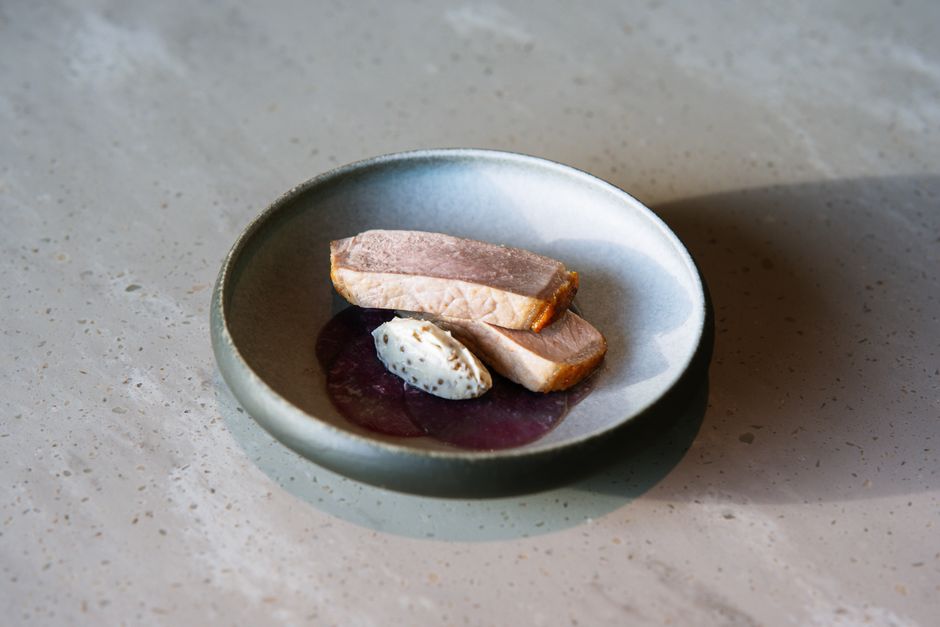
Sous vide cooking does kill bacteria, but only when the food is held at a high enough temperature for a long enough time. The method uses precise, lower temperatures than a grill or skillet, so the margin for error is different. Time and temperature work together, and both matter more here than in almost any other cooking method.
Does Sous Vide Kill Bacteria the Food Safety Facts
Bacteria die when their internal proteins and enzymes are damaged beyond repair. Heat does this. The key variable is not just how hot the water bath is, but how long the food stays at that temperature.
Most people know the number 165°F. That figure comes from the USDA and refers to the temperature at which Salmonella is killed almost instantly — within seconds. It is a safety margin built for convenience, not a biological threshold below which bacteria survive indefinitely.
What pasteurization actually requires is a combination of temperature and time. At 136°F (58°C), Salmonella can be reduced to a safe level in about 63 minutes. At 140°F (60°C), that time drops to roughly 20 minutes. At 145°F (63°C), it takes about 8 minutes. These figures come from established food microbiology research and are the basis for sous vide safety guidelines.
This is why sous vide can produce safely pasteurized chicken at 145°F — as long as it is held there long enough. The bacteria are not surviving because the temperature is lower. They are dying because time compensates for the lower heat.
The critical distinction: this only works if the food’s internal temperature actually reaches the target and stays there for the required duration. A water bath set to 145°F does not guarantee the center of a thick piece of meat hits 145°F immediately. It takes time for heat to penetrate.
What Temperature Actually Kills Bacteria in Sous Vide?
There is no single temperature that kills all bacteria. Different organisms have different heat resistance. What matters is achieving pasteurization — a specific reduction in bacterial load that makes the food safe to eat.
For poultry, the USDA recommends a minimum internal temperature of 165°F (74°C) for instant safety. However, food science research shows that Salmonella in poultry can be pasteurized at lower temperatures with longer holding times. At 145°F (63°C), poultry needs to be held for approximately 8.5 minutes to achieve a 7-log reduction — meaning the bacterial population is reduced by 99.99999%.
For beef, pork, and lamb, the target organisms differ. E. coli and Listeria are the primary concerns. Pasteurization for these meats can be achieved at temperatures as low as 130°F (54°C) with extended holding times, though most sous vide guidance recommends 131°F (55°C) or higher for safety.
Fish is more delicate. Listeria and parasites like Anisakis are concerns. Parasites are killed by freezing or by reaching 140°F (60°C). Bacterial pasteurization for fish typically requires 140°F (60°C) or higher with appropriate holding time.
Here is a reference table for common proteins:
| Protein | Minimum Pasteurization Temp | Approximate Hold Time |
|---|---|---|
| Chicken breast | 145°F (63°C) | 8.5 minutes |
| Chicken breast | 140°F (60°C) | 20 minutes |
| Beef steak | 131°F (55°C) | ~90 minutes |
| Pork loin | 140°F (60°C) | ~12 minutes |
| Salmon | 140°F (60°C) | ~8 minutes |
These times assume the food has already reached the target internal temperature. The clock starts after the center of the food hits the target, not when you press start on the machine.
Why Time Matters as Much as Temperature
Bacterial death is not instantaneous at most temperatures. It follows a logarithmic curve. At any given temperature above the organism’s thermal death point, a certain percentage of the population dies per unit of time.
This is why a chicken breast cooked to 145°F and held for 9 minutes is as safe as one cooked to 165°F and pulled immediately. Both achieve the same level of pasteurization. The lower-temperature version just takes longer.
The practical implication: you cannot guess. You need to know both the temperature and the time required for that specific protein and thickness. Sous vide circulators maintain temperature precisely, but they do not automatically calculate pasteurization time. That is on the cook.
Thickness matters because heat penetration is not instant. A one-inch thick chicken breast reaches the target internal temperature faster than a two-inch thick one. The pasteurization clock only starts once the cold spot — usually the geometric center — reaches the target temperature.



Does Sous Vide Kill All Harmful Bacteria?
No. Sous vide pasteurization reduces vegetative bacteria — the active, growing form — to safe levels. It does not destroy bacterial spores.
Clostridium botulinum is the primary concern. This bacterium produces spores that survive boiling. In anaerobic conditions — meaning without oxygen — those spores can germinate and produce a potentially lethal neurotoxin. Sous vide creates anaerobic conditions because the food is vacuum-sealed.
This is not a theoretical risk. It is the reason food safety authorities emphasize proper refrigeration and time limits for sous vide cooking. The danger zone for C. botulinum growth is between 40°F and 140°F (4°C to 60°C). Food held in that range for extended periods without proper controls can become dangerous.
Sous vide cooking at temperatures above 140°F (60°C) does not support C. botulinum growth. The bacteria cannot produce toxin at those temperatures. The risk arises when food is cooked at lower temperatures — particularly below 130°F (54°C) — and held for long periods, or when cooked food is stored improperly afterward.
Other spore-formers like Bacillus cereus and Clostridium perfringens follow similar logic. Vegetative cells die with proper pasteurization. Spores survive. The key is preventing those spores from germinating and producing toxin.
What Are the Real Risks of Sous Vide Cooking?
The biggest risk is not the method itself. It is how people use it.
Cooking at temperatures below pasteurization and assuming the food is safe is one problem. Another is holding food in the danger zone — between 40°F and 140°F — for too long before or after cooking.
A third risk is cross-contamination. Vacuum sealing does not sterilize the outside of the food. If you handle raw chicken and then touch the bag, the circulator, or your phone, you are spreading bacteria. The sealed bag protects the food from the water, but it does not protect your kitchen from you.
There is also the issue of food that is cooked but not eaten immediately. Sous vide food that is pasteurized but then left at room temperature can become unsafe. Spores that survived pasteurization can germinate if the food sits in the danger zone. The general guidance is to chill cooked sous vide food rapidly if it will not be eaten right away, and to store it below 40°F (4°C).
Some people assume that because the food was cooked in a sealed bag, it is sterile. It is not. Pasteurized is not sterile. The bag is not a sterile environment. It is a controlled one — and only if you control it.
How Do You Know Your Sous Vide Food Is Safe?
Use a calibrated thermometer. The temperature displayed on your sous vide circulator is the water temperature, not the food temperature. They are not the same until the food has fully equilibrated.
Follow established time and temperature tables. These are widely available from food science sources and sous vide equipment manufacturers. Do not guess or rely on recipes that give only temperature without time.
Keep records if you cook sous vide regularly. Note the protein, thickness, temperature, and hold time. If something goes wrong, you will know what to adjust.
Chill leftovers quickly. Do not leave cooked sous vide food at room temperature for more than two hours. If you are not eating it immediately, put it in an ice bath and then refrigerate.
Do not cook at temperatures below 130°F (54°C) for more than a few hours unless you are following a specific, validated protocol. The risk of C. botulinum growth increases with time in the danger zone.
Frequently Asked Questions
Does sous vide kill bacteria at 130°F?
At 130°F (54°C), some bacteria are killed over time, but pasteurization for most proteins requires higher temperatures or very long hold times. Cooking below 130°F for extended periods carries a risk of C. botulinum growth.
Is sous vide chicken safe at 145°F?
Yes, if the chicken is held at 145°F (63°C) for at least 8.5 minutes after reaching that internal temperature. This achieves the same pasteurization as cooking to 165°F instantly.
Can you get food poisoning from sous vide?
Yes, if the food is not pasteurized properly or is held in the danger zone too long. Sous vide is not inherently safer than other cooking methods — it requires the same attention to time and temperature.
Does vacuum sealing kill bacteria?
No. Vacuum sealing removes oxygen, which can actually create conditions favorable to C. botulinum if the food is not properly cooked or stored. The seal does not sterilize the food.
